

Research
- +10
Rosa Balfour, Frances Z. Brown, Yasmine Farouk, …
{
  "authors": [
    "Moisés Naím"
  ],
  "type": "legacyinthemedia",
  "centerAffiliationAll": "",
  "centers": [
    "Carnegie Endowment for International Peace",
    "Malcolm H. Kerr Carnegie Middle East Center"
  ],
  "collections": [
    "Iranian Proliferation"
  ],
  "englishNewsletterAll": "",
  "nonEnglishNewsletterAll": "",
  "primaryCenter": "Carnegie Endowment for International Peace",
  "programAffiliation": "",
  "programs": [],
  "projects": [],
  "regions": [
    "North America",
    "United States",
    "South America",
    "Middle East",
    "Iran",
    "Gulf"
  ],
  "topics": [
    "Economy",
    "Trade",
    "Security",
    "Foreign Policy",
    "Nuclear Policy",
    "Global Governance"
  ]
}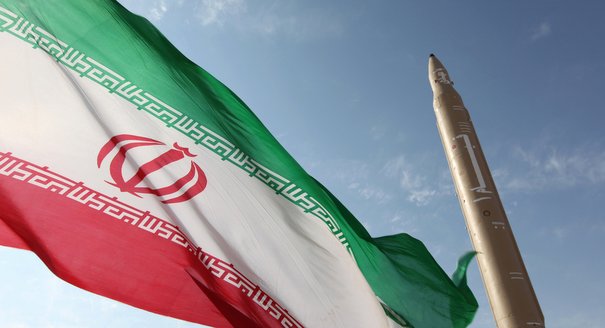
Source: Getty
More powerful nations tend to use sanctions to force policy shifts or even changes in leadership in other countries. They seldom work.
Source: El País
The word “sanction” is an unpleasant one. It implies the punishment that someone with power (parent, teacher, boss, judge) inflicts on someone less powerful who is forced to submit. In international relations, sanctions have a well-earned bad reputation. The more powerful nations tend to use them to force policy shifts — or even changes in leadership — in other countries. They seldom work. Instead, they tend to penalize the already-suffering population of the sanctioned country, more than the tyrants who misgovern it. The irrational and counterproductive US embargo on Cuba is a good example. The embargo, which began in 1960, has served only to give the Castro brothers half a century of excuses to justify the island’s bankruptcy. One rare and contrasting example is that of the successful sanctions on South Africa in the mid-1980s. The US Congress imposed severe economic sanctions on the country until it abolished apartheid and freed Nelson Mandela, among other conditions. Europe and Japan joined in. The embargo wreaked havoc in the South African economy, leading its government to eventually reform the segregationist laws and free Mandela. But the list of sanctions that have accomplished their stated goals is very short.
Therefore, criticizing the use of international sanctions, denouncing their injustice and futility, and designating them a hangover of colonialism is frequent — and easy. But what if there was a new class of sanctions, more effective, and targeted on the leaders of the country whose behavior the international community wants to change? In Iraq, for example, would it not have been better to rely on this option, and thus avoid the terrible war and its aftermath? In Iran, would it not be better to allow the sanctions to force the government to limit its nuclear program to peaceful uses, rather than embarking on a war with dire and immense global consequences? Of course it would.The good news is that there has been a great deal of progress in the development of this new class of sanctions. The bad news is that it is not clear that they are sufficient to prevent an armed conflict with Iran.
The sanctions that the international community has imposed on Iran are the most sophisticated, precise and economically devastating in history. Their efficacy is due in part to the use of new information technologies and unprecedented financial measures. But it is also due to the fact that never before have such a large number of diverse countries so actively and methodically been engaged in sanctioning another country. These sanctions range from an embargo on petroleum exports to the exclusion of Iranian banks from the SWIFT system for the electronic transfer of funds between banks, the freezing of Iranian assets worldwide as well as all sorts of obstacles to the transport of freight and passengers, imports and exports, and investment in the country. As important are other kinds of economic measures that directly target Iran’s leaders, their families and their business associates in the country and abroad.
The impact has been enormous. Petroleum exports have fallen by half, the currency has been devalued by just as much in recent months, and inflation has soared. While the government maintains that the economy grew by two percent last year, an IMF official, speaking on condition of anonymity, told me that he estimates that the Iranian economy suffered a 10-percent contraction in 2012. And according to the magazine Iran Economics, per capita income will fall by almost a third in 2013.
Will all this be enough to bring the Iranian government to the negotiating table? For now, it seems it won’t. “I am not a diplomat. I’m a revolutionary who speaks frankly and directly… the Iranian nation is not going to negotiate under pressure,” said the supreme leader of Iran, the Ayatollah Ali Khamenei. And he added: “Direct negotiations don’t solve any problem.”
Four possibilities, then, remain. The first is that the supreme leader does not know in detail the damage the sanctions are causing to his country’s economy, and their harsh consequences for the Iranians. The second is that he doesn’t care and that he is relying on the repressive capabilities of the state to ensure that popular unrest is kept under control. The third is that the sanctions are not yet having their full impact, and that it will soon be impossible for Khamenei to continue to ignore them and will eventually be forced to negotiate. The fourth and most dreadful possibility is that the supreme leader and his advisors are convinced that a war will strengthen the regime. A bombing of its nuclear installations by the US or Israel would mobilize the population in the government’s favor, and create a broad wave of support throughout the Islamic world — including among the population of the many Arab countries whose governments are now at odds with Tehran. To achieve this, all the supreme leader has to do is to go on with his nuclear program, and come ever closer to the production of nuclear weapons.
Let’s hope the sanctions work.

Distinguished Fellow
Moisés Naím is a distinguished fellow at the Carnegie Endowment for International Peace, a best-selling author, and an internationally syndicated columnist.
Recent Work



Rosa Balfour, Frances Z. Brown, Yasmine Farouk, …
Moisés Naím
Carnegie does not take institutional positions on public policy issues; the views represented herein are those of the author(s) and do not necessarily reflect the views of Carnegie, its staff, or its trustees.

In an interview, Rozina Ali discusses her new book on the rise and manifestations of Islamophobia in the United States.

Michael Young

In an interview, Ian Lustick and Eli Clifton discuss their new book on why a prominent ally has so much influence in America.
Michael Young

As the U.S. stumbles in its war with Iran, we are likely to see an acceleration of its disengagement from the region.
Michael Young

Middle Eastern states should welcome an accelerated U.S. disengagement from their region.
Michael Young

In an interview, former ambassador Charles Freeman assesses the Trump administration’s war against Iran.
Michael Young