

Article
Marc Pierini
{
  "authors": [
    "Marc Pierini"
  ],
  "type": "legacyinthemedia",
  "centerAffiliationAll": "dc",
  "centers": [
    "Carnegie Endowment for International Peace",
    "Carnegie Europe"
  ],
  "collections": [
    "Turkey’s Transformation",
    "Arab Awakening"
  ],
  "englishNewsletterAll": "menaTransitions",
  "nonEnglishNewsletterAll": "",
  "primaryCenter": "Carnegie Europe",
  "programAffiliation": "MEP",
  "programs": [
    "Middle East"
  ],
  "projects": [],
  "regions": [
    "Middle East",
    "Europe",
    "Türkiye",
    "Syria"
  ],
  "topics": []
}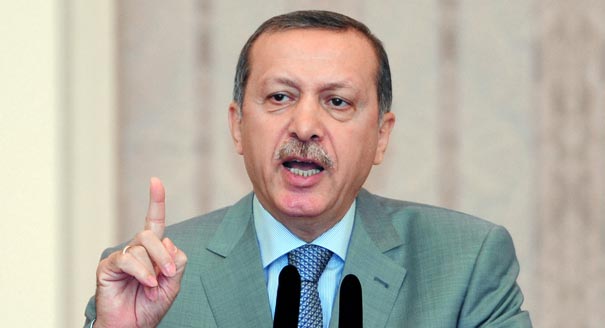
Source: Getty
Following the Syrian crisis, Turkey's main role will be that of providing reconstruction aid.
Source: Fox News
Speaking on Fox News, Carnegie’s Marc Pierini discussed recent developments in the Syrian crisis. He highlighted the asymmetry of the conflict, explaining that the present Syrian government is being advised and armed by Russia and Iran. The West must provide tools to the rebellion in order to balance the fight, he stated. Pierini also addressed Turkey’s fear of total and lasting chaos in Syria, as well as the creation of a regional Kurdish coalition. He said that Turkey’s main role in Syria will be that of providing reconstruction aid. Pierini concluded, “The country is destroyed…and of course the people are shattered, so you need a lot of efforts and there Turkey will have and can have and must have a greater role.”

Senior Fellow, Carnegie Europe
Marc Pierini is a senior fellow at Carnegie Europe, where his research focuses on developments in the Middle East and Turkey from a European perspective.
Recent Work
Marc Pierini
Marc Pierini
Carnegie does not take institutional positions on public policy issues; the views represented herein are those of the author(s) and do not necessarily reflect the views of Carnegie, its staff, or its trustees.

As the U.S. stumbles in its war with Iran, we are likely to see an acceleration of its disengagement from the region.

Michael Young

Huawei pushed hard to enter the Egyptian data centers market, until the Americans made a better offer.

Angie Omar

The accord represents a pivotal moment in the region to avert a security vacuum in the Gulf.


Azeema Cheema, Mohanad Hage Ali

In an interview, Jason Burke discusses his sweeping account of the “revolutionists” who so shaped the 1970s and early 1980s.
Michael Young
In an interview, Sohaib Jawhar analyzes the profound changes in the ties between the neighboring countries.
Michael Young