

Commentary
As talks begin between Washington and Tehran, Beirut has an opening to advance a regional plan for the party’s disarmament.
Michael Young
{
  "authors": [
    "John Beyrle",
    "James F. Collins",
    "Jack Matlock",
    "Thomas Pickering",
    "Alexander A. Bessmertnykh",
    "Yury V. Dubinin",
    "Viktor G. Komplektov",
    "Vladimir P. Lukin"
  ],
  "type": "other",
  "centerAffiliationAll": "dc",
  "centers": [
    "Carnegie Endowment for International Peace",
    "Carnegie Russia Eurasia Center"
  ],
  "collections": [],
  "englishNewsletterAll": "ctw",
  "nonEnglishNewsletterAll": "",
  "primaryCenter": "Carnegie Endowment for International Peace",
  "programAffiliation": "russia",
  "programs": [
    "Russia and Eurasia"
  ],
  "projects": [],
  "regions": [
    "North America",
    "United States",
    "Russia"
  ],
  "topics": [
    "Economy",
    "Security",
    "Foreign Policy"
  ]
}
Source: Getty
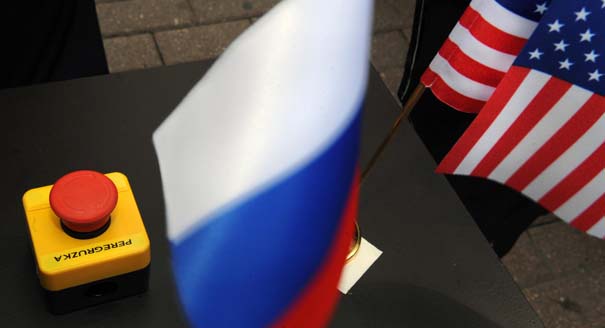
Deepening economic engagement and making progress on missile defense should be central policy priorities for Russia and the United States in their bilateral relations.
Last week, we former ambassadors to Washington and Moscow from Russia and the United States gathered in Moscow to discuss and consider fundamental questions concerning our countries’ bilateral relations and the international context in which they exist. When we last met two years ago in Washington, we welcomed the concrete steps our governments had taken to redirect relations toward a constructive path but noted that much remained to be done.
In our current talks, we welcomed further significant accomplishments by our two governments that have put in place a strong foundation for cooperation in the future. The new strategic arms agreement is being implemented and continuing to reduce the nuclear arsenals of both countries. The 123 agreement is in force and expanding our civilian nuclear cooperation. With strong U.S. support, Russia completed its formal entry into the World Trade Organization, and the level of mutual trade and investment is increasing. Russian-U.S. cooperation on Afghanistan has made the fight against terrorism and narcotics in that country more effective. And the signature of a major agreement on visas has made it easier for the citizens of both countries to visit and do business with each other.
Against that backdrop of real achievement, we took a sober view of the strains that continue to complicate today’s relations. We agreed that the level of hard rhetoric and the high degree of mistrust that were once the norm in our relations have diminished, and the heads of our countries have expressed a desire to build a stable modus vivendi that takes into account the interests and national security of each state and its allies as well as world peace.
On the other hand, we noted that the experience of the recent past shows that serious irritants and differences still can disrupt our bilateral relations. We agreed that these issues often stem from failure to conduct our relations in ways consistent with principles of equality and mutual respect. In discussing the global context for our relations, we stressed the reality of rapid change, and we agreed that one of the pressing tasks for us today is to coordinate better mutual bilateral and multilateral steps as we address the problems of a changing and complex global environment.
Cooperation is essential as both nations face today’s challenges. The consequences of the global economic crisis linger. Shifting balances of economic, political, and military power reshape the international environment in unpredictable ways. The upheaval in the Arab Middle East has suddenly made that region a source of unpredictable and rapid change. Global problems—terrorism, climate change, and transnational crime—demand coordinated multilateral action. Nuclear proliferation and the uncertainties of dependence on increasingly complex technologies present familiar and new challenges to the status quo and global stability.
In these circumstances, our discussions focused on how our two governments can build on the positive foundation for cooperation that has been created over the last several years and bring focus to an agenda that can address productively the challenges both our countries now face. The full agenda we confront is the result of a mutual acknowledgement that stability and predictability in our countries’ relations and progress on mutually beneficial steps will benefit both of our peoples as well as global peace and security.
Our long experience working in each other’s countries came largely during the era when questions of strategic stability and arms control constituted the center of gravity in affairs between us. Today, we welcome the fact that a healthy and fundamental shift is taking place in which questions of trade, investment, and economic cooperation are becoming central. We agreed that the sustainable, long-term improvement in relations that our people seek must be built on a strong foundation of growing commercial interaction. Russia’s accession to the World Trade Organization is a vital component of this, and the long-overdue repeal of the Jackson-Vanik Amendment allows American business to take full advantage of new opportunities for trade and investment.
But far too many obstacles to doing business still exist in both countries, and we need to do a better job of breaking down the barriers that prevent the enhancement of our scientific and technological cooperation. Although bilateral trade balances hit record levels since our last meeting, we are dismayed to see what a small fraction they still constitute of our foreign trade levels overall. We call on the governments and business communities in both countries to work together on a set of ambitious, concrete goals aimed at tripling our trade and investment over the next five years. We also support greater U.S. and Russian mutual involvement in trans-Atlantic and trans-Pacific trade and investment mechanisms.
The world is no longer hostage to tense relations between Moscow and Washington, but the global community is still concerned to see these relations put on a stable foundation. Our two countries hold a special and unique responsibility for maintaining strategic stability in a changing global threat environment. The development of a reliable foundation for a regime of nuclear nonproliferation and nonproliferation of other weapons of mass destruction depends to a large degree on how Russia and the United States interact.
We considered in detail existing disagreements in the search for compromise on ballistic missile defense, and we agreed that efforts to find a mutually acceptable formula must be intensified. We believe that with the U.S. decision to restructure its missile defense posture in Europe, our two sides should urgently take advantage of the opportunity to end the division ballistic missile defense has brought to relations for more than a decade. Our nations should set as a goal achieving the highest level of cooperation sufficient to assure that these systems will not undermine deterrence and strategic stability but will retain the capacity to deal with limited ballistic missile threats from proliferating states with the appropriate level of interceptors.
We are greatly encouraged by the mutual steps taken by our governments over the last several years to continue the trend of strategic arms reduction begun almost three decades ago. The habits of cooperation built through such negotiations and verification regimes pay dividends beyond the actual reductions. This process must continue, and we believe that setting a lower number of operational warheads and delivery vehicles for each side would build further on the momentum toward the lower levels achieved in New START.
One of the pressing tasks for us today is to strive to coordinate the bilateral and multilateral steps we must take to manage challenges to international peace and security. Few international problems are manageable without cooperation among the major powers. We agreed that further cooperation is essential to ensure that the leadership in both Iran and North Korea understands our joint view on the imperative of compliance with international norms and agreements regarding the nuclear programs in both countries and to avoid precipitation of conflict by accident or miscalculation.
On Syria, we believe invigorated joint efforts toward political settlement to permit early necessary steps at negotiations without preconditions or linkage could prove critical in moving toward peace. Russia and the United States should work together along with others to: develop negotiations without preconditions or linkage of one measure to another; seek an immediate humanitarian ceasefire monitored by the United Nations; assure protection for all minorities in Syria; and establish a representative, transitional government.
We took note as well of the impending change in the role of the U.S. and allied forces in Afghanistan and the transfer to Afghan authority of responsibility for their own security. Cooperation on Afghanistan has been a strong positive element in U.S.-Russian cooperation over the last years. It will be important now for our two governments to continue discussions and joint work to ensure a future of peace and stability for this region.
In discussing bilateral relations, we found disturbing the recent deterioration in the atmosphere of relations and the growing trend toward a focus on issues that divide us. Some legislation enacted in both countries does not help the desirable expansion of contacts and engagement between our two societies. We believe this matter requires urgent attention, and we call for a renewed level of parliamentary exchange between Moscow and Washington involving both members and senior staff.
We noted the positive contribution the Bilateral Presidential Commission has made to expanding contacts and cooperation, giving impetus to more effective work among the agencies of the two governments and stimulating broader exchanges among the Russian and American people in education, science, sports, and the arts. Modernizing this mechanism further by upgrading the leadership and moving in the direction of a more active search for joint projects in areas of mutual self-interest will add an important element to the structure of Russian-American stability.
We believe that our two countries are on the threshold of an important new period in relations. Two decades after the Cold War and the great changes that have reshaped the economic, political, and security maps of the Euro-Atlantic region, new opportunities exist to create a more stable, productive, and secure future. Creative professional diplomacy is a reliable instrument for achieving these goals and making the most from these possibilities. The character of the coming era will largely depend on it. But in the end, ambassadors, diplomats, and decisionmakers must recognize that all of our work aimed at making relations between Russia and the United States more constructive and more productive depends increasingly on active and informed support from our societies as a whole.
John Beyrle
Nonresident Senior Fellow, Russia and Eurasia Program; Diplomat in Residence
Ambassador Collins was the U.S. ambassador to the Russian Federation from 1997 to 2001 and is an expert on the former Soviet Union, its successor states, and the Middle East.
Jack Matlock
Thomas Pickering
Thomas Pickering is a former U.S. undersecretary of state for political affairs and ambassador to Russia, Israel and the UN.
Alexander A. Bessmertnykh
Yury V. Dubinin
Viktor G. Komplektov
Vladimir P. Lukin
Carnegie does not take institutional positions on public policy issues; the views represented herein are those of the author(s) and do not necessarily reflect the views of Carnegie, its staff, or its trustees.
As talks begin between Washington and Tehran, Beirut has an opening to advance a regional plan for the party’s disarmament.

Michael Young
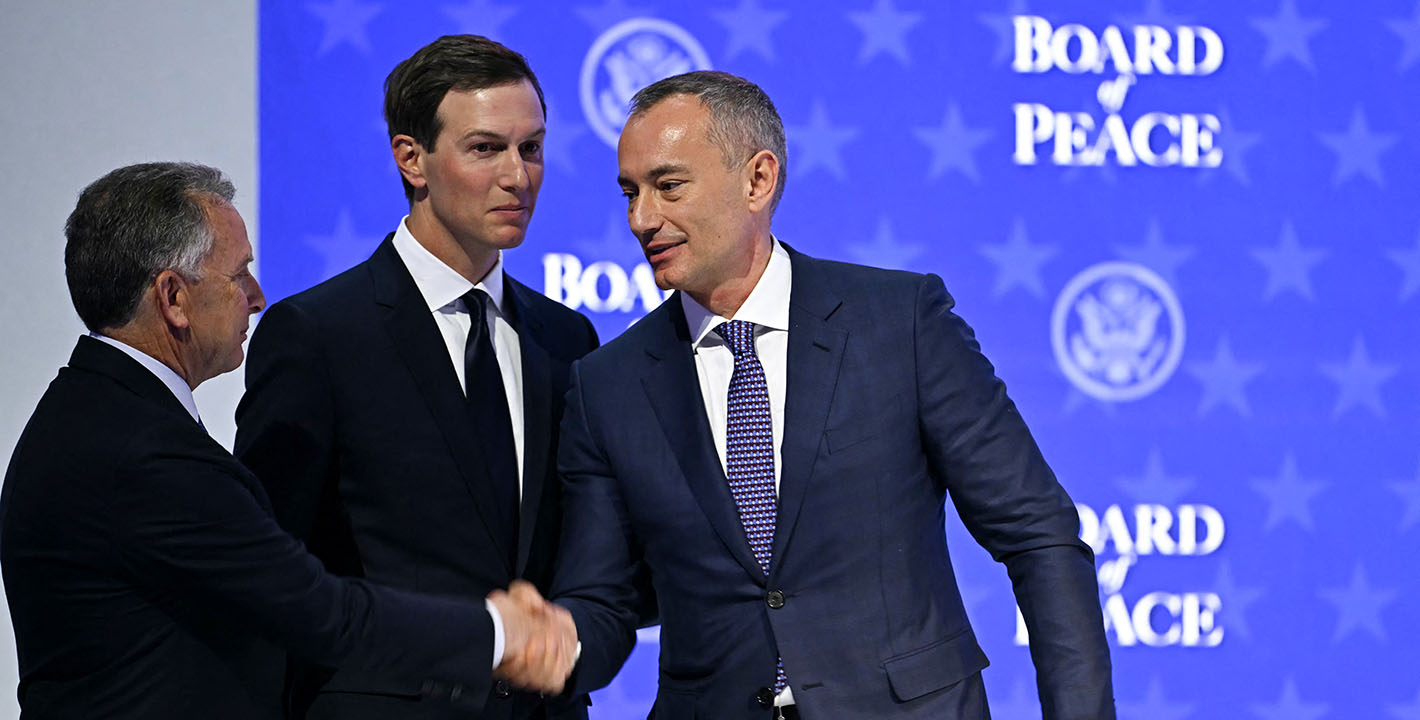
What is behind Marco Rubio’s announcement that the body is now an international nongovernmental organization?
Zaha Hassan
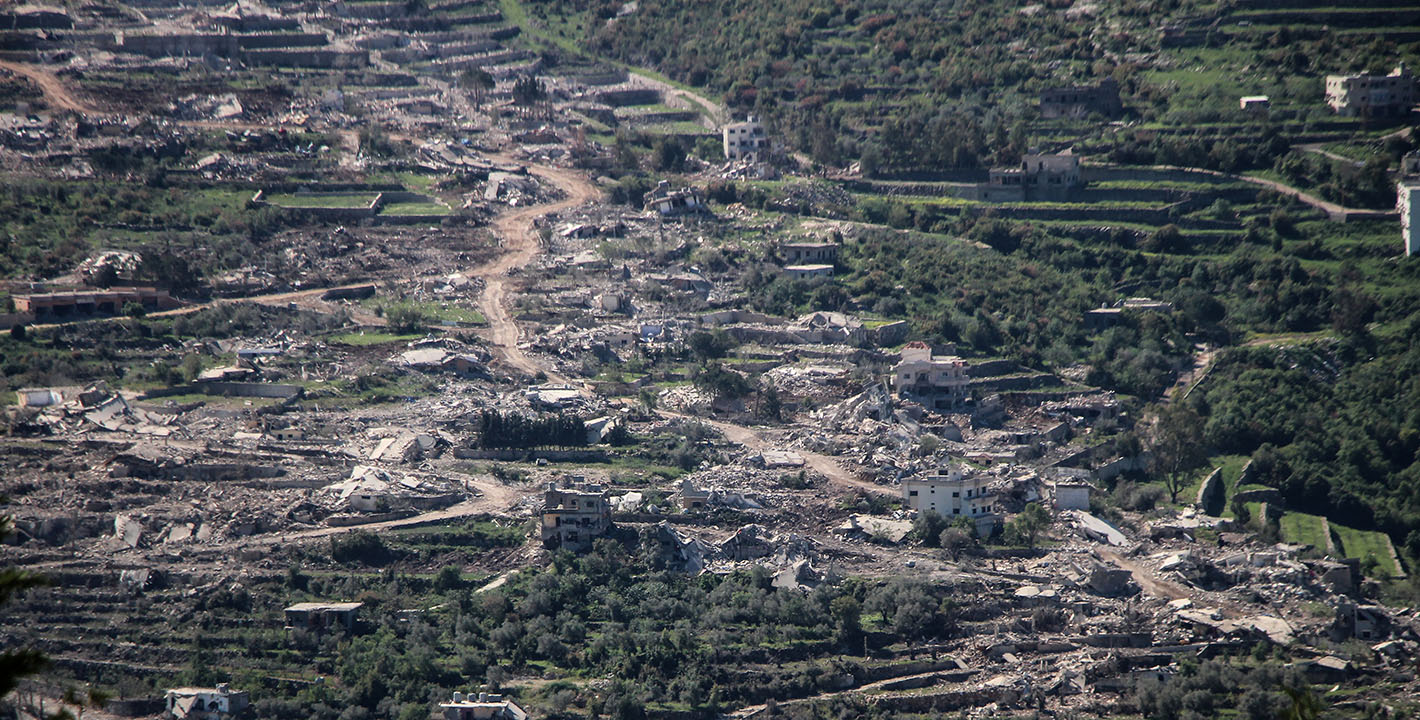
Policy discussion is ignoring that the Palestinian national project is hollowed out and apartheid is a present danger.

Nathan J. Brown
As negotiations with Iran and Lebanon continue, chaos is at the heart of the Netanyahu government’s calculations.
Michael Young
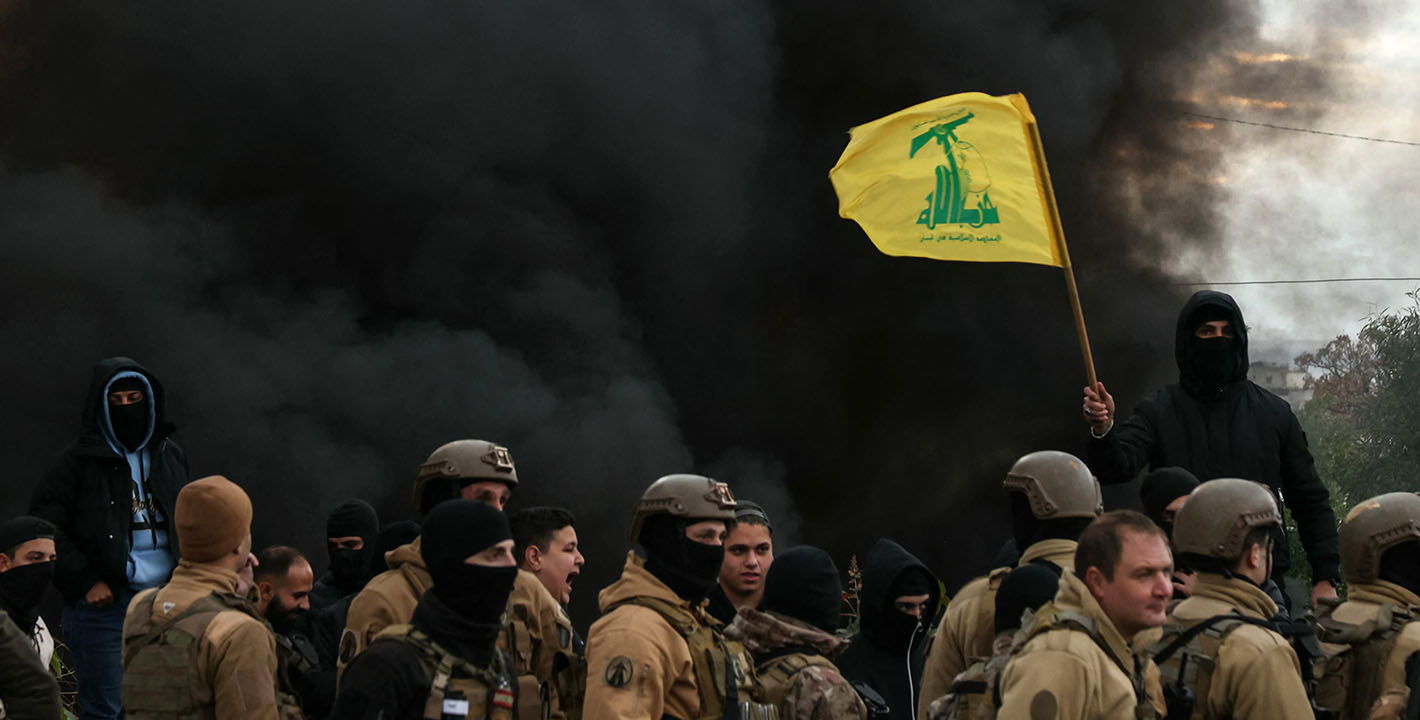
The party’s domestic and regional roles have changed, so Lebanon should devise a disarmament strategy that encompasses this.
Michael Young