

Commentary
As the U.S. stumbles in its war with Iran, we are likely to see an acceleration of its disengagement from the region.
Michael Young
{
  "authors": [
    "Zhang Chuanjie"
  ],
  "type": "legacyinthemedia",
  "centerAffiliationAll": "",
  "centers": [
    "Carnegie Endowment for International Peace",
    "Carnegie China"
  ],
  "collections": [
    "U.S.-China Relations",
    "China’s Foreign Relations"
  ],
  "englishNewsletterAll": "",
  "nonEnglishNewsletterAll": "",
  "primaryCenter": "Carnegie China",
  "programAffiliation": "",
  "programs": [],
  "projects": [],
  "regions": [
    "North America",
    "United States",
    "East Asia",
    "China",
    "North Korea"
  ],
  "topics": [
    "Security",
    "Nuclear Policy"
  ]
}
Source: Getty
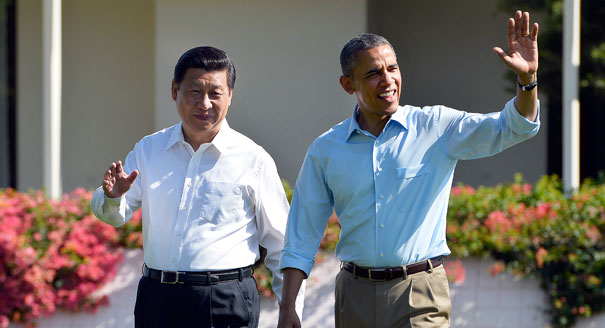
The informal surroundings at Sunnylands enable Xi and Obama to have private and meaningful discussion about critical bilateral and global issues.
Source: CCTV
Speaking on CCTV, Carnegie’s Zhang Chuanjie explained that the benefit of the informal meeting in Sunnylands, California between Presidents Xi Jinping and Barack Obama is that “neither has any pressure to come up with an agreement.”
He predicted that cybersecurity will be an important point of discussion between the two leaders. Zhang suggested that both countries should send groups to work out “rules and regulations” to help improve cooperation on cybersecurity. Another commonality that the two countries should cooperate on is North Korea, since both have a vested interest in stability on the peninsula, he added.
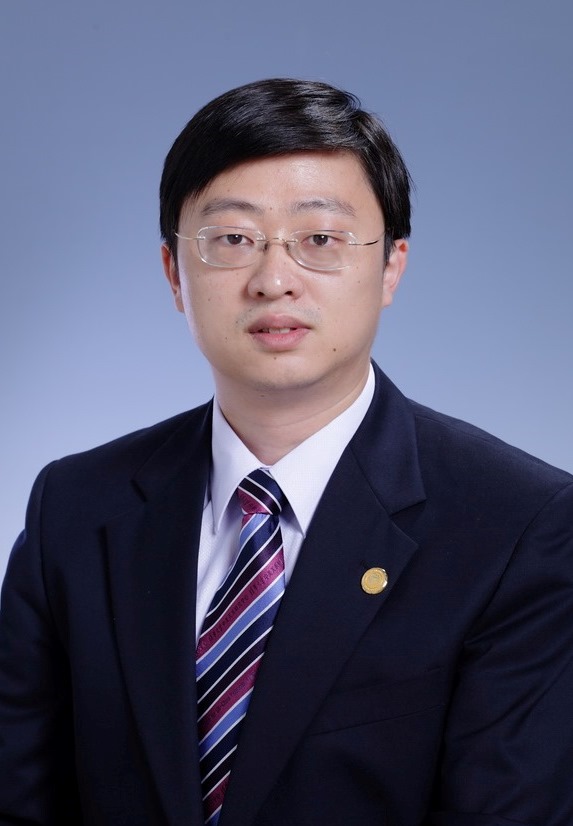
Zhang Chuanjie
Former Resident Scholar, Carnegie-Tsinghua Center for Global Policy
Zhang Chuanjie was a resident scholar at the Carnegie-Tsinghua Center until June 2020.
Carnegie does not take institutional positions on public policy issues; the views represented herein are those of the author(s) and do not necessarily reflect the views of Carnegie, its staff, or its trustees.

As the U.S. stumbles in its war with Iran, we are likely to see an acceleration of its disengagement from the region.

Michael Young

Huawei pushed hard to enter the Egyptian data centers market, until the Americans made a better offer.

Angie Omar

Middle Eastern states should welcome an accelerated U.S. disengagement from their region.
Michael Young

In an interview, former ambassador Charles Freeman assesses the Trump administration’s war against Iran.
Michael Young

By failing to address Palestinian representation, the current process is bound to lead to just another temporary arrangement.

Nathan J. Brown