

Research
- +4
Milan Vaishnav, Rahul Verma, Rukmini S., …
{
  "authors": [
    "Christophe Jaffrelot"
  ],
  "type": "legacyinthemedia",
  "centerAffiliationAll": "dc",
  "centers": [
    "Carnegie Endowment for International Peace"
  ],
  "collections": [],
  "englishNewsletterAll": "ctw",
  "nonEnglishNewsletterAll": "",
  "primaryCenter": "Carnegie Endowment for International Peace",
  "programAffiliation": "SAP",
  "programs": [
    "South Asia"
  ],
  "projects": [],
  "regions": [
    "South Asia",
    "Pakistan"
  ],
  "topics": [
    "Security",
    "Military",
    "Foreign Policy"
  ]
}
Source: Getty
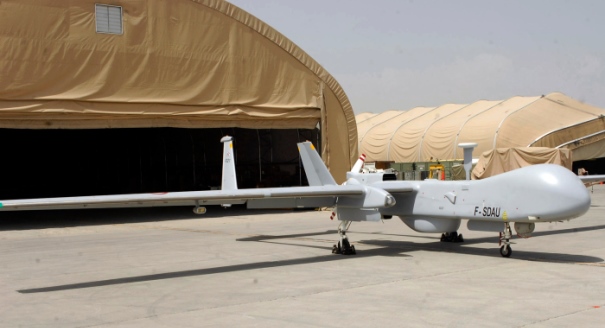
Pakistan Prime Minister Nawaz Sharif will soon have an important meeting with President Barack Obama in Washington, one that will largely focus on U.S. drone strikes.
Source: Indian Express
On October 23, Pakistan Prime Minister Nawaz Sharif will have an important meeting with U.S. President Barack Obama in Washington. Exactly one year ago, U.S.-Pakistan relations started to recover from the big blows that the Osama bin Laden raid, the Raymond Davis affair and the Salala attack (when NATO forces killed 24 Pakistani soldiers by mistake) had dealt. In retaliation, Pakistan had closed the NATO supply lines to Afghanistan in November 2011, while the U.S. suspended a large proportion of its financial support to Islamabad (and Rawalpindi). The supply lines were reopened in July last year in exchange of a $1 billion payment in arrears.
But other problems remained, including drone strikes. During the 2013 election campaign, opposition parties — mainly Imran Khan's Pakistan Tehreek-e-Insaf (PTI) and Nawaz Sharif's PML-N — accused the PPP-led government of undermining the sovereignty of Pakistan by permitting such strikes. Despite Sharif's electoral success, these strikes have continued. This year, till September 30, about 20 drone attacks have taken place in the FATA (mostly in North Waziristan), according to the New American Foundation, a US-based institution.In August, John Kerry, who has always supported better U.S.-Pakistan relations, as evident from his role in passing the Kerry-Lugar-Berman act of 2009, paid a discreet visit to Islamabad to announce that the drone strikes would end "very soon". He also said he was hopeful of a "deeper, broader and more comprehensive partnership". In fact, drone strikes in the FATA may well remain on the U.S.'s agenda. There is a good reason: Washington is shifting from counter-insurgency to counter-terrorism in the Af-Pak region. It is transitioning to this technique (which Joe Biden had advocated as early as 2009) in Afghanistan, where the U.S. might leave not more than 9,000 to 10,000 soldiers in 2014 if the talks with Hamid Karzai fructify. And the Pentagon and the CIA are all for the same technique in the FATA, where their targets remain al-Qaeda leaders still in hiding.
The Pakistan army will probably remain supportive of this technique, despite public denials. The chief of army staff, General Ashfaq Kayani, as evident from WikiLeaks cables, unofficially approved of drone attacks in order to strike militants his army was not in a position to dislodge. The high casualties the Pakistan army has suffered in its fight against al-Qaeda and the Tehrik-i-Taliban Pakistan (TTP) have had a demoralising effect that observers, often quick to see only the affinities between the army and the Haqqani network, tend to miss.
Can Sharif resist the pressure coming from the army and the US in favour of the continuation, probably on a smaller scale, of drone strikes? He may be in a better position to resist the army chief once Kayani's successor is appointed, probably sometime next month. But the army as a group may not deploy more forces in the FATA, especially if, as one might expect, the peace talks between the PTI-led government of Khyber-Pakhtunkhwa and the Taliban, as well as the talks Sharif himself — in order to not lag behind — has initiated with the Taliban, lead nowhere. Why should the TTP enter such a dialogue in any meaningful way now when, in less than a year, the withdrawal of NATO forces will give them a safe haven in Afghanistan on a platter?
Sharif might also have difficulty convincing the U.S. to give up the drone strikes if the U.S. continues to help his country financially. They have already supported him at the IMF. After weeks of negotiations, last month Pakistan was finally offered $6.6 billion in exchange for the usual commitment: to reduce its budget deficit from 8.5 per cent of the GDP to 3.5 per cent in three years. That would imply a fiscal reform the government does not seem prepared to undertake, as evident from the budget voted for in June. It means Pakistan will continue to need American money which, along with expatriate remittances, has enabled it to avoid a real fiscal reform till now.
According to the Congressional Research Service, over the last 12 years, since the beginning of the Afghan war, the U.S. has spent more than $20 billion in aid to Pakistan, the bulk of which was for "security related" assistance. This suggests that perhaps a fifth of the budget of the Pakistan army depends on U.S. support. If Washington is prepared to continue to pay and thereby help Pakistan cope with a huge energy crisis that is forcing the country to import electricity from Central Asia (when it could possibly get some, at a better price, from India), Sharif's demands regarding drone strikes may remain rhetorical.
The U.S. may well be ready to pay simply because 2014 is a key year, when thousands of American soldiers and tonnes of equipment will leave Afghanistan via Pakistan. This is definitely not a good time to alienate the rulers of Islamabad and Rawalpindi. It would be much easier for Washington to say, "Mission accomplished: bin Laden is dead", and claim that this war (the longest in the country's history) has therefore been won if the number of coalition casualties remains where it is today — at 3,393. Even congressmen, many among whom were willing to stop "investing" in Pakistan after the bin Laden raid, may understand what is at stake, and give up the idea of reducing U.S. support to Pakistan.
But what after 2014? Can the U.S. then look upon the Af-Pak chapter as closed? Naturally, it will be immediately reopened if there is a terrorist attack on American soil that could be attributed to that part of the world. But Washington may also be willing to maintain a presence and continue its drone strikes precisely to avoid such a thing. Besides, to maintain a presence may also be justified by the need to "keep an eye" on Pakistan's nuclear capabilities, especially now that China has just decided to sell it two nuclear plants.
This suggests that the anti-American feelings fostered by the drone attacks may, at best, show resilience in Pakistan. This may affect the army even more than before simply because the officers currently reaching the top levels have not been trained in the West. On the contrary, they joined the military at a time when the Pressler Amendment and other American sanctions were implemented.
PS: There are two caveats to the above argument. First, if the drones are now based entirely in Afghanistan, their continuance will depend on the agreement the U.S. is negotiating with Karzai. If the U.S. does not get immunity from prosecution for American soldiers in Afghan courts, the drone servicers may be pulled out. Second, if the Pakistanis decide to go into Waziristan — perhaps after another general has been assassinated — would they want the "don't ask, don't tell" system of tacit drone approval to continue, or would they decide to "clean up" the FATA by themselves?
This article was originally published in the Indian Express.

Former Nonresident Scholar, South Asia Program
Jaffrelot’s core research focuses on theories of nationalism and democracy, mobilization of the lower castes and Dalits (ex-untouchables) in India, the Hindu nationalist movement, and ethnic conflicts in Pakistan.
Recent Work


Milan Vaishnav, Rahul Verma, Rukmini S., …
Christophe Jaffrelot
Carnegie does not take institutional positions on public policy issues; the views represented herein are those of the author(s) and do not necessarily reflect the views of Carnegie, its staff, or its trustees.

In an interview, Ian Lustick and Eli Clifton discuss their new book on why a prominent ally has so much influence in America.

Michael Young

By failing to address Palestinian representation, the current process is bound to lead to just another temporary arrangement.

Nathan J. Brown

The armed forces champion a form of capitalism that is generating revenue, but its reliance on rent faces diminishing returns, leaving the country with massive sunk costs and deferred returns, deepening dependency on external borrowing.

Yezid Sayigh

Just look at Iraq in 1991.

Marwan Muasher

A coalition of states is seeking to avert a U.S. attack, and Israel is in the forefront of their mind.
Michael Young