

Commentary
Thomas de Waal
{
  "authors": [
    "Thomas de Waal"
  ],
  "type": "commentary",
  "centerAffiliationAll": "",
  "centers": [
    "Carnegie Endowment for International Peace",
    "Carnegie Europe",
    "Carnegie Russia Eurasia Center"
  ],
  "collections": [],
  "englishNewsletterAll": "",
  "nonEnglishNewsletterAll": "",
  "primaryCenter": "Carnegie Europe",
  "programAffiliation": "",
  "programs": [],
  "projects": [],
  "regions": [
    "Russia",
    "Eastern Europe",
    "Ukraine"
  ],
  "topics": [
    "Foreign Policy"
  ]
}
Source: Getty
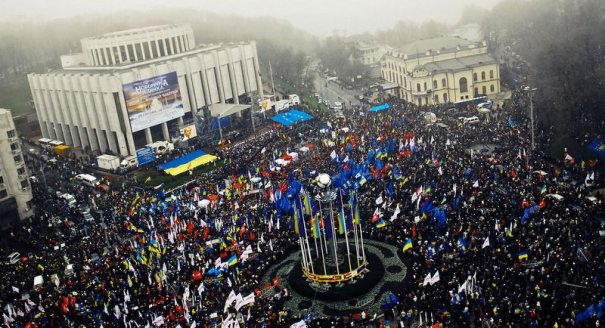
In the run-up to the Vilnius summit, the EU could have played its hand better and could have gone the extra mile with Moscow to demonstrate to Russia and the world its good intentions.
This week’s European Union’s Vilnius summit will have a big Ukraine-sized hole in it and lingering regrets of what might have been. The Ukrainians will be there, but they will not initial an Association Agreement with the EU.
There is much anguish in both Brussels and Kiev about what went wrong and it is worth asking, “Could it have been otherwise?”
On the Ukrainian side, the answer is a definite yes. Viktor Yanukovych tried to play a balancing game with Moscow and Brussels in order to bargain a better deal out of both. But last week, he evidently made a pure economic calculation: his own monopolistic system could survive without a European deal but could not withstand Russian pressure.
A different leader with different priorities would surely have made a different decision.
Could Brussels have played its hand better? The EU had certainly upped its game with the Eastern Partnership, strengthening what had initially been a rather weak project.
The new differentiated approach of “more for more” which made clear distinctions between what was on offer for the different six countries, clearly incentivized Georgia and Moldova in particular into moving ahead.
On offer were “three Ms” of “money, markets, and mobility” if they agreed to Europeanizing reforms. The flaw in the Eastern Partnership is of course that it does not contain any promise of a fourth “M,” prospective membership, the carrot that worked wonders with the post-Communist countries of Central Europe and the Balkans. But it seems that some major EU powers, notably France, balk at giving six new neighbors that perspective.
The biggest “what if” is if Brussels could have played it any differently with Moscow. Not in the sense of accommodating any of Russia’s demands or watering down the deal on offer, but in doing better diplomacy with Moscow.
Last week’s events were chiefly, of course, a power-play by Vladimir Putin. But Russians also had genuine anxieties about how an EU free trade deal with Kiev would impact their own trading relationship with Ukraine, as well as more visceral feelings that their closest Slavic cousin was being taken from them.
Unfortunately, Brussels is better at writing trade agreements than at deft political diplomacy. But it would surely have been better if they had gone the extra mile with Moscow to demonstrate to Russia and the world their good intentions. So, as Charles Grant suggested last week, they could have commissioned a “joint impact assessment” on how a trade deal would affect Russia. A European official could have given a speech in Kiev, saying that closer European integration in no way affected Kiev’s status as the cradle of Orthodox civilization.
This would quite probably not have affected the outcome, but it might have reduced the anger in the air between Brussels and Moscow—an anger which is likely to hurt the six countries of the Eastern Partnership.

Senior Fellow, Carnegie Europe
Thomas de Waal is a senior fellow at Carnegie Europe, specializing in Eastern Europe and the Caucasus.
Recent Work
Thomas de Waal
Thomas de Waal
Carnegie does not take institutional positions on public policy issues; the views represented herein are those of the author(s) and do not necessarily reflect the views of Carnegie, its staff, or its trustees.
In an interview, Ian Lustick and Eli Clifton discuss their new book on why a prominent ally has so much influence in America.
Michael Young
By failing to address Palestinian representation, the current process is bound to lead to just another temporary arrangement.

Nathan J. Brown
Just look at Iraq in 1991.

Marwan Muasher
A coalition of states is seeking to avert a U.S. attack, and Israel is in the forefront of their mind.
Michael Young
Baku may allow radical nationalists to publicly discuss “reunification” with Azeri Iranians, but the president and key officials prefer not to comment publicly on the protests in Iran.

Bashir Kitachaev