

Commentary
Sarah Chayes
{
  "authors": [
    "Sarah Chayes"
  ],
  "type": "legacyinthemedia",
  "centerAffiliationAll": "dc",
  "centers": [
    "Carnegie Endowment for International Peace"
  ],
  "collections": [],
  "englishNewsletterAll": "ctw",
  "nonEnglishNewsletterAll": "",
  "primaryCenter": "Carnegie Endowment for International Peace",
  "programAffiliation": "SAP",
  "programs": [
    "South Asia"
  ],
  "projects": [],
  "regions": [
    "South Asia",
    "Afghanistan"
  ],
  "topics": [
    "Political Reform",
    "Security",
    "Military",
    "Foreign Policy"
  ]
}
Source: Getty
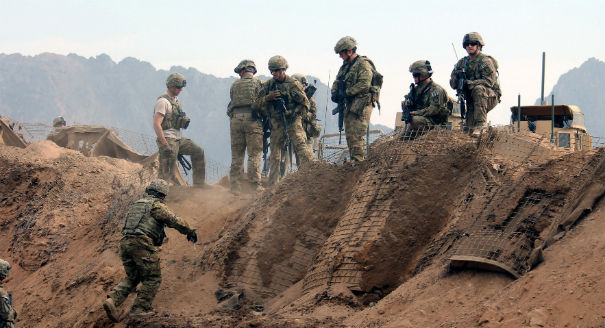
Washington’s ability to conclude a security pact with Kabul may hinge on the results of the Afghan elections.
Source: WBEZ’s Worldview
Speaking on WBEZ’s Worldview, Carnegie’s Sarah Chayes discussed why the United States is considering waiting on a security agreement with Afghanistan until presidential elections take place in April. Washington has been unable to reach an agreement with current Afghan president Hamid Karzai, and the United States says it would like to leave more than 10,000 troops in the country after it formally withdraws forces at the end of this year. Sarah Chayes discussed how the election results could impact such an agreement.
This interview was originally broadcast on WBEZ’s Worldview.
Former Senior Fellow, Democracy, Conflict, and Governance Program
Sarah Chayes is internationally recognized for her innovative thinking on corruption and its implications. Her work explores how severe corruption can help prompt such crises as terrorism, revolutions and their violent aftermaths, and environmental degradation.
Recent Work
Sarah Chayes
Carnegie does not take institutional positions on public policy issues; the views represented herein are those of the author(s) and do not necessarily reflect the views of Carnegie, its staff, or its trustees.

The armed forces champion a form of capitalism that is generating revenue, but its reliance on rent faces diminishing returns, leaving the country with massive sunk costs and deferred returns, deepening dependency on external borrowing.

Yezid Sayigh

Just look at Iraq in 1991.

Marwan Muasher

A coalition of states is seeking to avert a U.S. attack, and Israel is in the forefront of their mind.

Michael Young

Baku may allow radical nationalists to publicly discuss “reunification” with Azeri Iranians, but the president and key officials prefer not to comment publicly on the protests in Iran.

Bashir Kitachaev
The country’s leadership is increasingly uneasy about multiple challenges from the Levant to the South Caucasus.

Armenak Tokmajyan