

Commentary
Bayram Balci
{
  "authors": [
    "Bayram Balci"
  ],
  "type": "commentary",
  "centerAffiliationAll": "",
  "centers": [
    "Carnegie Endowment for International Peace",
    "Carnegie Russia Eurasia Center"
  ],
  "collections": [],
  "englishNewsletterAll": "",
  "nonEnglishNewsletterAll": "",
  "primaryCenter": "Carnegie Endowment for International Peace",
  "programAffiliation": "",
  "programs": [],
  "projects": [
    "Eurasia in Transition"
  ],
  "regions": [
    "Middle East",
    "Türkiye",
    "Caucasus",
    "Azerbaijan",
    "Armenia"
  ],
  "topics": [
    "Political Reform",
    "Security",
    "Foreign Policy"
  ]
}
Source: Getty
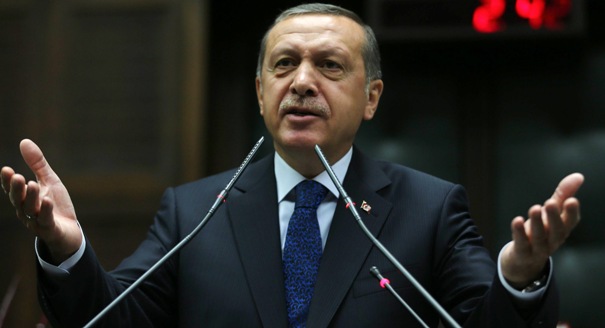
Erdogan’s statement of condolences to the descendants of Armenians murdered by the Ottomans can let Turks feel freer and more comfortable to take a more critical look at their history, as well as reduce the tension between Turkey and Armenia.
On the eve of the anniversary of the mass killings of Armenians in 1915 by the Ottoman army, the Turkish prime minister made a historical gesture this April 23. He issued a statement in nine languages, including Armenian, in which he expressed public condolences to the descendants of Armenians murdered by the Ottomans. Although the Turkish, Armenian and international media took note of this statement, it’s not clear if everyone realizes how this initiative—a noble and courageous gesture—is capable of changing mentalities in Turkey and of fostering a new and less strained atmosphere in the region.
Erdoğan’s opponents have already said that this gesture is nothing but a way to improve his image, which had deteriorated considerably in the last few months because of his authoritarian policies and the corruption scandals involving his close ministers and even his family. According to them, Erdoğan is actually campaigning for the presidential elections that will take place next August, and his condolences to Armenia and the Armenian diaspora are part of his broad strategy to win these elections. Indeed, his gesture might be motivated in part for that purpose. But a quick look at Erdoğan’s policy since he came to power in 2002 shows that it is not the first time he has broken taboos. Turks have gotten used to such historical initiatives by Erdoğan. For example, he denounced the Turkish state responsibility in the mass killings against the Alevi Kurds in Dersim in 1931. More recently, he publicly broke another taboo when he used the term Kurdistan in his attempt to resolve the Kurdish problem in his country. Although there are personal and political calculations in Erdoğan’s initiatives, it is unfair to reduce them to pure political strategy for the upcoming presidential elections.
It is not likely that his statement will satisfy all Turks, as there is still an important part of society, even in his AKP party, which is not ready to compromise on this issue. In that sense, his statement could bring risks as well as political advantages. However, what is certain is that after his statement Turks will feel freer and more comfortable to take a more critical look at their history, even at its dark and tragic episodes.
In a regional perspective, although the prime minister did not use the term genocide, the recognition of injustices could also have a positive impact. First of all, the statement should reduce the tension between Turkey and Armenia, who still do not have diplomatic relations and are separated by closed borders. It could give a new impetus to the debate about the opening of the borders. In 2008 and 2009, serious attempts were made to sign protocols for the normalization of the relations between the two countries and for the opening of the borders. These attempts bore no fruit. But Erdoğan’s initiative could restore confidence between the two sides and facilitate ratification of the protocols. The improvement of relations between Turkey and Armenia, and the opening of the border could reassure Armenia and make it less unyielding in negotiations with Azerbaijan, a key factor in the Turkish-Armenian rapprochement.
Indeed, the Azerbaijani factor is inescapable in Turkish-Armenian relations. Erdoğan’s statement did not please Azerbaijani authorities, although their reaction was not strongly hostile to this statement. Unsurprisingly, they indicated that the status of Karabakh, the occupation of Azerbaijani districts surrounding it, and the situation of refugees are still problems that cannot be ignored. This is a clear indication that a rapprochement between Turkey and Armenia cannot be obtained without the agreement of Baku. A close ally of Turkey and an invaluable source of energy for the Turkish economy, Azerbaijan has many ways to pressure Turkey. When the rapprochement between Turkey and Armenia failed in 2009, the Azerbaijani factor was among the main reasons, along with the attitude of the Armenian diaspora which sought reconciliation on terms of recognition of the genocide by Turkey. For sure, these factors—the Azerbaijani and the Armenian diaspora positions—will continue to play a determinant role in any rapprochement attempt between Turkey and Armenia. There is a chance that Erdoğan’s initiative could reduce the strength of these factors. These condolences could be seen in Yerevan as a gesture of good will, and reassure Armenia that it is not surrounded by hostile enemies—Turkey and Azerbaijan. This conciliatory gesture is necessary to soften Armenia’s unyielding attitude in its negotiations with Azerbaijan over the problem of Karabakh and the other issues related to it.
Former Nonresident Scholar, Russia and Eurasia Program
Balci was a nonresident scholar in Carnegie’s Russia and Eurasia Program, where his research focuses on Turkey and Turkish foreign policy in Central Asia and the Caucasus.
Recent Work
Bayram Balci
Bayram Balci, Daniyar Kosnazarov
Carnegie does not take institutional positions on public policy issues; the views represented herein are those of the author(s) and do not necessarily reflect the views of Carnegie, its staff, or its trustees.

In an interview, Ian Lustick and Eli Clifton discuss their new book on why a prominent ally has so much influence in America.

Michael Young

As the U.S. stumbles in its war with Iran, we are likely to see an acceleration of its disengagement from the region.
Michael Young

The accord represents a pivotal moment in the region to avert a security vacuum in the Gulf.


Azeema Cheema, Mohanad Hage Ali

In an interview, Jason Burke discusses his sweeping account of the “revolutionists” who so shaped the 1970s and early 1980s.
Michael Young

By failing to address Palestinian representation, the current process is bound to lead to just another temporary arrangement.

Nathan J. Brown