

Q&A
- +1
Amr Hamzawy, Andrew Leber, Eric Lob, …
{
  "authors": [
    "Marwan Muasher"
  ],
  "type": "legacyinthemedia",
  "centerAffiliationAll": "dc",
  "centers": [
    "Carnegie Endowment for International Peace",
    "Malcolm H. Kerr Carnegie Middle East Center"
  ],
  "collections": [
    "Arab Awakening"
  ],
  "englishNewsletterAll": "menaTransitions",
  "nonEnglishNewsletterAll": "",
  "primaryCenter": "Malcolm H. Kerr Carnegie Middle East Center",
  "programAffiliation": "MEP",
  "programs": [
    "Middle East"
  ],
  "projects": [],
  "regions": [
    "Middle East",
    "North Africa",
    "Iraq",
    "Gulf",
    "Maghreb"
  ],
  "topics": [
    "Political Reform",
    "Security"
  ]
}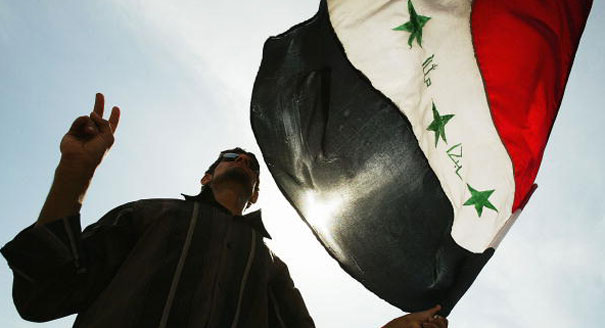
Source: Getty
The real story in Iraq, and the Middle East at large, is the policies of exclusion that have created an environment in which radical organizations like ISIS have been able to gain ground.
Source: World Post
Recent advances by the Sunni jihadist group Islamic State of Iraq and Syria (ISIS) have thrown Iraq into violent chaos and instability.
And while ISIS is a threat that must be addressed, it is not the real story. The real story in Iraq, and the Middle East at large, is the policies of exclusion that have created an environment in which radical organizations like ISIS have been able to gain ground.
The crisis in Iraq highlights how sectarian conflicts are tearing Arab countries apart, with Syria serving as the most extreme example. Throughout the Arab Spring, leaders have taken advantage of religious and ethnic divides in order to gain or stay in power, and they have systematically subordinated the rights of the non-ruling sectors of society.
Governments that have risen to power during the Arab Spring claiming visions of building pluralistic societies have, once in power, embraced exclusionary policies that only benefit certain sectors of society. Inclusionary policies in Iraq and throughout the region must be embraced in order to achieve political pluralism. The Arab world must accept and pride itself on the diversity of its people and allow all voices to be heard. The Arab uprisings demand that all regimes reconsider their policies to allow for differences of views, ethnicities, and beliefs, so they treat every citizen as equal.The focus in Iraq and throughout the region should be on building pluralistic societies rather than reminiscing about the artificially-induced "stability" of the past. This process will be painful and slow moving, but the region must take responsibility for its own future. In order for democracy to take hold, Arab countries must build stronger national identities that trump any other sub-allegiances. It must embrace political, cultural, ethnic and religious diversity, as well as gender equity.
The U.S. government and the international community should not look at Iraq or any other country in the region purely through a security lens. They must see the situation for what it is -- a period of transition that cannot be solved through military action alone.
The situation in Iraq may get worse before it gets better, but in the end, exclusionist policies will never produce a functioning society. A commitment to pluralism is a prerequisite for sustainable political and economic renewal across the Middle East. This might seem like a self-evident, basic statement, but so far neither the language nor the practice of pluralism has been prominent in the post-uprising era--save for a few cases, like Tunisia. It is no wonder Tunisia is fairing far better. Iraq must embrace politics of inclusion and focus on developing a political process where all forces feel they have a stake in the system. If it fails to do so, there is a real possibility the country may split, which is in no party's interest.
What is worse than the Skyes-Picot agreement, which produced artificial boundaries in the Eastern part of the Arab world, is its dissolution. Ethnically or religiously pure states are not the answer to achieving productive societies. Rather, it will lead to non-viable entities at war with each other. A separated Iraq will only result in more war and strife for years to come.
The Maliki government, and the international community, must make the most immediate priority forming a more inclusive government for Iraq. A political solution will not be easy, but it is the only way for Iraq to move forward as one, sustainable democratic country.

Vice President for Studies
Marwan Muasher is vice president for studies at Carnegie, where he oversees research in Washington and Beirut on the Middle East. Muasher served as foreign minister (2002–2004) and deputy prime minister (2004–2005) of Jordan, and his career has spanned the areas of diplomacy, development, civil society, and communications.
Recent Work



Amr Hamzawy, Andrew Leber, Eric Lob, …
Marwan Muasher
Carnegie does not take institutional positions on public policy issues; the views represented herein are those of the author(s) and do not necessarily reflect the views of Carnegie, its staff, or its trustees.
As the U.S.-led Coalition withdraws, the Kurds’ reliance on Baghdad, and on themselves, will only increase.
Wladimir van Wilgenburg

As the U.S. stumbles in its war with Iran, we are likely to see an acceleration of its disengagement from the region.

Michael Young
The Zaidi government’s objective to collect weapons is constrained by regional conflict, but it can take certain measures at home.
Ali Al-Mawlawi

Middle Eastern states should welcome an accelerated U.S. disengagement from their region.
Michael Young

The accord represents a pivotal moment in the region to avert a security vacuum in the Gulf.


Azeema Cheema, Mohanad Hage Ali