

Article
- +1
Toby Dalton, Mark Hibbs, Nicole Grajewski, …
{
  "authors": [
    "Mark Hibbs"
  ],
  "type": "legacyinthemedia",
  "centerAffiliationAll": "dc",
  "centers": [
    "Carnegie Endowment for International Peace"
  ],
  "collections": [
    "Iranian Proliferation"
  ],
  "englishNewsletterAll": "ctw",
  "nonEnglishNewsletterAll": "",
  "primaryCenter": "Carnegie Endowment for International Peace",
  "programAffiliation": "NPP",
  "programs": [
    "Nuclear Policy"
  ],
  "projects": [],
  "regions": [
    "Middle East",
    "Iran"
  ],
  "topics": [
    "Nuclear Policy",
    "Arms Control",
    "Nuclear Energy"
  ]
}
Source: Getty
The IAEA will meet on whether Iran has come clean about trying to build nuclear weapons—and whether the nuclear deal will move forward.
Source: National Interest
The International Atomic Energy Agency (IAEA) and its member countries will take critically important decisions in the coming days about allegations that Iran has worked on making nuclear weapons. Their actions will determine whether and how the Joint Comprehensive Plan of Action (JCPOA)—the agreement which Iran and six other countries including the United States concluded this summer to end the Iran nuclear crisis—will be implemented.
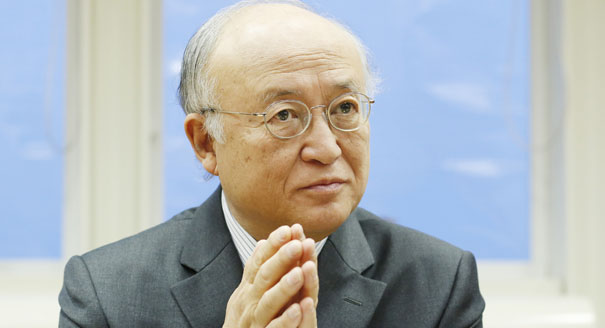
First, IAEA director general Yukiya Amano will report conclusions to the IAEA board of governors about evidence suggesting that, beginning in the 1980s, Iran’s military worked on nuclear weapons development. Then, on December 15, the board which represents IAEA member countries will respond to Amano’s findings.On paper, how the IAEA and its member states proceed should be cut-and-dried. The IAEA is a technical agency and its job is to present conclusions representing all pertinent facts. Since 2003, the IAEA has informed the board about what it has learned about Iran’s nuclear program, including activities that Iran tried to conceal from the IAEA. In response to these findings, the board has taken actions, expressed in resolutions.
In practice, however, the division of labor concerning how Amano and the IAEA’s member governments handle hitherto unresolved nuclear weapons-making allegations will not be so clearly defined.
After a decade of seemingly fruitless diplomacy to de-escalate the Iran nuclear crisis, the JCPOA was successfully concluded this year because the six states negotiating with Iran powerfully incentivized Iran to agree to the deal. Amano knows that if he tells the board that the IAEA is satisfied that Iran did things that look like elements of a nuclear weapons development effort, Iran may then refuse to implement the agreement in part or in full. Amano also knows that, in addition to the influential countries that negotiated the JCPOA, nearly all other IAEA member states strongly favor the accord with Iran. They do not want Amano to provide a negative assessment which could doom the agreement even before it can be implemented. On the other side of the ledger, the IAEA’s credibility will be fatally damaged if Amano provides what one IAEA board member governor last week called a “politically correct reflection of what many member states want to hear.”
Amano’s report will therefore likely be inconclusive. There will be grey areas that may reflect technical difficulties for verification, the absence of full Iranian cooperation and the persistence of unresolved differences between the IAEA and Iran about what the facts are in specific instances—for example, concerning allegations of nuclear weapons-related activities by Iran at the Parchin military site.
The JCPOA requires Iran to cooperate with the IAEA, but it doesn’t require Iran to provide the IAEA with a comprehensive picture explaining all of its prior activities. So for Amano it’s a judgment call, and he will likely find that Iran has met the not-too-rigorous standard the IAEA and the powers negotiated with Iran for resolving nuclear weapons allegations.
What then does this mean for the IAEA board’s response to Amano’s report? Its resolution should clearly say that, as is the case for any other state subject to safeguards, the IAEA’s file on Iran is never completely “closed,” and that the IAEA has the authority to pursue any unresolved or additional information it deems credible pointing to undeclared nuclear activities. This authority follows from Iran’s bilateral safeguards agreement, but also and especially from Iran’s Additional Protocol with the IAEA, which under the JCPOA Iran has pledged to implement, and which gives the IAEA greater access to Iran’s nuclear program.
The board’s resolution should also formally authorize the IAEA to verify prohibitions in the JCPOA on specific weaponization-related activities by Iran. This authority goes beyond what is called for under Iran’s safeguards agreement and its Additional Protocol.
The JCPOA sets forth that the ultimate aim of the IAEA’s verification in Iran over the next eight years is to reach the so-called “broader conclusion” that all nuclear materials in Iran—not just those which Iran has declared to inspectors—are used peacefully. Board members should remind Iran that lack of cooperation in facilitating IAEA access will reflect negatively on the IAEA’s judgment whether a “broader conclusion” for Iran is justified. Tehran also needs to know that a future U.S. administration could require Iran having this imprimatur from the IAEA as the basis to ask Congress to terminate, not just suspend, statutory sanctions.
This article was originally published in the National Interest.

Nonresident Senior Fellow, Nuclear Policy Program
Hibbs is a Germany-based nonresident senior fellow in Carnegie’s Nuclear Policy Program. His areas of expertise are nuclear verification and safeguards, multilateral nuclear trade policy, international nuclear cooperation, and nonproliferation arrangements.
Recent Work


Toby Dalton, Mark Hibbs, Nicole Grajewski, …
Mark Hibbs
Carnegie does not take institutional positions on public policy issues; the views represented herein are those of the author(s) and do not necessarily reflect the views of Carnegie, its staff, or its trustees.

As the U.S. stumbles in its war with Iran, we are likely to see an acceleration of its disengagement from the region.

Michael Young

Middle Eastern states should welcome an accelerated U.S. disengagement from their region.
Michael Young

In an interview, former ambassador Charles Freeman assesses the Trump administration’s war against Iran.
Michael Young

The accord represents a pivotal moment in the region to avert a security vacuum in the Gulf.


Azeema Cheema, Mohanad Hage Ali

In an interview, Jason Burke discusses his sweeping account of the “revolutionists” who so shaped the 1970s and early 1980s.
Michael Young