

Commentary
Aron Lund
{
  "authors": [
    "Aron Lund"
  ],
  "type": "other",
  "centerAffiliationAll": "dc",
  "centers": [
    "Carnegie Endowment for International Peace"
  ],
  "collections": [
    "Arab Awakening"
  ],
  "englishNewsletterAll": "menaTransitions",
  "nonEnglishNewsletterAll": "",
  "primaryCenter": "Carnegie Endowment for International Peace",
  "programAffiliation": "MEP",
  "programs": [
    "Middle East"
  ],
  "projects": [],
  "regions": [
    "Middle East",
    "Syria",
    "Levant"
  ],
  "topics": [
    "Political Reform",
    "Security",
    "Military"
  ]
}
Source: Getty
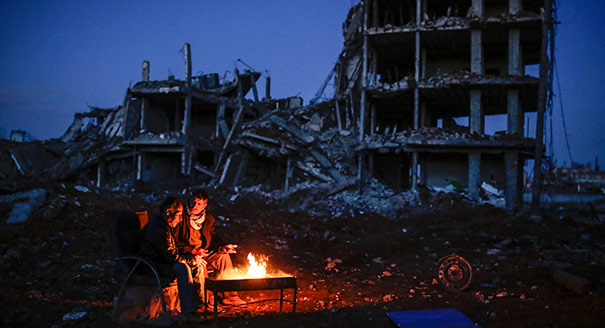
Aron Lund recommends six articles on the war in Syria and the international response to the crisis.
Source: Syria Deeply
Syria expert Aron Lund picks six reads you probably haven’t come across before – on subjects including authoritarian counterinsurgency tactics, the key forces behind conflict before 2011, the divisions likely to make the Geneva peace talks fail and life as a gay soldier in Assad’s army
Recently at Syria Deeply, we’ve been reaching out to experts in our network for resources they would recommend to others in understanding Syria. In our first installment of “Recommended Resources,” we are thrilled to highlight six suggestions from Aron Lund, a Swedish writer specializing in Middle Eastern affairs and the author of several books and reports on Syria and Arab politics; he’s on Twitter @aronlund...
Former Nonresident Fellow, Middle East Program
Aron Lund was a nonresident fellow in the Middle East Program and the author of several reports and books on the Syrian opposition movement.
Recent Work
Aron Lund
Aron Lund
Carnegie does not take institutional positions on public policy issues; the views represented herein are those of the author(s) and do not necessarily reflect the views of Carnegie, its staff, or its trustees.

The accord represents a pivotal moment in the region to avert a security vacuum in the Gulf.


Azeema Cheema, Mohanad Hage Ali

In an interview, Jason Burke discusses his sweeping account of the “revolutionists” who so shaped the 1970s and early 1980s.

Michael Young
In an interview, Sohaib Jawhar analyzes the profound changes in the ties between the neighboring countries.
Michael Young

The armed forces champion a form of capitalism that is generating revenue, but its reliance on rent faces diminishing returns, leaving the country with massive sunk costs and deferred returns, deepening dependency on external borrowing.

Yezid Sayigh
There is a disturbing structural parallel between the old global energy economy and the new green transition.

Angie Omar