

Commentary
As the U.S. stumbles in its war with Iran, we are likely to see an acceleration of its disengagement from the region.
Michael Young
{
  "authors": [
    "Aron Lund",
    "Thanassis Cambanis",
    "Michael Hanna",
    "Sam Heller"
  ],
  "type": "legacyinthemedia",
  "centerAffiliationAll": "dc",
  "centers": [
    "Carnegie Endowment for International Peace",
    "Malcolm H. Kerr Carnegie Middle East Center"
  ],
  "collections": [
    "Arab Awakening"
  ],
  "englishNewsletterAll": "menaTransitions",
  "nonEnglishNewsletterAll": "",
  "primaryCenter": "Carnegie Endowment for International Peace",
  "programAffiliation": "MEP",
  "programs": [
    "Middle East"
  ],
  "projects": [],
  "regions": [
    "Middle East",
    "North Africa",
    "Syria",
    "Levant"
  ],
  "topics": [
    "Political Reform",
    "Democracy",
    "Security",
    "Military",
    "Foreign Policy"
  ]
}
Source: Getty
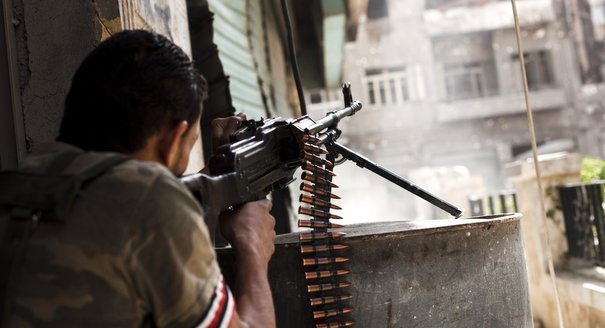
Five years into the civil war in Syria, the effects have been felt globally and few paths toward peace appear viable.
Source: Century Foundation
...Thanassis: Is Syria irreparably fragmented into a mosaic of little fiefs, its long run as a unitary state consigned to history? Is it governable? Aron, you wrote recently about the destruction in Idlib province of a network of informers and enforcers that two generations of Assads crafted over decades. I read your argument to say that the basis for local power and control was always more complex than mere brutality or sectarian loyalty—and that the war has destroyed the architecture of local control not just for Assad but for anyone who wants to govern. Do you think Humpty Dumpty can be put back together again?
Aron: I don’t have a lot of hope for Humpty Dumpty. It doesn’t look like any party to the war could seize and rule all of Syria again, unless there’s a really dramatic escalation of foreign involvement from one side but not the other. That’s unlikely, of course.
Of the alternatives on offer, Assad is by far the best placed to claw back control, but that’s partly because his rivals have set the bar so low. He has used up most of the economic and human capital he had, his army is increasingly in thrall to sectarian forces, and most Syrians outside government control seem to hate him. It would be difficult for him to control even the half of Syria he holds now if support from Russia and Iran were to taper off while rebels were still active. With continued support, it’s quite plausible that Assad will take back key territory around Damascus and Aleppo and establish himself as the dominant actor in a fragmented Syria. That’s a long way from physically controlling the whole country as he did before 2011, but it is a role that none of his rivals could realistically aspire to.
The war hasn’t downgraded the opposition’s ability to govern, because it never had any such ability. A few anti-government groups have shown real skill as state-builders, but they are all prevented from developing fully by their own narrow base or by foreign enemies.
It’s a short list. You have the Islamic State’s so-called caliphate in the east and northeast, there’s the socialist Rojava autonomy set up by Kurdish groups aligned with the Kurdistan Workers’ Party (PKK) along the Turkish border, and there’s a web of sub-state governance bodies in the Idlib region run by al-Qaeda’s Nusra Front. All three are being undermined by outside governments bombing them or inciting Syrian factions against them. The two big Islamist factions known as Ahrar al-Sham and the Islam Army have also shown some ability to organize people and territory, but most of the wider insurgency is made up of local groups that refuse to unite with their next-door neighbors. They hold out no promise of centralized statehood at all...
Former Nonresident Fellow, Middle East Program
Aron Lund was a nonresident fellow in the Middle East Program and the author of several reports and books on the Syrian opposition movement.
Thanassis Cambanis
is a senior fellow at The Century Foundation.
Michael Hanna
Sam Heller
is a fellow at The Century Foundation.
Carnegie does not take institutional positions on public policy issues; the views represented herein are those of the author(s) and do not necessarily reflect the views of Carnegie, its staff, or its trustees.

As the U.S. stumbles in its war with Iran, we are likely to see an acceleration of its disengagement from the region.

Michael Young
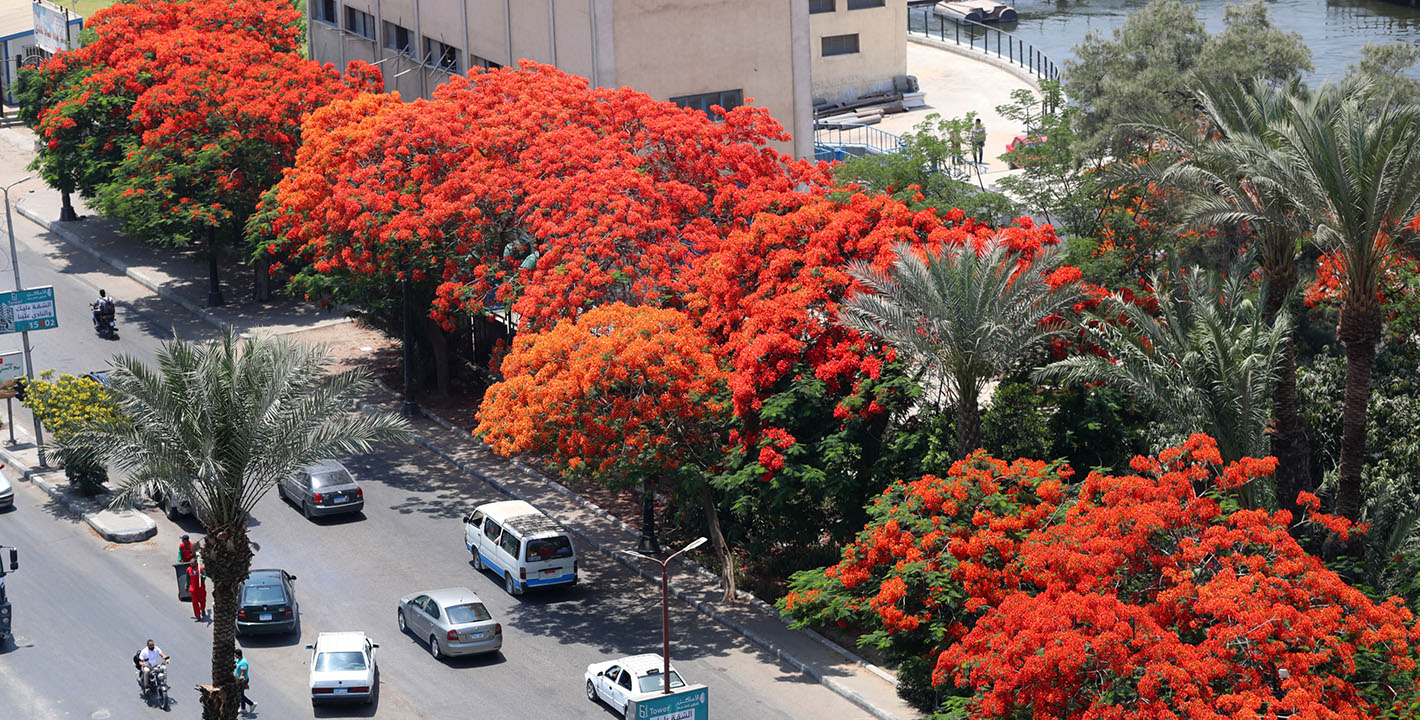
In Egypt’s dense cities, the disappearance of foliage has health implications and punishes daily commuters.

Angie Omar

The Zaidi government’s objective to collect weapons is constrained by regional conflict, but it can take certain measures at home.
Ali Al-Mawlawi

Huawei pushed hard to enter the Egyptian data centers market, until the Americans made a better offer.
Angie Omar

The accord represents a pivotal moment in the region to avert a security vacuum in the Gulf.


Azeema Cheema, Mohanad Hage Ali