

Article
Dalia Ghanem
{
  "authors": [
    "Dalia Ghanem"
  ],
  "type": "legacyinthemedia",
  "centerAffiliationAll": "dc",
  "centers": [
    "Carnegie Endowment for International Peace",
    "Malcolm H. Kerr Carnegie Middle East Center"
  ],
  "collections": [],
  "englishNewsletterAll": "menaTransitions",
  "nonEnglishNewsletterAll": "",
  "primaryCenter": "Malcolm H. Kerr Carnegie Middle East Center",
  "programAffiliation": "MEP",
  "programs": [
    "Middle East"
  ],
  "projects": [],
  "regions": [
    "Maghreb",
    "Algeria",
    "North Africa"
  ],
  "topics": [
    "Political Reform"
  ]
}
Source: Getty
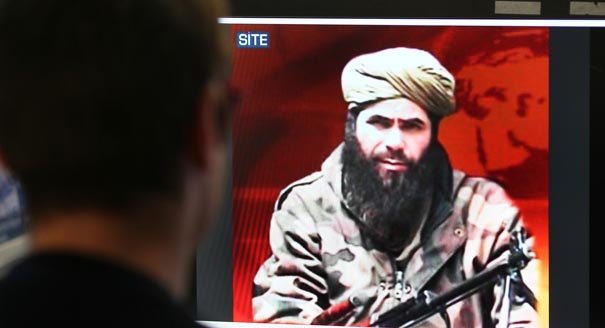
Thanks to the Algerian military's experience in fighting armed Islamist groups during the Algerian civil war, it has stopped ISIS from establishing a foothold in the country.
Source: The Cipher Brief
On September 21, 2014, a group of Algerian jihadists, named Jund El Khilafa (The soldiers of the Caliphate) kidnapped Hervé Gourdel, a 55-year-old French nature guide, in Djurdjura National Park in northern Algeria. Jund El Khilafa’s leader, Khaled Abu-Suleiman, had pledged allegiance to ISIS earlier that month, and three days after Gourdel’s abduction, the group published a video of his decapitation, stating that their act was in retaliation for France’s involvement in the war against ISIS in Iraq. Two months later, in November 2014, ISIS leader Abu Bakr El Baghdadi accepted Jund El Khilafa into his fold and officially announced, through an audio message, the creation of wilayat el Djazair, ISIS’ province in Algeria.
Faithful to its famous slogan, baqiya wa tatamaded (remaining and expanding), the Islamic State (ISIS) prioritizes expansion to new territories. One of the reasons that ISIS has targeted Algeria is due to the fact that the country has served as an important U.S. and European ally in the fight against terror in North Africa since 9/11. In addition, Algeria has a history of jihadism; hence, the group thought it would be an easy-access and easy-recruitment base.Yet, ISIS seems unable to gain a foothold in Algeria. The only attack that the group perpetrated is the killing of Hervé Gourdel. Since then, Jund El Khilafa has published propaganda videos in which they have exaggerated their capacities. ISIS’ Algerian branch does not have the manpower or resources to represent a serious threat to the country. In fact, ISIS’ stagnation in Algeria can be attributed to the country’s high level of security, its competition with Al Qaeda in the Islamic Maghreb (AQIM), and the trauma of the black decade in the 1990s that remains fresh in the memory of the Algerian people.
A key reason for ISIS failing to make progress in Algeria is due to Algeria’s tough, modern, and experienced security forces that have acquired substantial counterterrorism capabilities during their decade-long fight against jihadist groups (1991-2001). This period came to be known as Algeria’s civil war or the “black decade.” During the war, the Algerian military (PNA) faced threats from various jihadi organizations, including the Islamic Armed Movement (MIA), the Movement for an Islamic State (MEI), the Islamic League for Da’awa and Jihad (LIDD), the Islamic Salvation Army (AIS), and the Armed Islamic Group (GIA). As the most formidable group, the GIA “liberated” entire villages, and subsequently applied Sharia law and acted as a “parallel-state,” where it served as the provider of justice, administration, social services, tax collection, and protection. Algerian security forces fought back and eventually retook control of the “liberated areas.”
This article was originally published on The Cipher Brief website.
Former Senior Resident Scholar, Malcolm H. Kerr Carnegie Middle East Center
Dalia Ghanem was a senior resident scholar at the Malcolm H. Kerr Carnegie Middle East Center in Beirut, where her research focuses on Algeria’s political, economic, social, and security developments. Her research also examines political violence, radicalization, civil-military relationships, transborder dynamics, and gender.
Recent Work
Dalia Ghanem


Frances Z. Brown, Judy Dempsey, Dalia Ghanem, …
Carnegie does not take institutional positions on public policy issues; the views represented herein are those of the author(s) and do not necessarily reflect the views of Carnegie, its staff, or its trustees.

The armed forces champion a form of capitalism that is generating revenue, but its reliance on rent faces diminishing returns, leaving the country with massive sunk costs and deferred returns, deepening dependency on external borrowing.

Yezid Sayigh

Morocco and Algeria, each in its own way, are having to navigate the global economic fallout of the U.S.-Israeli military campaign against Iran.

Yasmine Zarhloule
This will be the region’s most representative tournament, amid broad changes in its footballing landscape.

Issam Kayssi
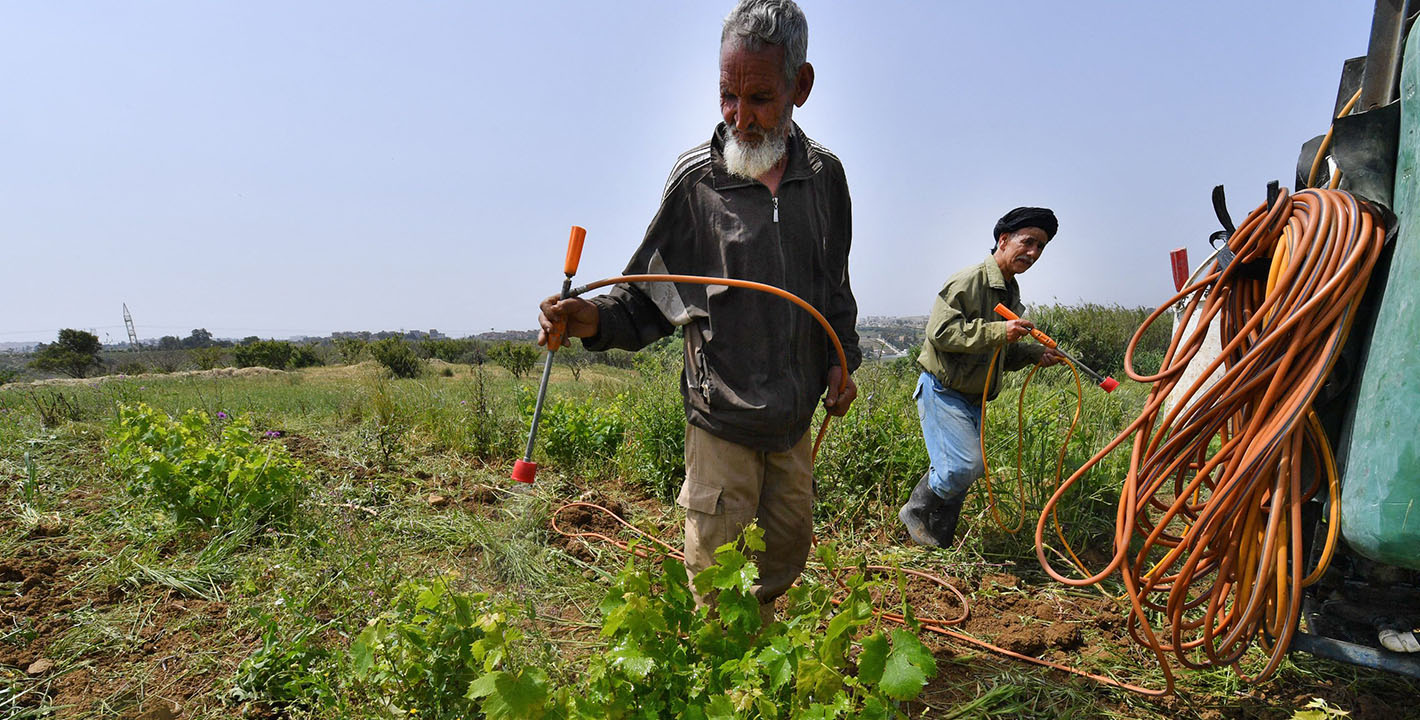
Understanding how farmers in the Oued Sahel-Soummam Valley grapple with climate change is essential for addressing the paradoxes through which adaptation, operating at both individual and institutional levels, deepens the region’s vulnerability and erodes the social fabric and agrarian identity that once defined life.
Ilyssa Yahmi
Unless the European Union-led energy transition provides economic development to Algeria, Morocco, and Tunisia, the process may be perceived as a new form of extraction.
Yasmine Zarhloule