

Commentary
In an interview, Ian Lustick and Eli Clifton discuss their new book on why a prominent ally has so much influence in America.
Michael Young
{
  "authors": [
    "Jessica Tuchman Mathews",
    "Jim Smith"
  ],
  "type": "legacyinthemedia",
  "centerAffiliationAll": "",
  "centers": [
    "Carnegie Endowment for International Peace"
  ],
  "collections": [
    "Iranian Proliferation",
    "Arab Awakening"
  ],
  "englishNewsletterAll": "",
  "nonEnglishNewsletterAll": "",
  "primaryCenter": "Carnegie Endowment for International Peace",
  "programAffiliation": "",
  "programs": [],
  "projects": [],
  "regions": [
    "North America",
    "United States",
    "Middle East",
    "North Africa"
  ],
  "topics": [
    "Democracy",
    "Security",
    "Foreign Policy",
    "Nuclear Policy"
  ]
}
Source: Getty
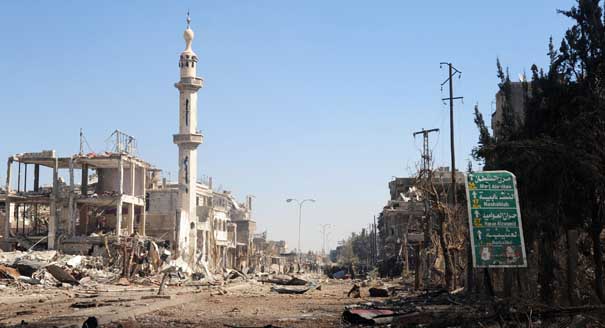
The Trump administration has inherited all of the old challenges from the Middle East, from the conflict in Syria to the self-proclaimed Islamic State to the Iran nuclear deal.
Source: New Hampshire Public Radio
The new team in Washington inherits all the old challenges from the Middle East: threats from ISIS, the Syrian Civil War, and questions about the last administration's Iran nuclear deal. The World Affairs Council of New hampshire hosted several guests who have, for years, worked as scholars, diplomats, and businesspeople in the Middle East. They discussed the challenges facing our new administration.
This discussion was orginally broadcast by New Hampshire Public Radio.

Distinguished Fellow
Mathews is a distinguished fellow at the Carnegie Endowment for International Peace. She served as Carnegie’s president for 18 years.
Jim Smith
Carnegie does not take institutional positions on public policy issues; the views represented herein are those of the author(s) and do not necessarily reflect the views of Carnegie, its staff, or its trustees.

In an interview, Ian Lustick and Eli Clifton discuss their new book on why a prominent ally has so much influence in America.

Michael Young

As the U.S. stumbles in its war with Iran, we are likely to see an acceleration of its disengagement from the region.
Michael Young

In Egypt’s dense cities, the disappearance of foliage has health implications and punishes daily commuters.

Angie Omar

Huawei pushed hard to enter the Egyptian data centers market, until the Americans made a better offer.
Angie Omar

Middle Eastern states should welcome an accelerated U.S. disengagement from their region.
Michael Young