

Commentary
- +11
Cornelius Adebahr, Dan Baer, Rosa Balfour, …
{
  "authors": [
    "Erik Brattberg"
  ],
  "type": "other",
  "centerAffiliationAll": "dc",
  "centers": [
    "Carnegie Endowment for International Peace"
  ],
  "collections": [],
  "englishNewsletterAll": "ctw",
  "nonEnglishNewsletterAll": "",
  "primaryCenter": "Carnegie Endowment for International Peace",
  "programAffiliation": "EP",
  "programs": [
    "Europe"
  ],
  "projects": [],
  "regions": [
    "North America",
    "United States",
    "Western Europe",
    "Iran"
  ],
  "topics": [
    "Security",
    "Foreign Policy"
  ]
}
Source: Getty
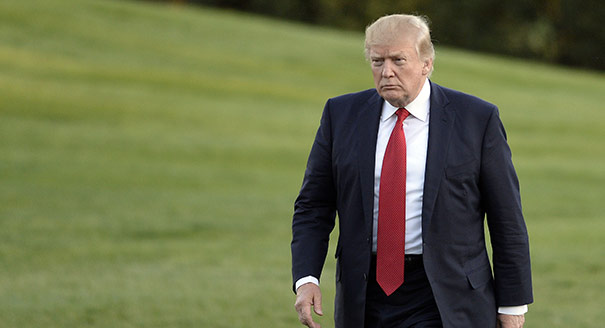
Trump’s mixed signals on issues as varied as the Paris Agreement, trade, Russia, and NATO have left U.S. allies in Europe confused about U.S. policies and priorities.
Carnegie’s Erik Brattberg spoke at the Newseum with Oxford Analytica to offer an expert assessment of European perceptions of U.S. foreign policy 100 days into Trump’s presidency. He pointed out that while many European capitals were initially very concerned about Donald Trump’s rhetoric on the campaign trail, they are feeling somewhat more relaxed today about continued U.S. commitment to Europe and the transatlantic partnership. However, he said, Trump’s mixed signals on issues as varied as the Paris Agreement, trade, Russia, and NATO have left U.S. allies in Europe confused about U.S. policies and priorities. President Trump’s upcoming visits to Europe, he said, will be crucial tests for restoring European trust and confidence in the new U.S. administration’s foreign policy going forward.

Former Director, Europe Program, Fellow
Erik Brattberg was director of the Europe Program and a fellow at the Carnegie Endowment for International Peace in Washington. He is an expert on European politics and security and transatlantic relations.
Recent Work


Cornelius Adebahr, Dan Baer, Rosa Balfour, …

Erik Brattberg, Philippe Le Corre, Paul Stronski, …
Carnegie does not take institutional positions on public policy issues; the views represented herein are those of the author(s) and do not necessarily reflect the views of Carnegie, its staff, or its trustees.

As the U.S. stumbles in its war with Iran, we are likely to see an acceleration of its disengagement from the region.

Michael Young

Huawei pushed hard to enter the Egyptian data centers market, until the Americans made a better offer.

Angie Omar

Middle Eastern states should welcome an accelerated U.S. disengagement from their region.
Michael Young

In an interview, former ambassador Charles Freeman assesses the Trump administration’s war against Iran.
Michael Young

By failing to address Palestinian representation, the current process is bound to lead to just another temporary arrangement.

Nathan J. Brown