

Q&A
- +1
Sheena Chestnut Greitens, Oriana Skylar Mastro, Yukon Huang, …
{
  "authors": [
    "Yukon Huang"
  ],
  "type": "legacyinthemedia",
  "centerAffiliationAll": "dc",
  "centers": [
    "Carnegie Endowment for International Peace",
    "Carnegie China"
  ],
  "collections": [],
  "englishNewsletterAll": "asia",
  "nonEnglishNewsletterAll": "",
  "primaryCenter": "Carnegie China",
  "programAffiliation": "AP",
  "programs": [
    "Asia"
  ],
  "projects": [],
  "regions": [
    "North America",
    "United States",
    "East Asia",
    "China"
  ],
  "topics": [
    "Political Reform",
    "Economy",
    "Trade",
    "Foreign Policy"
  ]
}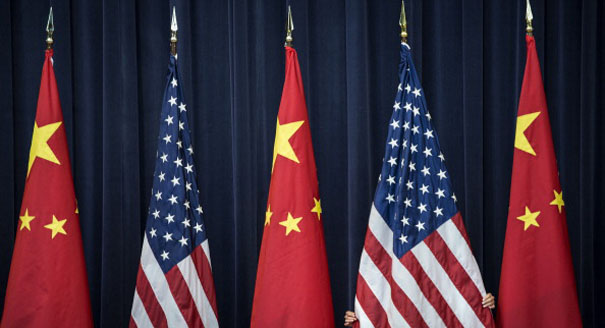
Source: Getty
Reducing America’s persistent trade deficits with China will require addressing thorny structural issues. In the short term, the focus should be on investment-related concerns.
Source: Wall Street Journal
Officials from China and the U.S. met in Washington last week for the so-called Comprehensive Economic Dialogue, but the results were meagre. The two sides are no closer to solving Beijing’s $340 billion trade surplus with the U.S., but focusing on the bilateral trade balance was always going to be a fool’s errand.
Freeing up U.S. beef exports or curbing Chinese steel production won’t bring trade into balance. That requires addressing thorny structural issues such as America’s persistent budget deficits and China’s low household-consumption rate. Neither can be achieved overnight. Addressing investment-related concerns would have been a more productive use of the delegates’ time.The conventional wisdom is that too much U.S. foreign investment is landing in China, taking jobs and competitiveness away from America. Yet the official statistics show that only 1% to 2% of U.S. investment has gone to China over the past decade, while only 2% to 3% of China’s outward investment has entered the U.S.
Data deficiencies partially explain these low numbers. Much of the global flow of foreign investment is channeled through tax havens that blur their origins. But country comparisons can help neutralize this distortion.
Consider the European Union, which is comparable to the U.S. in economic size. Over the past 10 years, annual flows of the EU’s foreign investment to and from China have been two to three times that of the U.S., although they both began the decade around the same level.
The difference is that the EU’s manufacturing strengths complement China’s market needs. Stroll through any major shopping mall in China and you’ll notice that 80% of the products are European.
The EU’s top exports to China are dominated by machinery and transport as well as high-end consumer goods. These products require FDI flows to support market penetration and servicing.
Meanwhile, a visit to China’s major cities shows a plethora of U.S. brand names such as Apple, Marriott and McDonald’s . Many of these are operated as franchises with fees paid by Chinese investors. The actual investment is local. Or, as in the case of Apple, the investment is Taiwanese; Apple invests very little in China.
Manufactured exports and related investments are largely welcomed in China’s domestic market and cater more to the EU’s strengths. Meanwhile the country’s closed services sector hinders investment from the U.S., whose strengths lie in higher-value services, notably in information technology and finance. China’s long list of activities restricted to foreign investors is dominated by services. Getting Beijing to significantly liberalize entry has been a tough battle.
But economic factors only explain part of the EU’s higher levels of Chinese FDI. Other sensitivities also play a significant role.
Politically, the EU represents a much easier market for Chinese companies to penetrate. If one member country restricts access to its market, a Chinese company can enter the EU through a different member country.
Partnerships with individual U.S. states are possible, but the more agglomerated nature of U.S. companies and the overarching nature of federal policies is a challenge for Chinese investors.
Security concerns are also more contentious in the U.S. Although China accounts for only a few percent of America’s foreign investment, it makes up nearly 25% of the reviews by the U.S. committee that deals with national-security concerns.
Such concerns led Huawei, China’s major telecommunications company, to largely give up on the U.S. market. Instead, it has secured a foothold in Europe and now accounts for about a quarter of the mobile-network infrastructure spending in Africa, Europe and the Middle East.
For the U.S., encouraging more bilateral investment flows and improving market access in high-value services while dealing with legitimate security concerns would benefit both sides.
The Trump administration may want to resist any agreement that would encourage U.S. firms to invest more abroad, but a bilateral investment treaty should be high on its agenda, even if it isn’t politically expedient.
This article appeared originally in the Wall Street Journal.

Senior Fellow, Asia Program
Huang is a senior fellow in the Carnegie Asia Program where his research focuses on China’s economy and its regional and global impact.
Recent Work


Sheena Chestnut Greitens, Oriana Skylar Mastro, Yukon Huang, …


Yukon Huang, Isaac B. Kardon, Matt Sheehan
Carnegie does not take institutional positions on public policy issues; the views represented herein are those of the author(s) and do not necessarily reflect the views of Carnegie, its staff, or its trustees.

As the U.S. stumbles in its war with Iran, we are likely to see an acceleration of its disengagement from the region.

Michael Young

Huawei pushed hard to enter the Egyptian data centers market, until the Americans made a better offer.

Angie Omar

Middle Eastern states should welcome an accelerated U.S. disengagement from their region.
Michael Young

In an interview, former ambassador Charles Freeman assesses the Trump administration’s war against Iran.
Michael Young

By failing to address Palestinian representation, the current process is bound to lead to just another temporary arrangement.

Nathan J. Brown