

Commentary
- +11
Cornelius Adebahr, Dan Baer, Rosa Balfour, …
{
  "authors": [
    "Erik Brattberg"
  ],
  "type": "legacyinthemedia",
  "centerAffiliationAll": "dc",
  "centers": [
    "Carnegie Endowment for International Peace"
  ],
  "collections": [],
  "englishNewsletterAll": "ctw",
  "nonEnglishNewsletterAll": "",
  "primaryCenter": "Carnegie Endowment for International Peace",
  "programAffiliation": "EP",
  "programs": [
    "Europe"
  ],
  "projects": [],
  "regions": [
    "North America",
    "United States",
    "South America",
    "East Asia",
    "China",
    "Western Europe",
    "Iran"
  ],
  "topics": [
    "Economy",
    "Trade",
    "Foreign Policy",
    "Global Governance"
  ]
}
Source: Getty
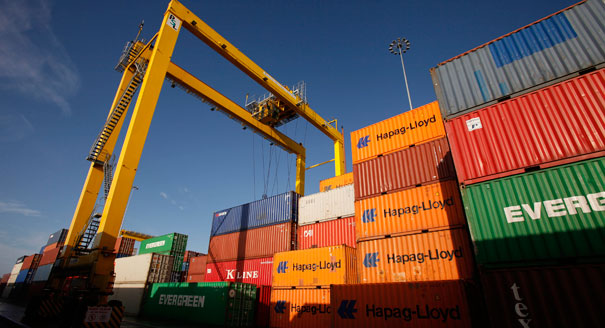
U.S. President Donald Trump’s tariffs on steel and aluminum will likely come with costs to the global economic and diplomatic order that exceed their domestic benefits.
Source: Axios
President Trump’s tariffs on steel and aluminum, authorized last Thursday, will likely come with costs to the global economic and diplomatic order that exceed their domestic benefits.
Why it matters: The tariffs were intended to address Chinese economic practices that harm American workers. But in order to truly mitigate that harm, the U.S. would need to collaborate with Europe through institutions such as the World Trade Organization. Instead, Trump's tariffs will create tensions with our trading partners and undermine global stability.
EU–U.S. relations: The Europeans will not accept a tariff hike without responding. As the world's largest trading bloc and importer of U.S. goods, the EU has plenty of leverage. EU retaliation could result in higher prices for Americans, a slower U.S. economy and, most important for the president, layoffs in key American labor sectors. What’s more: Trump’s decision will further reinforce already negative European views of the U.S. administration.
Managing China: Rather than checking China’s ambitions, Trump’s tariff move will allow Beijing to claim the moral high ground as a supporter of multilateral and open trade. It will also make it harder for U.S. and EU leaders to forge a joint strategy to address concerns about Chinese subsidies and dumping practices.
An already-fraying global economic order: The Trump tariffs circumvent the World Trade Organization, the global referee underpinning a stable, multilateral trading system. Trump, an international institution skeptic, is already stalling the appointment of U.S. judges to the WTO Dispute Settlement Body. His invocation of a rarely used national-security clause to justify the tariffs will further undermine the WTO and set a dangerous precedent for other countries to act unilaterally in self-interest.
The bottom line: Rather than checking China’s ambitions as intended, the tariffs will likely create a vacuum of economic and diplomatic leadership for Beijing to fill.
Former Director, Europe Program, Fellow
Erik Brattberg was director of the Europe Program and a fellow at the Carnegie Endowment for International Peace in Washington. He is an expert on European politics and security and transatlantic relations.
Recent Work


Cornelius Adebahr, Dan Baer, Rosa Balfour, …

Erik Brattberg, Philippe Le Corre, Paul Stronski, …
Carnegie does not take institutional positions on public policy issues; the views represented herein are those of the author(s) and do not necessarily reflect the views of Carnegie, its staff, or its trustees.

In an interview, Rozina Ali discusses her new book on the rise and manifestations of Islamophobia in the United States.

Michael Young

In an interview, Ian Lustick and Eli Clifton discuss their new book on why a prominent ally has so much influence in America.
Michael Young

As the U.S. stumbles in its war with Iran, we are likely to see an acceleration of its disengagement from the region.
Michael Young

Middle Eastern states should welcome an accelerated U.S. disengagement from their region.
Michael Young

In an interview, former ambassador Charles Freeman assesses the Trump administration’s war against Iran.
Michael Young