

Article
Dalia Ghanem
{
  "authors": [
    "Dalia Ghanem"
  ],
  "type": "legacyinthemedia",
  "centerAffiliationAll": "dc",
  "centers": [
    "Carnegie Endowment for International Peace",
    "Malcolm H. Kerr Carnegie Middle East Center"
  ],
  "collections": [
    "Arab Spring 2.0"
  ],
  "englishNewsletterAll": "menaTransitions",
  "nonEnglishNewsletterAll": "",
  "primaryCenter": "Malcolm H. Kerr Carnegie Middle East Center",
  "programAffiliation": "MEP",
  "programs": [
    "Middle East"
  ],
  "projects": [],
  "regions": [
    "Maghreb",
    "North Africa",
    "Algeria"
  ],
  "topics": [
    "Political Reform"
  ]
}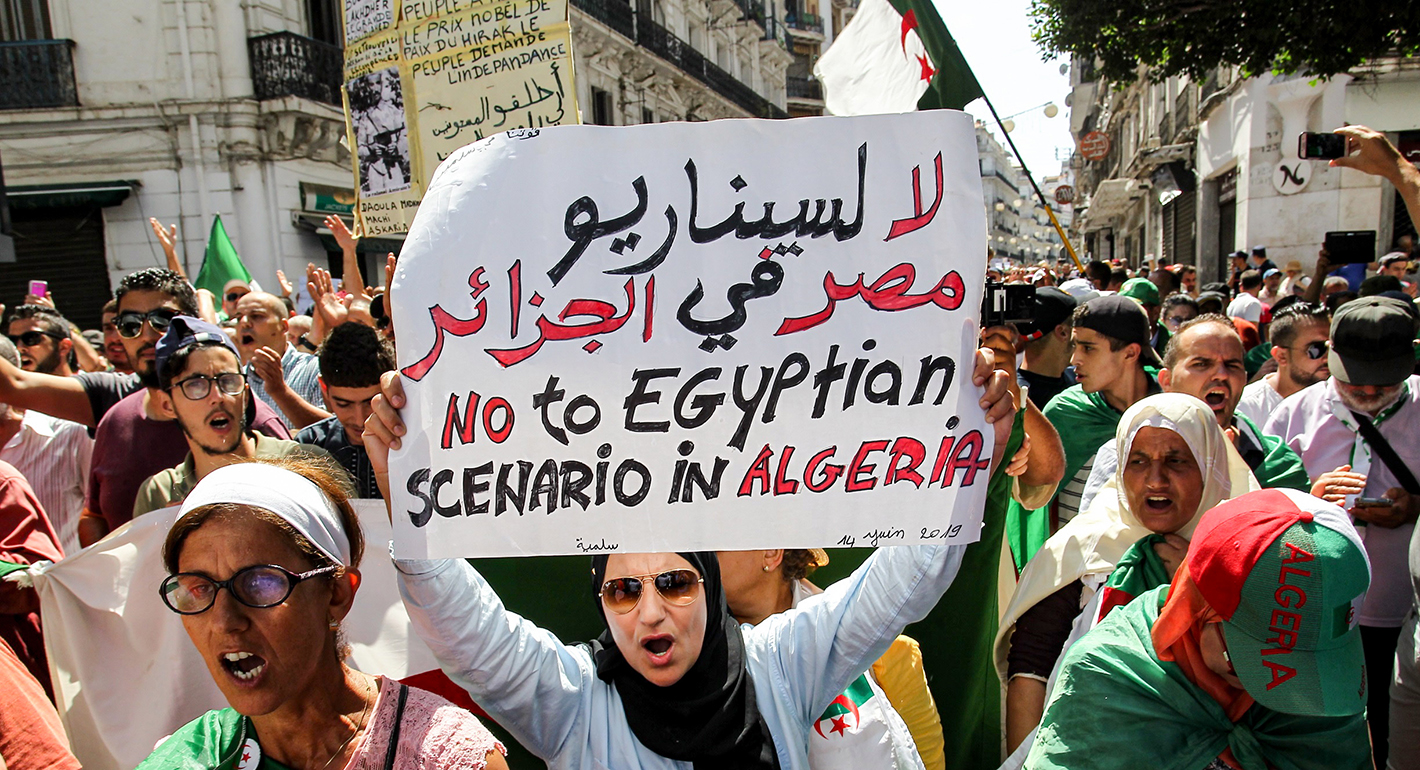
Source: Getty
In the absence of well-organised political forces, it has been easy for the army to put itself in the driver’s seat.
Source: Middle East Eye
Earlier this month, Algeria’s army chief of staff, Ahmed Gaid Salah, called for the electoral process to begin on 15 September, so that presidential elections could be held before the end of the year.
On Sunday, Abdelkader Bensalah, Algeria's interim president, said those elections would take place on 12 December. "I have decided... that the date of the presidential election will be Thursday, December 12," said Bensalah, who is precluded from standing himself, in a televised address to the nation.
Since the beginning of the “Revolution of Smiles”, Algeria’s military has aimed to take charge of the political transition in order to secure its corporate interests, broaden its domination over Algeria’s core elite, and reverse the loss of political influence it experienced during former president Abdelaziz Bouteflika’s two-decade tenure.This political manoeuvring was based on two principles: to safeguard Algeria’s constitution and ensure speedy presidential elections, and to instrumentalise the judiciary to facilitate this process. But the military must also take into consideration the disruptive power of sustained peaceful protests and a looming economic crisis.
The first principle the military is evoking to shape the transition is the conservation of the existing constitutional framework. Unlike in Tunisia, where a constituent assembly was elected to draft a new constitution, Algeria’s military leadership decided to work with the existing constitution, organising presidential elections within 90 days of Bouteflika’s departure.
Despite calls from the public to ignore the constitution, and the refusal of mayors and public officials to hold elections, the military leadership announced elections for 4 July. In the absence of credible candidates, the vote was eventually cancelled - but the leadership remains adamant about ensuring it takes place before the end of 2019.
The military appears unwilling to acknowledge popular demands to achieve national consensus; instead, it is putting itself in charge of determining the transition path. This stance is backed by the country’s “technocratic” government, formed by Bouteflika as his grip on power was fading, which has been maintained despite widespread calls for its dismissal.
The military refused to open dialogue with the popular movement and instead supervised the appointment of an independent, six-member panel to oversee a national dialogue - via Abdelkader Bensalah, who has also been resoundingly rejected by protesters.
Days after its creation, the panel announced, in line with military leadership views, the need to organise presidential elections as soon as possible, without a transitional period.
The second principle the military is following to shape and supervise the transition is the instrumentalisation of the judiciary. Although many judges and lawyers joined the protests and opposed the military’s maneuvering, they did not prevail. Part of the judiciary is controlled by the military, as evidenced by the selective arrests of high-profile individuals and the arbitrary arrests of citizens.
Purges have been orchestrated to punish regime opponents and keep allies in line; this would not have been possible without the connivance of the judiciary. Several members of Bouteflika’s inner circle, including his brother Said and two spy chiefs, were brought to a military court, while many other controversial figures remain free.
These arrests have been rebuked by the popular movement, which believes that it will be the future elected power, and should be tasked with carrying out investigations on Bouteflika’s era. Rather than putting an end to the old regime and initiating a genuine process of transitional justice, the military is instead controlling the nature of the country’s change.
The arrests of citizens, meanwhile, are meant to intimidate and divide the popular movement, and to show the extent of the penetration of the judiciary by the military. According to Amnesty International, 41 people were arbitrarily arrested in July for carrying flags. Human Rights Watch has also confirmed the crackdown, and just last month, one of the group’s officials, Ahmed Benchemsi, was expelled from Algeria.
Just a few days ago, one of the most popular opposition figures, Karim Tabou, was also arrested.
In the absence of well-organised political forces, it has not been difficult for the military to install itself in the driver’s seat of the transition. It remains the ultimate decision-maker in all matters, including socioeconomic ones.
While it is undoubtedly true that the recent decision to allow foreign ownership in some sectors was taken by Bensalah’s technocratic government, it is also true that such a decision could not have been taken without the approval of the military leadership, which has vested interests. By letting the politicians announce these decisions, the military is protecting itself against a backlash should they lead to further impoverishment.
As long as it remains the protector of “national interests” and “national security” - two categories that are broadly defined - any attempt to curb the military’s power will prove useless and inconsequential.
This article was originally published in the Middle East Eye.
Former Senior Resident Scholar, Malcolm H. Kerr Carnegie Middle East Center
Dalia Ghanem was a senior resident scholar at the Malcolm H. Kerr Carnegie Middle East Center in Beirut, where her research focuses on Algeria’s political, economic, social, and security developments. Her research also examines political violence, radicalization, civil-military relationships, transborder dynamics, and gender.
Recent Work
Dalia Ghanem


Frances Z. Brown, Judy Dempsey, Dalia Ghanem, …
Carnegie does not take institutional positions on public policy issues; the views represented herein are those of the author(s) and do not necessarily reflect the views of Carnegie, its staff, or its trustees.

The armed forces champion a form of capitalism that is generating revenue, but its reliance on rent faces diminishing returns, leaving the country with massive sunk costs and deferred returns, deepening dependency on external borrowing.

Yezid Sayigh

Morocco and Algeria, each in its own way, are having to navigate the global economic fallout of the U.S.-Israeli military campaign against Iran.

Yasmine Zarhloule
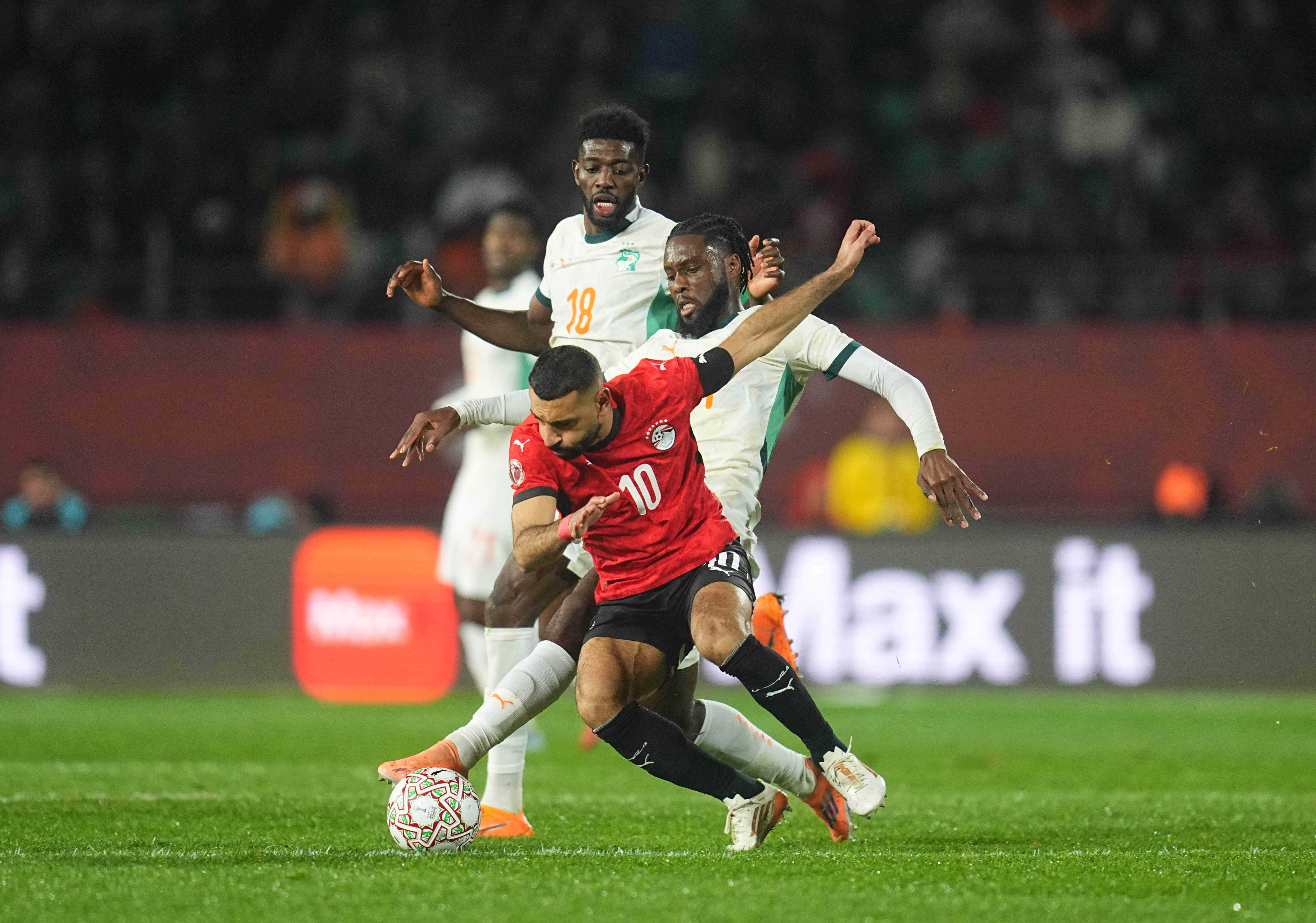
This will be the region’s most representative tournament, amid broad changes in its footballing landscape.
Issam Kayssi
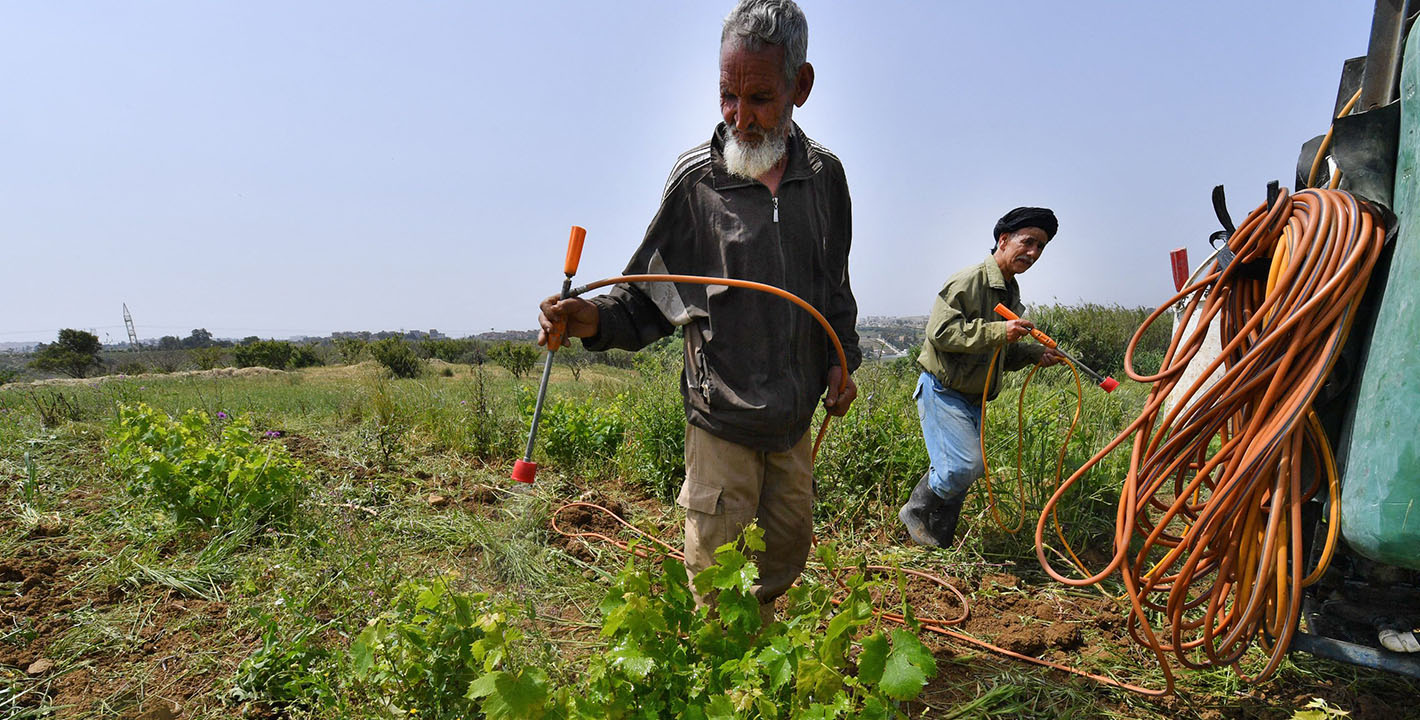
Understanding how farmers in the Oued Sahel-Soummam Valley grapple with climate change is essential for addressing the paradoxes through which adaptation, operating at both individual and institutional levels, deepens the region’s vulnerability and erodes the social fabric and agrarian identity that once defined life.
Ilyssa Yahmi
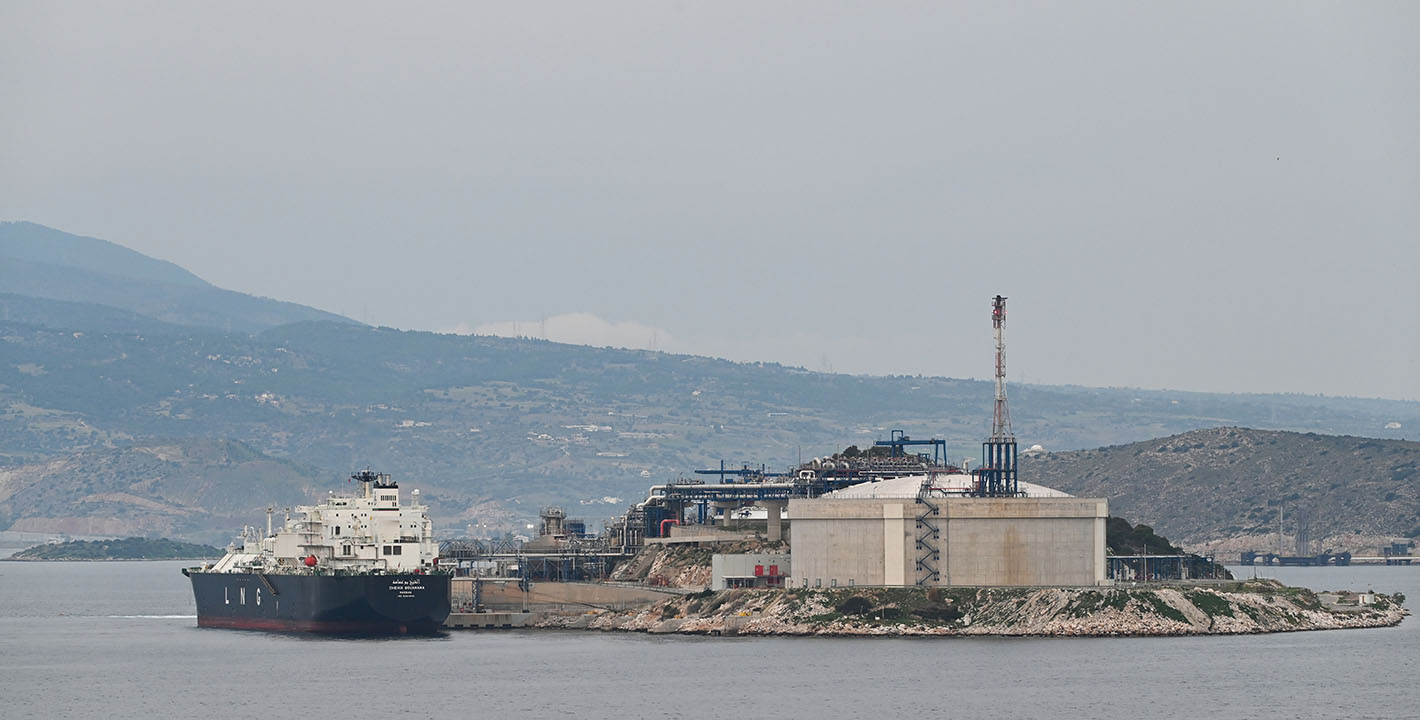
Unless the European Union-led energy transition provides economic development to Algeria, Morocco, and Tunisia, the process may be perceived as a new form of extraction.
Yasmine Zarhloule