

Commentary
In an interview, Rozina Ali discusses her new book on the rise and manifestations of Islamophobia in the United States.
Michael Young
{
  "authors": [
    "Aaron David Miller",
    "Richard Sokolsky"
  ],
  "type": "legacyinthemedia",
  "centerAffiliationAll": "",
  "centers": [
    "Carnegie Endowment for International Peace",
    "Malcolm H. Kerr Carnegie Middle East Center"
  ],
  "collections": [],
  "englishNewsletterAll": "",
  "nonEnglishNewsletterAll": "",
  "primaryCenter": "Carnegie Endowment for International Peace",
  "programAffiliation": "",
  "programs": [],
  "projects": [],
  "regions": [
    "North America",
    "United States",
    "Middle East",
    "Saudi Arabia",
    "Gulf"
  ],
  "topics": [
    "Democracy",
    "Foreign Policy"
  ]
}
Source: Getty
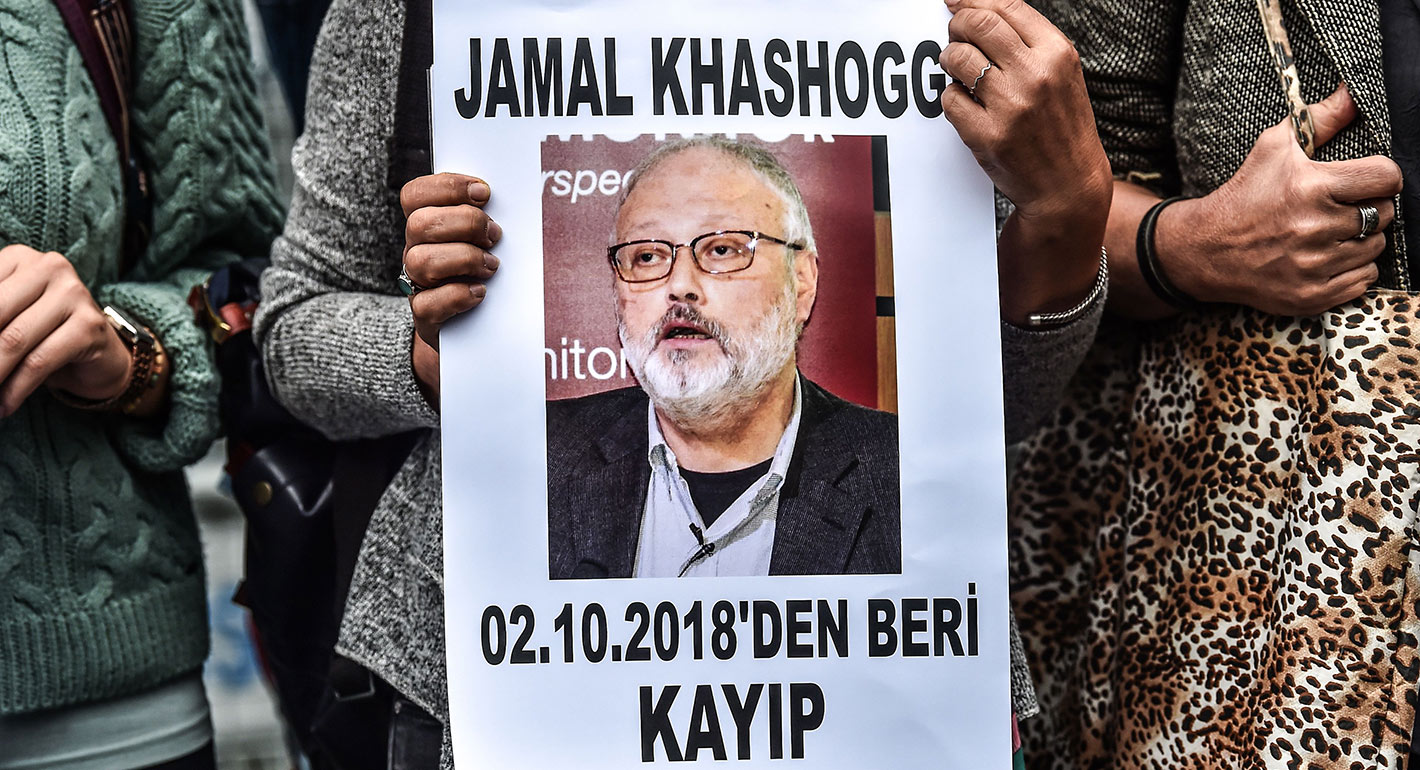
The Saudis killed Khashoggi but President Trump acquiesced in the cover-up and worked hard to protect the U.S.-Saudi relationship and soften the crown prince’s pariah status.
Source: NPR
It has been a year since Saudi journalist and Washington Post columnist Jamal Khashoggi entered Saudi Arabia's Consulate in Istanbul where he was slain and dismembered. There is still no objective or comprehensive Saudi or American accounting of what occurred, let alone any real accountability.
The Saudi Crown Prince Mohammed bin Salman's admission in a recent CBS interview that he takes "full responsibility," while denying foreknowledge of the killing or that he ordered it, sweeps under the rug the lengths to which the Saudis have gone to obscure the truth about their involvement in the killing and cover-up....

Senior Fellow, American Statecraft Program
Aaron David Miller is a senior fellow at the Carnegie Endowment for International Peace, focusing on U.S. foreign policy.
Nonresident Senior Fellow, Russia and Eurasia Program
Richard Sokolsky is a nonresident senior fellow in Carnegie’s Russia and Eurasia Program. His work focuses on U.S. policy toward Russia in the wake of the Ukraine crisis.
Carnegie does not take institutional positions on public policy issues; the views represented herein are those of the author(s) and do not necessarily reflect the views of Carnegie, its staff, or its trustees.

In an interview, Rozina Ali discusses her new book on the rise and manifestations of Islamophobia in the United States.

Michael Young

In an interview, Ian Lustick and Eli Clifton discuss their new book on why a prominent ally has so much influence in America.
Michael Young

As the U.S. stumbles in its war with Iran, we are likely to see an acceleration of its disengagement from the region.
Michael Young

Middle Eastern states should welcome an accelerated U.S. disengagement from their region.
Michael Young

In an interview, former ambassador Charles Freeman assesses the Trump administration’s war against Iran.
Michael Young