

Other
Kim Ghattas
{
  "authors": [
    "Kim Ghattas"
  ],
  "type": "legacyinthemedia",
  "centerAffiliationAll": "",
  "centers": [
    "Carnegie Endowment for International Peace",
    "Malcolm H. Kerr Carnegie Middle East Center"
  ],
  "collections": [],
  "englishNewsletterAll": "",
  "nonEnglishNewsletterAll": "",
  "primaryCenter": "Carnegie Endowment for International Peace",
  "programAffiliation": "",
  "programs": [],
  "projects": [],
  "regions": [
    "Middle East"
  ],
  "topics": [
    "Political Reform"
  ]
}
Source: Getty
Without an understanding of what was lost and how it happened—and why the rivalry between Saudi Arabia and Iran played such a crucial role in this unraveling—a better future for the Middle East will remain elusive, and the world’s understanding of the region will remain incomplete.
Source: Atlantic
What happened to us? The question haunts us in the Arab and Muslim world. We repeat it like a mantra. You will hear it from Iran to Syria, from Saudi Arabia to Pakistan, and in my own country, Lebanon. For us, the past is a different country, one not mired in the horrors of sectarian killings. It is a more vibrant place, without the crushing intolerance of religious zealots and seemingly endless, amorphous wars.
Though the past had coups and wars too, they were contained in time and space, and the future still held much promise. What happened to us? The question may not occur to those too young to remember a different world, whose parents did not tell them of a youth spent reciting poetry in Peshawar, debating Marxism in the bars of Beirut, or riding bicycles on the banks of the Tigris in Baghdad. The question may surprise those in the West who assume that the extremism and bloodletting of today have always been the norm.

Author of Black Wave and FT contributing editor
Kim Ghattas is an Author of Black Wave and FT contributing editor.
Recent Work
Kim Ghattas
Carnegie does not take institutional positions on public policy issues; the views represented herein are those of the author(s) and do not necessarily reflect the views of Carnegie, its staff, or its trustees.

As the U.S. stumbles in its war with Iran, we are likely to see an acceleration of its disengagement from the region.

Michael Young

The accord represents a pivotal moment in the region to avert a security vacuum in the Gulf.


Azeema Cheema, Mohanad Hage Ali

In an interview, Jason Burke discusses his sweeping account of the “revolutionists” who so shaped the 1970s and early 1980s.
Michael Young

Just look at Iraq in 1991.

Marwan Muasher
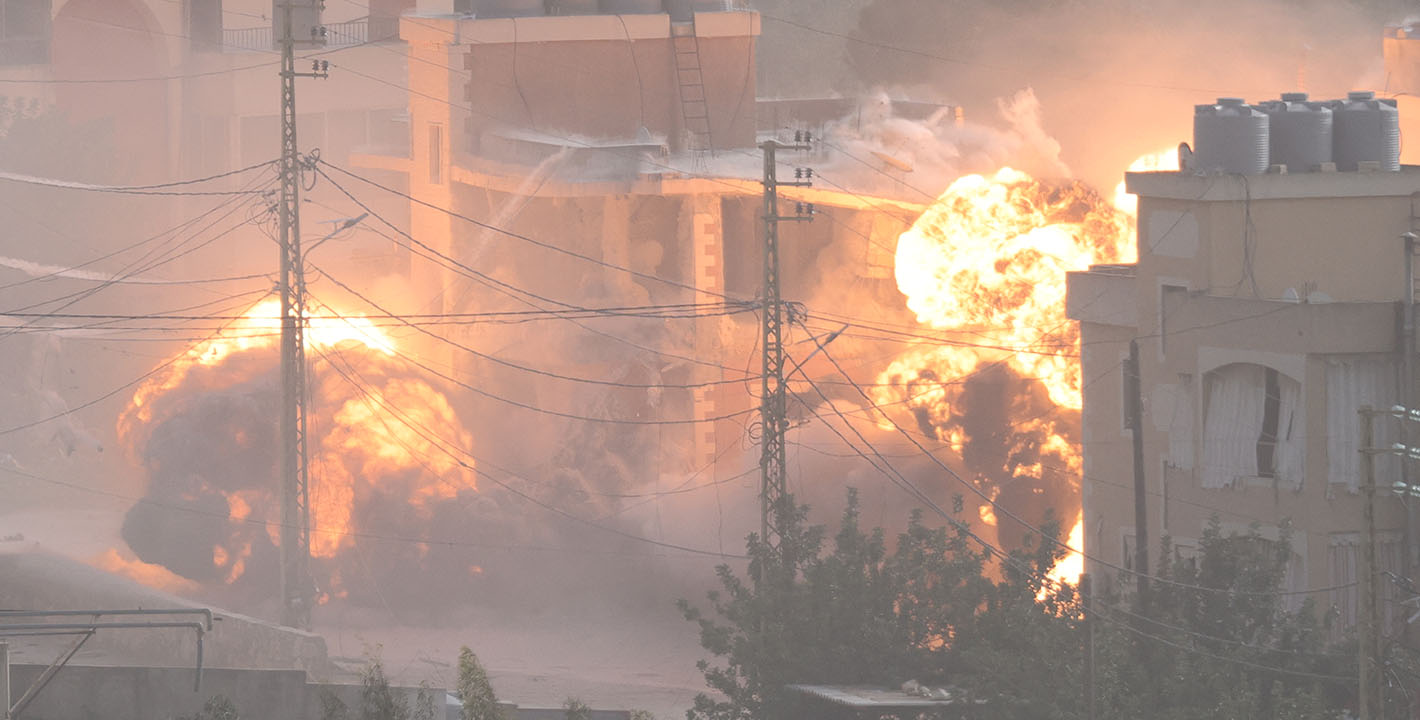
As Iran defends its interests in the region and its regime’s survival, it may push Hezbollah into the abyss.
Michael Young