

Commentary
Jamie Kwong, Toby Dalton
{
  "authors": [
    "Toby Dalton"
  ],
  "type": "other",
  "centerAffiliationAll": "dc",
  "centers": [
    "Carnegie Endowment for International Peace"
  ],
  "collections": [
    "Korean Peninsula"
  ],
  "englishNewsletterAll": "ctw",
  "nonEnglishNewsletterAll": "",
  "primaryCenter": "Carnegie Endowment for International Peace",
  "programAffiliation": "NPP",
  "programs": [
    "Nuclear Policy"
  ],
  "projects": [],
  "regions": [
    "East Asia",
    "North Korea"
  ],
  "topics": [
    "Security",
    "Nuclear Policy"
  ]
}
Source: Getty
Resolving security issues on the Korean peninsula will require diminishing the role of deterrence in inter-Korean affairs. Cooperative security is a useful concept to guide this shift.
Source: Journal for Peace and Nuclear Disarmament
Efforts to convince the Democratic People’s Republic of Korea (DPRK or North Korea) to abandon its nuclear-weapon aspirations and programs have been stuck in a wash-rinse-repeat cycle going on three decades. Carefully negotiated incremental steps and expert-led processes failed to survive the inevitable political hurdles, technical setbacks, and mutual recriminations that beset the 1994 Agreed Framework, the 2005–2008 Six Party Talks, and even the short-lived 2012 “Leap Day Deal”. Six DPRK nuclear explosive tests and multiple launches of long-range ballistic missiles are proof positive that a new method, based on a different logic, is needed to achieve denuclearization of the Korean Peninsula and, beyond that creation of a nuclear-weapon-free zone in Northeast Asia (NEANWFZ).
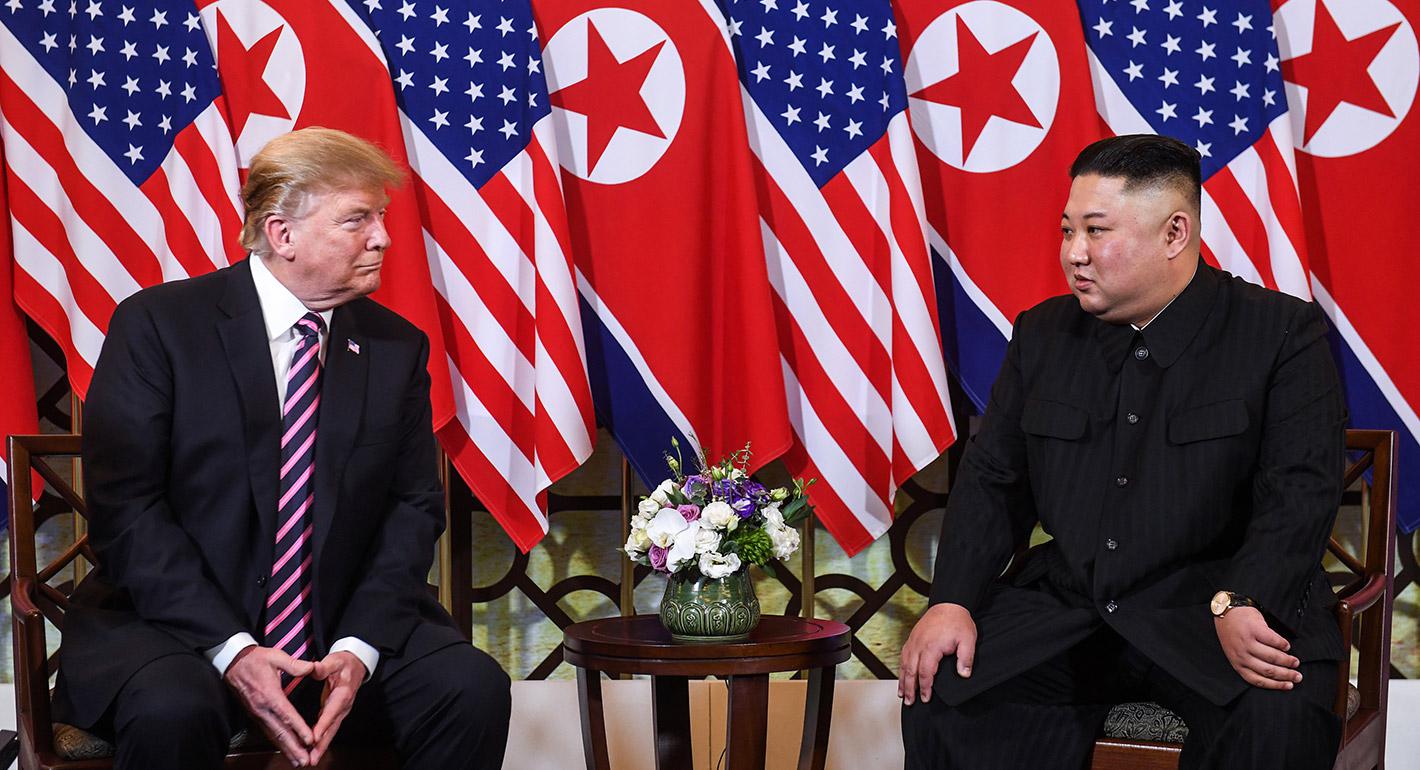
The remarkable June 2018 Singapore Summit between Chairman Kim Jong Un and President Donald Trump seemed to herald just such a needed new approach. The summit affirmed the prospect that direct, leader-to-leader negotiation between the DPRK and the United States could break apart the centripetal forces binding the cycle of failed nuclear diplomacy. The two leaders agreed, in essence, to subvert the old logic, which cast peace as a function of North Korea’s nuclear dismantlement. The Singapore Summit changed the math: the creation of a “lasting and stable peace regime” could be solved simultaneously with the “complete denuclearization of the Korean Peninsula”.1 This shift to focus on peace and normalization of relations among the combatants of the 70 years past Korean War implicitly recognizes that DPRK leaders are unlikely to relinquish nuclear weapons unless and until they achieve regime security.
Lamentably, in the months following the Singapore summit, despite additional high-level summitry, Washington and Pyongyang struggled to translate this new logic into sustained concrete action. As such, it is yet to be demonstrated that the new, “simultaneous equations” model can be more successful in moving the Korean Peninsula toward denuclearization than past approaches. Even so, pending diplomatic progress, it is worth examining in more detail the constituent security transformations that would be required to make the new approach workable.
1 Joint Statement of President Donald J. Trump of the United States of America and Chairman Kim Jong Un of the Democratic People’s Republic of Korea at the Singapore Summit, 12 June 2018,
https://www.whitehouse.gov/briefings-statements/joint-statement-president-donald-j-trump-united-states-america-chairman-kim-jong-un-democratic-peoples-republic-korea-singapore-summit/
This article was originally published in the Journal for Nuclear Peace and Disarmament.

Senior Fellow and Co-director, Nuclear Policy Program
Toby Dalton is a senior fellow and co-director of the Nuclear Policy Program at the Carnegie Endowment. An expert on nonproliferation and nuclear energy, his work addresses regional security challenges and the evolution of the global nuclear order.
Recent Work

Jamie Kwong, Toby Dalton

Ariel (Eli) Levite, Toby Dalton
Carnegie does not take institutional positions on public policy issues; the views represented herein are those of the author(s) and do not necessarily reflect the views of Carnegie, its staff, or its trustees.
In an interview, Marc Lynch discusses his new book decrying the post-1990 U.S.-dominated order in the Middle East.

Michael Young

Just look at Iraq in 1991.

Marwan Muasher

Baku may allow radical nationalists to publicly discuss “reunification” with Azeri Iranians, but the president and key officials prefer not to comment publicly on the protests in Iran.

Bashir Kitachaev

In addressing Hezbollah’s disarmament, the Lebanese state must start by increasing its own leverage.
Michael Young
The country’s political and military establishment is still debating how to interpret the recent war’s outcome.

Nicole Grajewski