

Commentary
By failing to address Palestinian representation, the current process is bound to lead to just another temporary arrangement.
Nathan J. Brown
{
  "authors": [
    "Yukon Huang",
    "Joshua Levy"
  ],
  "type": "legacyinthemedia",
  "centerAffiliationAll": "dc",
  "centers": [
    "Carnegie Endowment for International Peace"
  ],
  "collections": [],
  "englishNewsletterAll": "asia",
  "nonEnglishNewsletterAll": "",
  "primaryCenter": "Carnegie Endowment for International Peace",
  "programAffiliation": "AP",
  "programs": [
    "Asia"
  ],
  "projects": [],
  "regions": [
    "North America",
    "United States",
    "East Asia",
    "China"
  ],
  "topics": [
    "Political Reform",
    "Foreign Policy",
    "Technology"
  ]
}
Source: Getty
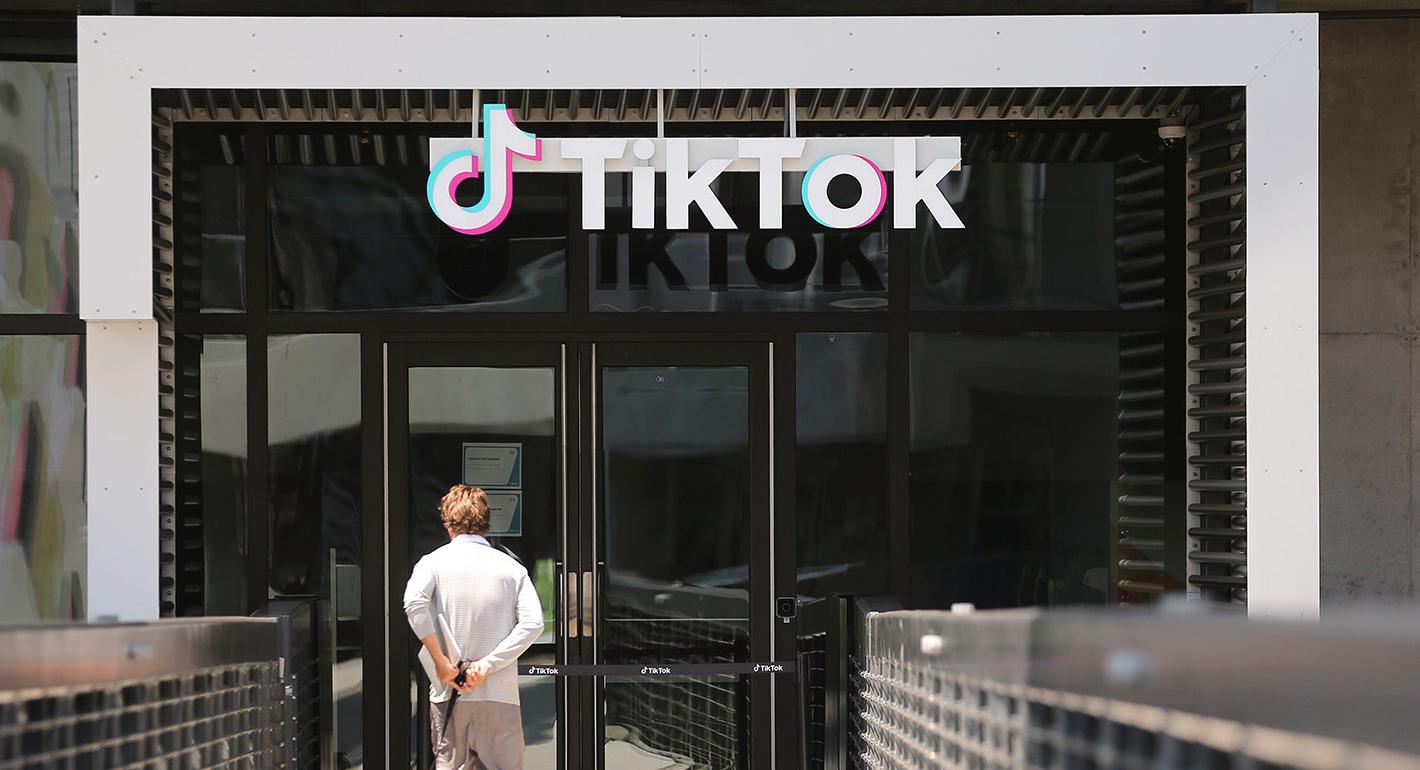
After Trump banned TikTok, a Chinese social media app, and forced the sale of its US operations to an American company, Beijing and Washington have struck a remarkably similar tone regarding forced technology transfers.
Source: South China Morning Post
“It is time that other countries saw through the outrageous farce … and joined hands to oppose such blatant robberies and maintain a fair global business environment.”
“These forms of state-sponsored forced technology transfer are truly a devil’s bargain.”
A casual observer could be forgiven for thinking that China and the United States disagree on everything these days: from how to confront a global pandemic to Hong Kong’s status. So some may be surprised to learn that the former quote was published in a People’s Daily editorial and the latter penned by Peter Navarro, US President Donald Trump’s top trade adviser.
After Trump banned TikTok, a Chinese social media app, and forced the sale of its US operations to an American company, Beijing and Washington have struck a remarkably similar tone regarding forced technology transfers.
American companies in China have long complained of forced technology transfers, where they are pressured (legally or otherwise) to hand over their trade secrets to joint-venture business partners. Indeed, it became a rallying cry for Trump in his trade war. The irony is that Washington is taking a page out of Beijing’s playbook.
In an August 6 executive order, Trump cited national security concerns in banning TikTok. He then ordered its Chinese parent company ByteDance to divest its interest in TikTok’s US operations. This in effect meant selling TikTok to a US company. Oracle and Walmart have since brokered a deal to take a majority stake in TikTok Global, which will be spun out of ByteDance.
Whether the short-video platform actually poses a threat to national security is unclear: TikTok has said it does not manage a propaganda campaign for the Chinese authorities, nor does it pass on American user data.
Beijing sometimes cites security, but mostly references its desire to acquire knowledge as a developing economy, when insisting that American companies form joint ventures with local partners when they want to enter China’s health care, education and aviation sectors, among others. Mostly, Western companies have not been able to resist China’s huge market.
The concerns on both sides about such joint ventures is that intellectual property, trade secrets and proprietary technologies are transferred, willingly or otherwise. Since 2017, US Trade Representative Robert Lighthizer has prepared public reports expressing concerns about such issues. In TikTok’s case, Beijing worries about who controls the algorithm that suggests a never-ending feed of videos.
Intellectual property theft is wrong, but there is nothing bad in principle about joint ventures. Local partners can provide insights on domestic regulations; foreign investors can offer new technologies and products. The subsequent diffusion of knowledge has been recognised as an inevitable and generally mutually beneficial consequence of cooperation.
The World Trade Organisation’s Agreement on Trade-Related Aspects of Intellectual Property Rights (TRIPS) – signed by both the US and China – even encourages the growth-accelerating transfer of knowledge and technology from developed to developing economies.
But those arguments seem facile now because the TikTok case contains an important nuance: it is symbolic of a simmering great power rivalry. Control of how and where user data flows has become a new domain of competition.
Beijing has been playing this game for years. Decades ago, its fears that allowing US tech giants entry would prevent the development of local competitors turned out to be well-grounded, given similar worries in Europe now. Today, security concerns have surpassed protectionism in guiding policy. In 2016, China passed a cybersecurity law requiring all data on Chinese citizens and organisations to be physically stored in China – a deal-breaker for many US companies.
Still, Trump’s position seems so reprehensible because he acts like a bully, demanding a finder’s fee for interfering in the market and allowing a deal that would favour friends. A better tactic would be to use the TikTok case to push a loftier goal.
Progress has ground to a standstill as Trump’s executive order winds its way through the courts and Beijing has remained mum on whether it will approve a technology export licence. The principle of reciprocity, a Trump administration trade policy talking point no less, could be a way to break the impasse.
Pushing China to drop its joint venture requirements would be a major achievement and the time is ripe for such a change. Joint ventures have accounted for hardly a quarter of China’s foreign investment flows in recent years, down from nearly two-thirds in 1997. The recent entry of Tesla in cars and BASF in chemicals as wholly foreign-owned ventures broke the last major barriers in manufacturing. While joint venture requirements once served as legitimate protection for an infant tech industry, giants such as Baidu and Alibaba are now true rivals to the likes of Google and Amazon.
Whoever is elected in November as American president can assuage Chinese worries about the continued bullying of tech companies by formalising a process to securely manage citizens’ data. Some propose independent “data trusts” to safeguard consumer information. Alternatively, supervision may involve local firms, though that need not entail a majority equity stake. This could work for both sides.
After all, if Beijing and Washington can come to an agreement on how TikTok should be treated in the US, why should the same treatment not work for Facebook, Twitter or other American companies that want to enter China?
Fairness should headline any US trade policy, even if Trump’s capricious handling of TikTok is anything but. The management of citizens’ data will remain a hot topic, particularly as geopolitical tensions heat up. Meantime, however, rules and common standards can still be drawn up to the benefit of American and Chinese companies. That, rather than arbitrary barriers on both sides of the Pacific, would be fair.
This article was originally published by the South China Morning Post.

Senior Fellow, Asia Program
Huang is a senior fellow in the Carnegie Asia Program where his research focuses on China’s economy and its regional and global impact.
Joshua Levy
Former James C. Gaither Junior Fellow, Asia Program
Joshua Levy was a James C. Gaither Junior Fellow in the Carnegie Asia Program.
Carnegie does not take institutional positions on public policy issues; the views represented herein are those of the author(s) and do not necessarily reflect the views of Carnegie, its staff, or its trustees.

By failing to address Palestinian representation, the current process is bound to lead to just another temporary arrangement.

Nathan J. Brown

Morocco and Algeria, each in its own way, are having to navigate the global economic fallout of the U.S.-Israeli military campaign against Iran.

Yasmine Zarhloule
Any move by the United States to make good on Trump’s suggestion that Washington persuade Damascus to confront Hezbollah militarily would have catastrophic consequences.

Kheder Khaddour

As talks begin between Washington and Tehran, Beirut has an opening to advance a regional plan for the party’s disarmament.

Michael Young
What is behind Marco Rubio’s announcement that the body is now an international nongovernmental organization?
Zaha Hassan