

Article
Dan Baer
{
  "authors": [
    "Dan Baer"
  ],
  "type": "legacyinthemedia",
  "centerAffiliationAll": "dc",
  "centers": [
    "Carnegie Endowment for International Peace"
  ],
  "collections": [],
  "englishNewsletterAll": "democracy",
  "nonEnglishNewsletterAll": "",
  "primaryCenter": "Carnegie Endowment for International Peace",
  "programAffiliation": "DCG",
  "programs": [
    "Democracy, Conflict, and Governance"
  ],
  "projects": [],
  "regions": [
    "North America",
    "United States",
    "East Asia",
    "China"
  ],
  "topics": [
    "Economy",
    "Trade",
    "Foreign Policy"
  ]
}
Source: Getty
While Beijing may appreciate soon having a more predictable set of interlocutors it should not expect them to be more pliable.
Source: Foreign Policy
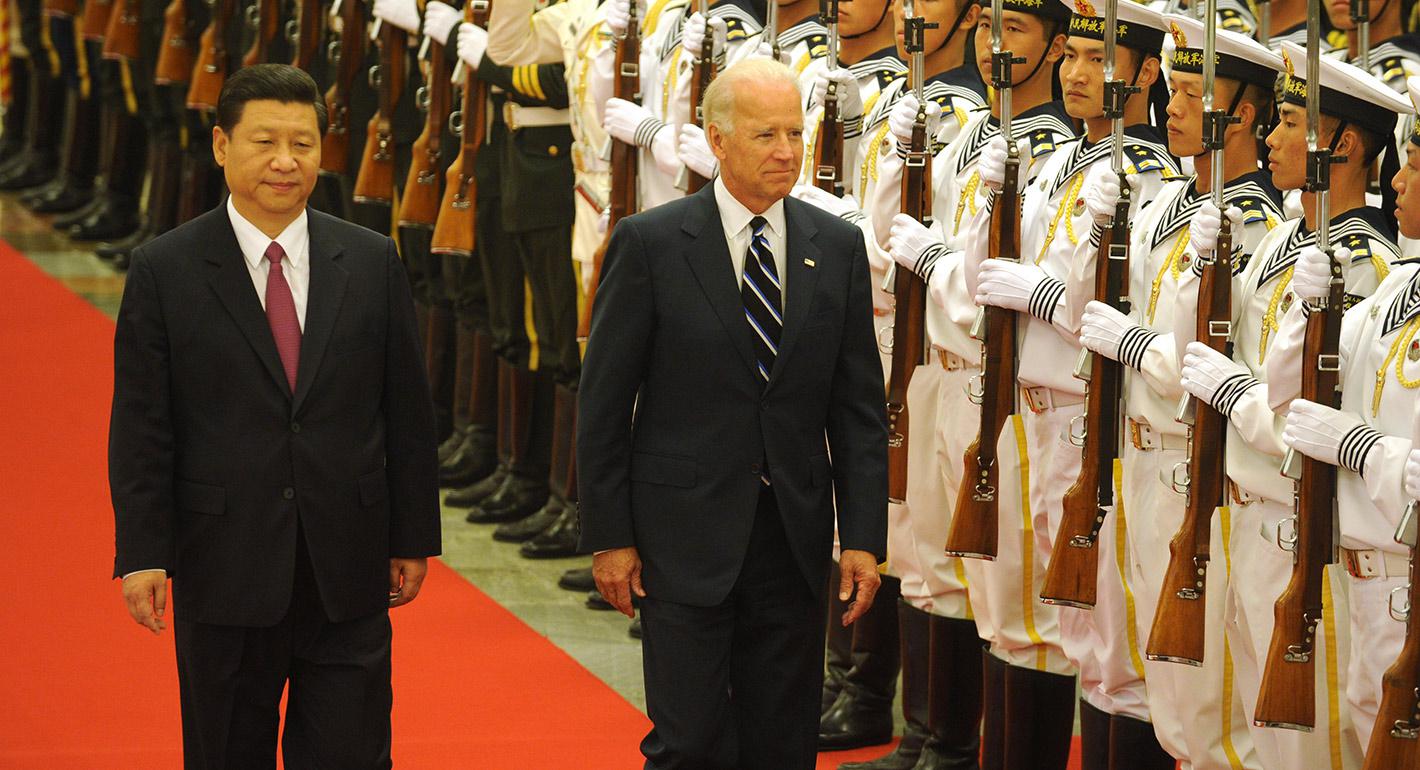
A Biden White House is likely to oversee a steadier and more coherent China policy than the Trump administration, whose erratic approach careened from President Donald Trump’s fawning praise of Chinese President Xi Jinping—including reportedly condoning concentration camps in Xinjiang—to name-calling and fighting a failed tariff war. A consistent approach will bring more stability to a delicate and difficult relationship. But a more stable approach does not mean a soft one, since there is now a bipartisan recognition in the United States that China is a strategic competitor. Indeed, while Beijing may appreciate soon having a more predictable set of interlocutors, it should not expect them to be more pliable.
Helping Biden is the fact that much of U.S. foreign policy is the prerogative of the president and therefore less constrained than domestic policy by the legislative branch. But if Republican Sen. Mitch McConnell remains in control of the U.S. Senate, one of the first tests for the Republicans in the Senate will be whether they will cut off America’s nose in order to spite the new president’s face. The United States needs a robust economic stimulus, including significant investment in infrastructure, in order to make it to the other side of the pandemic and jump-start the economy. Republicans who want to be tougher on China must recognize that a strong U.S. economy is a strategic imperative.
Some commentators have suggested that the Trump presidency, and its undignified end, has emboldened Chinese government leaders and raised their confidence in the superiority of their own system. On Election Day, the editor of the Chinese government propaganda newspaper Global Times, Hu Xijin, gleefully posted on Twitter about storefronts being boarded up in U.S. cities, writing that unrest is usually a “complication of elections in poor countries, but people are worried it may appear in the US. The US is in degradation.” It should be noted, of course, that the Chinese Communist Party boards up its windows from the inside, metaphorically speaking, to keep citizens from seeing how the leaders of its authoritarian regime are selected.
We cannot deny or dismiss the damage done to the global reputation of U.S. democracy by Trump’s antics. But neither should we overstate that damage. In the end, the United States—a giant, multiethnic, multiconfessional, industrialized democracy—had an election where the result was unknown ahead of time. It generated record voter participation and was held with relatively few problems in the midst of a global pandemic. It delivered a defeat for the incumbent and a new president.
Biden will most likely lead the United States with a divided government. His administration will have to work with senators and representatives from diverse constituencies and make compromises in order to strike deals that equip the county to confront the challenges of the 21st century, including its strategic rivalry with China. It will be messy and challenging, and progress will not be linear. But this is not a new story—it is a very old one. Chinese leaders pride themselves on taking a long view. The United States faces plenty of foreign and domestic challenges today, including in its democratic institutions. But in the long view, its democracy is not a source of weakness; it is a source of strength.
Senior Vice President; Director, Europe Program
Dan Baer is a senior vice president of the Carnegie Endowment for International Peace and director of the Europe Program. Under President Obama, he was U.S. ambassador to the Organization for Security and Cooperation in Europe (OSCE) and he also served deputy assistant secretary of state for the Bureau of Democracy, Human Rights, and Labor.
Recent Work


Richard Youngs, Erik Jones, Dan Baer, …
Carnegie does not take institutional positions on public policy issues; the views represented herein are those of the author(s) and do not necessarily reflect the views of Carnegie, its staff, or its trustees.

In an interview, Rozina Ali discusses her new book on the rise and manifestations of Islamophobia in the United States.

Michael Young

In an interview, Ian Lustick and Eli Clifton discuss their new book on why a prominent ally has so much influence in America.
Michael Young

As the U.S. stumbles in its war with Iran, we are likely to see an acceleration of its disengagement from the region.
Michael Young

Middle Eastern states should welcome an accelerated U.S. disengagement from their region.
Michael Young

In an interview, former ambassador Charles Freeman assesses the Trump administration’s war against Iran.
Michael Young