

Commentary
MINURSO’s renewal by the Security Council became highly politicized. Its expiration brings concerns of renewed violence and the future of demining efforts.
Sarah Yerkes
{
  "authors": [
    "James M. Acton",
    "Dan Baer",
    "Mark Baldassare",
    "Frances Z. Brown",
    "Jennifer Hendrixson White",
    "Ian Klaus",
    "Rachel Kleinfeld",
    "Sameer  Lalwani",
    "Leonardo Martinez-Diaz",
    "Arthur Nelson",
    "Stewart Patrick",
    "Eugene Rumer",
    "Sarah Yerkes"
  ],
  "type": "commentary",
  "blog": "Emissary",
  "centerAffiliationAll": "",
  "centers": [
    "Carnegie Endowment for International Peace"
  ],
  "englishNewsletterAll": "",
  "nonEnglishNewsletterAll": "",
  "programAffiliation": "",
  "regions": [
    "Southern, Eastern, and Western Africa",
    "Europe",
    "India",
    "Middle East",
    "Iran",
    "Russia",
    "Ukraine"
  ],
  "topics": [
    "AI",
    "Subnational Affairs",
    "Nuclear Policy",
    "Climate Change",
    "Global Governance",
    "Foreign Policy",
    "Domestic Politics",
    "Democracy"
  ]
}
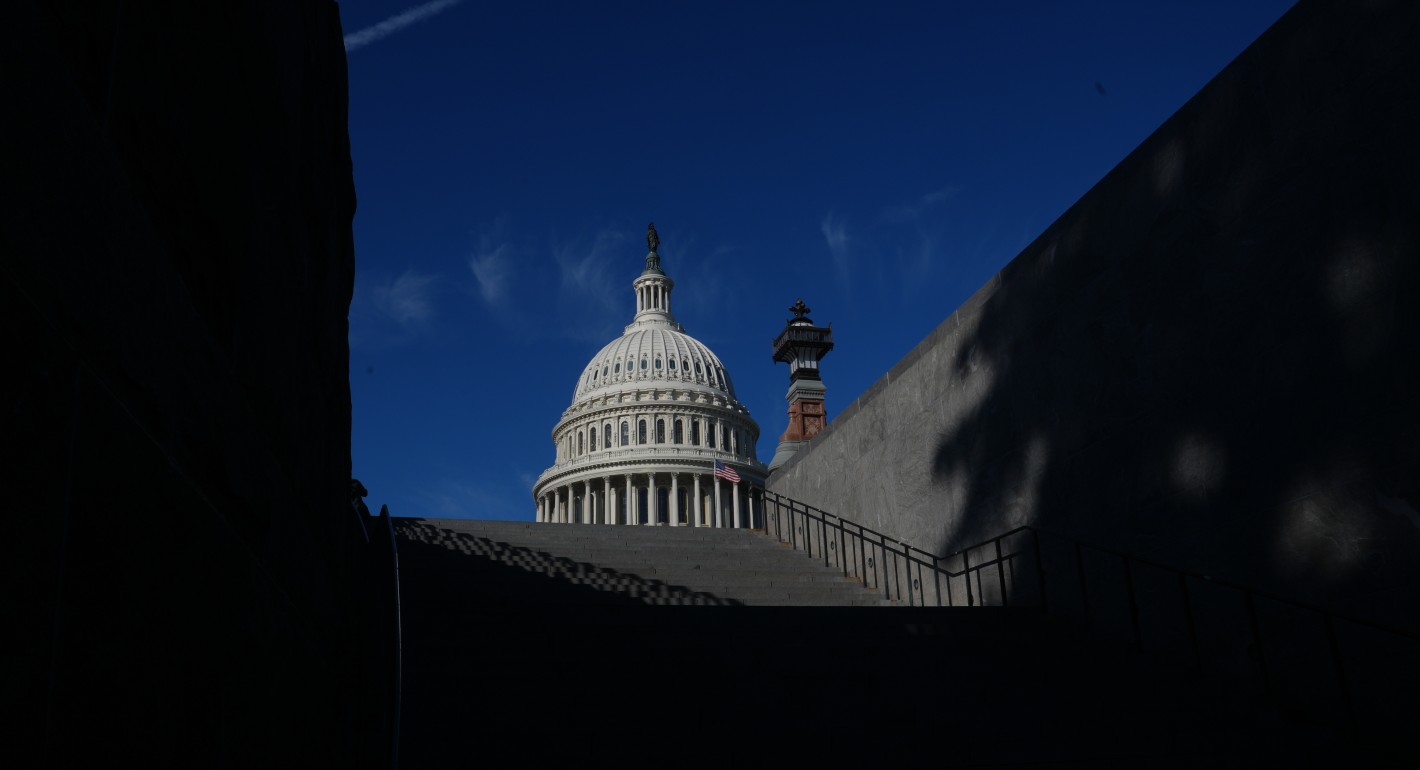
The Capitol on November 4, 2026. (Photo by Mehmet Eser/Anadolu via Getty Images)
Democrats now have the gavel and the purse, but the executive branch still pulls the levers on the U.S. role in the world.
The Africa policy of President Donald Trump’s second administration has existed almost entirely downstream of its domestic political priorities, including deporting third-country nationals and reorienting refugee admissions toward white Afrikaners. The incoming Congress has the opportunity to shift U.S. Africa policy to more strategic footing, within the bounds of congressional authorities. The expected elevation of Delaware Senator Chris Coons, a respected Africa hand, to Senate Foreign Relations Committee chair bodes well for that task.
The new term will likely see expanded oversight on issues ranging from the America First Global Health Strategy deals to advisers’ potential conflicts of interest, and legislation including on the modernization of the African Growth and Opportunity Act (expiring in 2028). But a few broader questions loom large:
Can Capitol Hill’s Africa-watcher tent be expanded? The new makeup of both the Senate and House offers a chance to broaden the constituency of lawmakers engaged on Africa. Observers have rightly noted the potential to involve members hailing from the diaspora and from faith communities, but others will simply see opportunity for their respective states in deepening ties with a fast-growing continent.
Will Congress put democracy back on the agenda? There are limits to what Congress can do vis-à-vis an executive branch that has walked away from democracy. However, legislators might push administration officials on their policy planning around executive power grabs, inevitable political transitions, or instability risks in Nigeria’s and Kenya’s upcoming elections. Lawmakers can also prioritize meetings with democratic leaders and civil society members from the continent, demonstrating (some) ongoing U.S. commitment to democratic norms.
Will Congress see State Department bandwidth as sufficient? The administration has identified several laudable yet personnel-intensive priorities in Africa—from ending conflicts in Democratic Republic of Congo and Sudan to expanding U.S. trade and investment. Meanwhile, the foreign-assistance oversight responsibilities formerly held by the U.S. Agency for International Development have also moved to Foggy Bottom. But with a majority of U.S. ambassador posts on the continent vacant and overall diplomatic capacity diminished, stark questions remain about whether the State Department’s bandwidth is adequate—and Congress will likely be asking them.
— Frances Z. Brown, vice president for studies, Africa Program
U.S. AI policy has been in a holding pattern, as Democrats sought to campaign on the issue rather than compromise. With midterms now behind us, expect AI to take center stage in American politics over the next two years.
The midterms clear the way for a serious debate about national AI regulation. So far, new AI safety laws have emanated from states such as California, New York, and Illinois while Congress voted down a Trump-backed push for federal preemption. A weakened White House will be less capable of deterring other states from passing new laws. This puts more pressure on a pro-innovation coalition to accept a more robust national standard. The big question is whether Democrats pursue a limited deal to regulate technical risks or push for a larger referendum on the societal impacts of AI.
U.S. AI diplomacy will largely stay the course. Congress may have a bit more leeway to strengthen export controls on chip sales to China or limit the White House’s ability to deny allies access to frontier models developed by U.S. labs. But the executive branch will continue to negotiate deals with other countries and control most tools of American statecraft.
—Arthur Nelson, co-director, Technology and International Affairs Program
The shift in congressional control has several implications for climate action, but without the White House and a filibuster-proof majority in the Senate, the new Congress will not be able to change the overall direction of decarbonization policy. At best, it will be able to do damage control, which is nevertheless still valuable.
Oversight will be key. Democrats are likely to launch investigations into how the administration has used (or refused to use) already appropriated funds for climate-related activities. Inquiries will likely be launched into the apparent politicization of disaster declarations, as well as unusual delays in the flow of federal disaster aid. Investigations into possible fraud or abuse in the energy and mining sectors are also possible.
With congressional majorities, Democrats may curb the administration’s most destructive budget proposals. These include draconian cuts to key accounts and departments engaged in climate and atmospheric research, weather forecasting, and disaster preparedness and resilience. On Capitol Hill and in newly won governors’ mansions, Democrats may roll out a new policy and political discourse—one that incorporates climate action into everyday issues voters care most about, including affordability and health. And importantly, newly elected Democratic governors can begin to shape state policies in a more climate-friendly direction, especially where statehouses are willing.
—Leonardo Martinez-Diaz, senior fellow and director, Sustainability, Climate, and Geopolitics Program
Democrats’ historic successes in the House and Senate naturally raise expectations that the new Congress could place meaningful checks on Trump’s foreign policy. History suggests, however, that the tools that Congress is most eager to use, such as speeches, nonbinding resolutions and investigations, can apply political pressure on the White House but do not force its hand. More substantial legal and financial tools, such as binding resolutions on the use of force or withholding federal funds, require veto-proof majorities or support from members of the president’s own party.
Following the 2018 midterms, as senior staff on the House Foreign Affairs Committee, I had a front-row seat to an election with similar atmospherics and foreign policy debates. The new Congress produced a flurry of measures that were rich in political signaling but produced little meaningful constraint on the administration. Successful legislative efforts rode on “must-pass” legislative vehicles like the National Defense Authorization Act (NDAA) that enjoyed veto-proof support.
The tools and strategies the new Congress employs—most notably, to creatively translate investigative efforts into binding legislation that enjoys broad support such that it can sustain a presidential veto—will determine whether and how the legislative branch is able to assert its constitutional prerogatives on the foreign policy issues that impact the daily lives of Americans.
—Jennifer Hendrixson White, visiting scholar, American Statecraft Program
The Democrats’ midterm tsunami was thanks in part to the party’s big-tent strategy, with candidates who represented every facet of Americans, from Democratic Socialists to Presbyterian pastors. Now, like the broad coalitions that wrested control in Poland, Brazil, and other eroding democracies, they must avoid infighting and cohere enough to deliver.
In their zeal to reassert congressional power, Democrats should not miss the fact that federalism saved these elections. A host of Trump administration efforts to affect the results were thwarted by state lawsuits and courts asserting the constitutional role of the states in running elections. But just a few years ago, outside groups spent hundreds of millions of dollars in an attempt to pass the For the People Act to assert federal rules of uniform fairness on our elections. However well-intentioned, the act—had it passed—would have provided precedent for a greater federal role in elections that could have been disastrous in the wrong hands. As they work to restore agencies that have been politicized or gutted and return America to working order, politicians must also ensure that the powers they claim will not be unduly helpful to the centralization of power under a future elected leader with authoritarian instincts.
What the election map looks like two years from now will also largely be decided at the state level. Exit polls showed Americans prioritize pocketbook issues, but other than congressional action on tariffs and the Iran war, most of where people feel their government is working, especially on the economy, will come from state decisions (and possibly the unelected tech titans and their AI Pandora’s boxes). Newly minted governors and state legislatures will be the actors who determine whether voters find satisfaction with democracy or feel that they are stuck swinging between two parties that are both unable to give them the kind of American dream they desire.
That brings us back to politics. Americans clearly do not want a king, with nearly all demographics punishing Trump and his sycophants at the ballot box. The return of men, Latinos, new voters, and even former Trump voters to the Democratic Party prevented Republicans from solidifying a realignment. But those voters have not fallen in love with Democrats—and dirty tricks like Mary Peltola’s Dan Sullivan fakeout in Alaska don’t help. Even though Republicans have pushed similar spoiler candidates in places with greater consequence, voters don’t like being deceived, lied to, or stolen from. They punished Republicans for that on Tuesday, but they will happily punish Democrats in the future if they find it necessary.
—Rachel Kleinfeld, senior fellow, Democracy, Conflict, and Governance Program
While all the caveats about an election that doesn’t deliver a new executive branch are true, Tuesday’s elections were so resounding that they can’t be seen as merely a rebuke—they are at least the beginning of a more significant breakthrough. And although all the caveats about the impossibility of going back to the way things were with Europe are true, there will be some parts of a more familiar America that will reappear to longing transatlanticist eyes in Europe.
First, in the near term, the new Democratic-controlled Congress will take up a war powers resolution to force the administration to end the disastrous Iran war, which has been a U.S. strategic defeat and has exacerbated inflation in the United States, Europe, and beyond. European voters, like Americans, will be looking for the gradual easing of energy prices.
Second, in the medium term, the new Congress likely will use the NDAA and other legislative vehicles—in addition to vigorous oversight of Secretary Pete Hegseth and his Defense Department—to curb the Trump administration’s more aggressive behavior toward NATO and European allies on security. A drawdown of U.S. forces in Europe may still happen over the coming years, but it won’t be designed with vindictiveness or in isolation.
And finally, over the longer term, the breadth of the midterm wins reassures Europeans that there will be a next generation of Americans with whom to forge win-win partnerships on security and prosperity—and that Americans, like Hungarians and Serbians, are capable of building political movements that reject corruption and focus on good government and rule of law.
—Dan Baer, senior vice president and director, Europe Program
The U.S.-India strategic partnership has historically enjoyed bipartisan support in Congress, so the midterm results should not substantially impact the relationship. Even before the new Congress is sworn in, the relationship could still meet significant milestones, with a Quad Leaders’ Summit around ASEAN meetings, a separate bilateral meeting between Trump and Prime Minister Narendra Modi around the G20 Summit, a potential trade deal, and more joint military exercises (adding to the highest number in a single year).
Democratic control of both houses of Congress could produce indirect steadying effects by bolstering U.S. predictability and reliability. Congressional oversight and legislative efforts could generate pressure to limit the president’s tariff threats, which could help solidify Indian confidence in a trade deal. Similarly, Congress will likely take up efforts to quell or end the Iran war. If it succeeds, it will remove a key friction point in the U.S.-India relationship because of the economic costs India has suffered from the disruption of maritime traffic in its backyard, the high costs of fuel, and rupee devaluation.
Congress could also play a greater role in authorizing new lines of bilateral strategic cooperation typically led by the White House—such as defense, energy, emerging technologies, and supply chain resilience—and embedding them within legislation such as the NDAA.
Finally, the new Congress should be aware of indirect threats to the relationship. If Capitol Hill pressures the administration on Russia with new sanctions legislation or removal of waiver authorities, that could lead to friendly fire against countries such as India that purchase Russian oil or arms. And since the U.S.-India relationship depends heavily on senior political leaders driving it forward, significant congressional oversight efforts that embattle the Defense and State departments’ political leadership could divert scarce political bandwidth from the strategic partnership.
—Sameer Lalwani, senior fellow, South Asia Program
The midterm “bluenami” sets Congress and the White House on a foreign policy collision course, but the impact on U.S. posture toward the United Nations and other international institutions will be modest during the rest of Trump’s term. Under the Constitution, the president has enormous leeway in foreign affairs, except when Congress’ affirmative consent is required. And despite their majorities, Democrats cannot compel the administration to rejoin treaties it has repudiated, such as the UN Framework Convention on Climate Change, or bodies it has abandoned, such as the World Health Organization.
The main tools Democrats can wield are the gavel and the purse. Committees will issue subpoenas and hold high-profile hearings highlighting the costs of U.S. withdrawals from, sharp funding cuts for, and ideological approach to international cooperation, including in global health, humanitarian assistance, climate change, human rights, and more. One can also expect high-profile inquiries into alleged violations of international law, such as the administration’s targeted killings of alleged narcotics traffickers in the Caribbean and the Pacific or potential war crimes in the Iran war. The Democratic majority will likely attach conditions to federal spending, defund certain White House priorities, and seek funding increases for international organizations and foreign assistance.
However, even a lame duck president retains a veto. It is unlikely that enough Republicans will break ranks with Trump to override it, particularly on behalf of multilateral institutions.
Given these legislative limitations, congressional Democrats would be wise to use their majority to outline a future governing agenda, including a new vision of foreign affairs that transcends the myopia of America First. Senator Tammy Duckworth (D-IL), who will chair the subcommittee overseeing multilateral institutions, says the Democrats must learn from their past missed opportunities. Under the previous administration, she noted in September, Democrats “fixed all the stuff that Trump broke,” but “we didn’t do anything innovative.” This time around, the party needs to think big, rather than just look back. As Duckworth said, “I don’t want the old world order. I want a better order than it was before.”
—Stewart Patrick, senior fellow and director, Global Order and Institutions Program
The Democratic-majority Congress will likely try to influence two main Middle East issues: the war in Iran and the U.S.-Israel relationship. On Iran, both the House and Senate should have enough votes to pass a war powers resolution that could theoretically force the administration to end the war. However, the key word is theoretically. Trump would most certainly veto any such resolution, and neither chamber appears to have a veto-proof majority. Additionally, neither the administration nor Congress ever formally declared war on Iran, and Congress never passed an authorization of the use of military force, so any act by Congress now would be largely symbolic.
On Election Day, Trump bizarrely announced an abrupt end to $4 billion of U.S. military assistance to Israel, despite a memorandum signed by both the United States and Israel and codified into U.S. law in 2021 that would continue that assistance at least until 2028. Congress will certainly attempt to scale back some, if not all, of the military aid to Israel. But, with the outcome of the October 27 Israeli elections still up in the air, the U.S.-Israel relationship could face significant turmoil both on Capitol Hill and at the White House.
The bottom line is that Trump still holds most of the cards when it comes to both Iran and Israel.
—Sarah Yerkes, senior fellow and acting co-director, Middle East Program
Few members of Congress—and even fewer congressional candidates—spend much time thinking about nuclear weapons (though one new member, who has just recaptured her old congressional seat after two years away, has operated nuclear reactors onboard aircraft carriers). Given that the Constitution affords the president broad authority over military affairs, this lack of interest may not be surprising. Still, the power of the purse gives Congress a key role in determining what nuclear capabilities the United States acquires as well as important oversight responsibilities.
Two nuclear-weapon-related items on Congress’ agenda stand out. First, the Trump administration wants to acquire new low-yield nuclear weapons, even though it has not clearly articulated why they are needed, given the United States’ existing capabilities. Second, an expensive, complex program to develop a new silo-based ICBM, Sentinel, is both seriously delayed and far over budget, and it is unclear what sacrifices to other programs, nuclear and nonnuclear, will be made to pay for it. To date, Congress has been broadly supportive of both efforts, despite the questions about them. However, if it seeks to cut the defense budget, as seems likely, it may start to ask those questions.
—James M. Acton, Jessica T. Mathews chair and co-director, Nuclear Policy Program
The outcome of the 2026 U.S. midterm elections has been declared the “beginning of the end to the Trump era” and “the death knell of Trumpism.” In the eyes of many commentators, Trump is now a lame duck.
In a normal presidency, that would be true. But this is not a normal presidency, and several things should be kept in mind about Trump’s policy toward Ukraine and Russia in the remaining two years of his term.
First, all politics is local. Voters and their elected representatives may disapprove of Trump’s handling of Ukraine and Russia, but this election was decided entirely on domestic policy issues. Prices for bread and butter—well, gasoline and diesel—dominated the agenda. Ukraine and Russia were decidedly not among the top ten concerns on voters’ minds, according to an October Gallup survey.
Second, Trump’s preference for Russia over Ukraine and for Vladimir Putin over Volodymyr Zelensky is well known. The election outcome is unlikely to change that. During his second term, Trump has withheld crucial military and intelligence support and access to SpaceX satellite communications in the hope of forcing Ukraine to make painful concessions. No one should be surprised if he leans even harder on Zelensky to cut a deal with Putin no matter the price, since it will burnish his legacy and enable him to claim that he has ended yet another war.
Third, Trump could double down on his Russia-friendly policy and habit of ignoring or sidestepping existing laws, as he did with the Lindsey O. Graham Sanctioning Russia Act of 2026. He could order another cutoff of satellite communications or intelligence-sharing with Ukraine. There is little Congress, even under Democratic control, can do to stop a president willing to ignore both laws and the legislative branch and enjoying virtually complete immunity thanks to the 2024 Supreme Court ruling.
Finally, the “blue tsunami” will trigger a strong pushback from Congress against Trump’s Russia-friendly policies—and plenty of uncomfortable questions and investigations about dealings by members of the Trump family and the administration with Russia. But they can rely on the president’s powers of pardon to shield them from all that.
At the end of the day, the president controls foreign policy, while Congress controls spending, authorizes the president to declare war, and confirms senior government appointments. But Trump has demonstrated complete disregard for Congress, going to war without congressional authorization, spending money to suit his priorities, and appointing officials to serve in an acting capacity, without advice and consent of the Senate.
Betting on Trump changing course on Russia and Ukraine in the remaining two years of his presidency is a risky proposition.
—Eugene Rumer, senior fellow and director, Russia and Eurasia Program
In a survey last fall, we asked Californians about their concerns over disconnects between U.S. foreign policy and their priorities. Two-thirds of survey respondents reported feeling at least somewhat concerned, an increase of more than 25 percent from the previous year.
As our survey work has illustrated over the past four years, Californians strongly believe that domestic well-being is linked to international affairs. As prices, including for gasoline, have surged, voters across the country have also connected the dots between their economic health and foreign policy.
Global engagement by governors and local officials has historically been built around this connection, with the vast proportion of diplomatic energy from state capitals—whether controlled by Republicans or Democrats—being focused on trade. But this historic midterm election also turned on other transnational issues that have been the focus of subnational diplomacy, including immigration, energy policy, and (perhaps most notably) AI policy. With the White House in the lead on foreign policy and Congress likely trying to restrain the administration's roguish tendencies, a new crop of state leaders may put a greater focus on global cooperation on these shared challenges.
—Ian Klaus, founding director, and Mark Baldassare, nonresident scholar, Carnegie California

Jessica T. Mathews Chair, Co-director, Nuclear Policy Program
Acton holds the Jessica T. Mathews Chair and is co-director of the Nuclear Policy Program at the Carnegie Endowment for International Peace.

Senior Vice President; Director, Europe Program
Dan Baer is a senior vice president of the Carnegie Endowment for International Peace and director of the Europe Program. Under President Obama, he was U.S. ambassador to the Organization for Security and Cooperation in Europe (OSCE) and he also served deputy assistant secretary of state for the Bureau of Democracy, Human Rights, and Labor.

Nonresident Scholar, Carnegie California
Mark Baldassare is a nonresident scholar at Carnegie California. He is an authority on elections, voter behavior, and political and fiscal reform.

Vice President for Studies
Dr. Frances Z. Brown is a vice president for studies at the Carnegie Endowment for International Peace. Brown served on the White House National Security Council (NSC) staff over the past three presidential administrations. Her research focuses on U.S. foreign policy, Africa, the Middle East, and governance.

Visiting Scholar, American Statecraft Program
Jennifer Hendrixson White is a visiting scholar in the American Statecraft Program at the Carnegie Endowment for International Peace. Her research focuses on Congress’s role in U.S. foreign policy and national security.

Founding Director, Carnegie California
Ian Klaus is the founding director of Carnegie California. He is a leading scholar on the nexus of urbanization, geopolitics, and global challenges, with extensive experience as a practitioner of subnational diplomacy.

Senior Fellow, Democracy, Conflict, and Governance Program
Rachel Kleinfeld is a senior fellow in Carnegie’s Democracy, Conflict, and Governance Program, where she focuses on issues of rule of law, security, and governance in democracies experiencing polarization, violence, and other governance problems.

Senior Fellow, South Asia Program
Sameer Lalwani is a senior fellow in the South Asia Program at the Carnegie Endowment for International Peace. He is also a research affiliate with the MIT Security Studies Program and a contributing editor to War on the Rocks.

Senior Fellow and Director, Sustainability, Climate, and Geopolitics Program
Leonardo Martinez-Diaz is senior fellow and director of the Sustainability, Climate, and Geopolitics Program at the Carnegie Endowment for International Peace. His fields of expertise include climate politics and diplomacy, climate finance, and mitigating and managing the risks of climate change to economies and communities.

Co-Director, Technology and International Affairs Program
Arthur Nelson is co-director of Carnegie’s Technology and International Affairs Program.

Senior Fellow and Director, Global Order and Institutions Program
Stewart Patrick is a senior fellow and director of the Global Order and Institutions Program at the Carnegie Endowment for International Peace. His primary areas of research focus are the shifting foundations of world order, the future of American internationalism, and the requirements for effective multilateral cooperation on transnational challenges.

Director and Senior Fellow, Russia and Eurasia Program
Rumer, a former national intelligence officer for Russia and Eurasia at the U.S. National Intelligence Council, is a senior fellow and the director of Carnegie’s Russia and Eurasia Program.

Acting Co-Director and Senior Fellow, Middle East Program
Sarah Yerkes is acting co-director and a senior fellow in the Middle East Program at the Carnegie Endowment for International Peace. Her research focuses on democracy and governance, U.S. foreign policy towards the Middle East and North Africa, and political and economic reform in Tunisia.
Carnegie does not take institutional positions on public policy issues; the views represented herein are those of the author(s) and do not necessarily reflect the views of Carnegie, its staff, or its trustees.

MINURSO’s renewal by the Security Council became highly politicized. Its expiration brings concerns of renewed violence and the future of demining efforts.
Sarah Yerkes
How Capitol Hill might reassert checks on the executive branch.
Jennifer Hendrixson White
Carnegie’s Middle East Program scholars reflect on the impasse and its potential impacts on the Middle East.



Nathan J. Brown, Alper Coşkun, Amr Hamzawy, …

The illusion of reproducing the ideology would come at the cost of the continent’s prosperity.

Giovanna De Maio

It would provide a golden opportunity to reconsider what success looks like.

Michael Mazarr