

Article
Marina Ottaway, Omar Hossino

REQUIRED IMAGE
Source: Carnegie
Summary
After decades of giving relatively little attention to the possibility and problems of democracy in the Middle East, the U.S. foreign policy community has in the past year elevated the issue to a position of central importance. In this working paper, Marina Ottaway highlights a problem of fundamental significance—the lack of credibility that the United States has in the Arab world when it presents itself as a pro-democratic actor.
Although many Americans may feel that America's bona fides as a pro-democratic actor are unquestionable, the stubborn fact remains that many people in other parts of the world, especially the Middle East, have a different opinion. If left unaddressed, this credibility gap will undermine even the most well-intentioned efforts by the United States to promote positive political change in the region. While recognizing that there are no instant solutions to this problem, the paper identifies ways the United States can begin to alleviate the gap and in so doing pave the way for a genuine, lasting democratic engagement with the Middle East.
Click on link above for full text of this Carnegie Paper.
This is the first in a series of working papers that will frame key issues relating to democracy promotion policies and programs in the Middle East.
About the Author
Marina Ottaway is senior associate in the Democracy and Rule of Law Project at the Carnegie Endowment. Her new book, Democracy Challenged: The Rise of Semi-Authoritarianism, a comparative study of semiauthoritarian regimes in Africa, the Caucasus, Latin America, and the Middle East, was published in January 2003.
Also by Marina Ottaway:
Africa's New Leaders: Democracy or State Reconstruction? (1999)
Funding Virtue: Civil Society Aid and Democracy Promotion (2000), coedited with Thomas Carothers
Democratic Mirage in the Middle East (Carnegie Endowment Policy Brief No. 20), coauthored with Thomas Carothers, Amy Hawthorne, and Daniel Brumberg
Available only online.
Former Senior Associate, Middle East Program
Before joining the Endowment, Ottaway carried out research in Africa and in the Middle East for many years and taught at the University of Addis Ababa, the University of Zambia, the American University in Cairo, and the University of the Witwatersrand in South Africa.
Recent Work
Marina Ottaway, Omar Hossino
Marina Ottaway
Carnegie does not take institutional positions on public policy issues; the views represented herein are those of the author(s) and do not necessarily reflect the views of Carnegie, its staff, or its trustees.

The accord represents a pivotal moment in the region to avert a security vacuum in the Gulf.


Azeema Cheema, Mohanad Hage Ali

In an interview, Jason Burke discusses his sweeping account of the “revolutionists” who so shaped the 1970s and early 1980s.

Michael Young

By failing to address Palestinian representation, the current process is bound to lead to just another temporary arrangement.

Nathan J. Brown

Morocco and Algeria, each in its own way, are having to navigate the global economic fallout of the U.S.-Israeli military campaign against Iran.

Yasmine Zarhloule
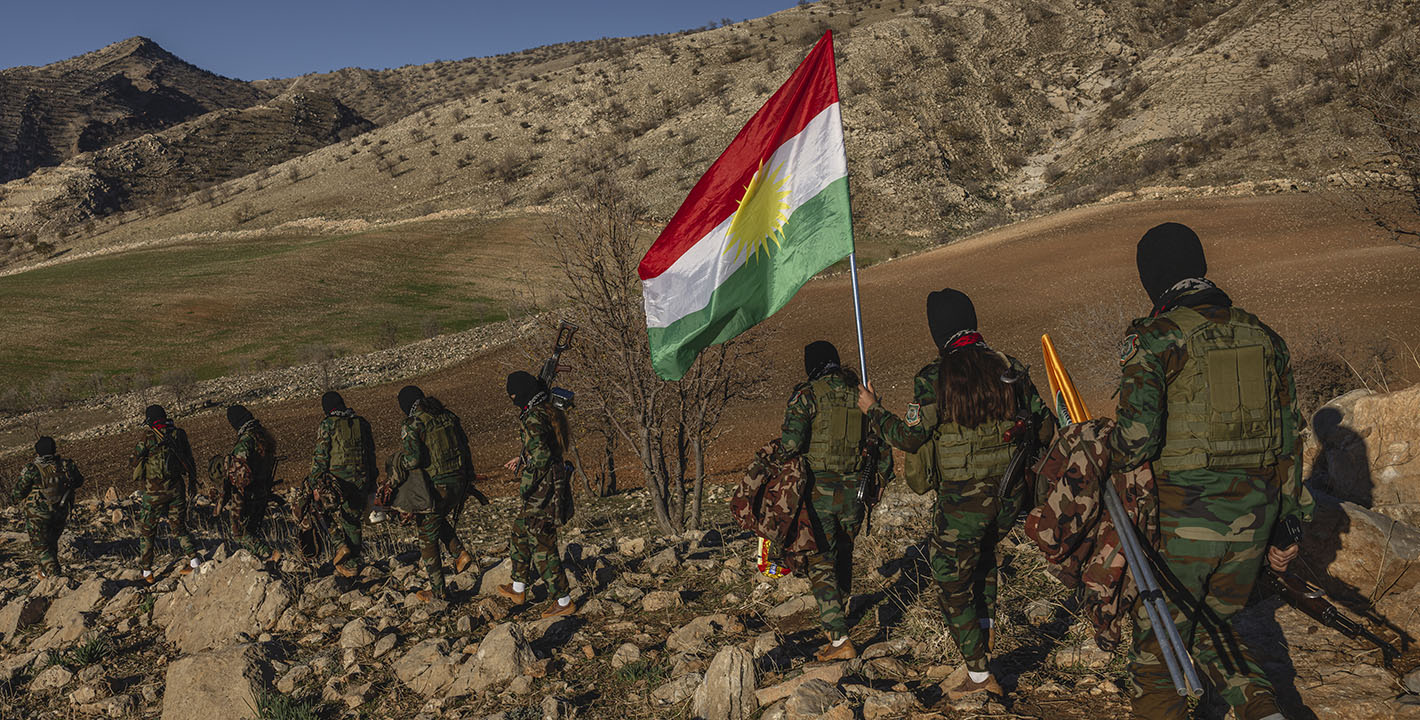
Following its deal with the United States, Iran may act against Iraq-based dissidents.
Wladimir van Wilgenburg