

Paper
Mei Ying Gechlik (Veron Hung)

REQUIRED IMAGE
This Carnegie Papert analyzes the trends of successful and failed patent lawsuits and presents steps foreign companies can take to better protect their intellectual property in China.
Source: Carnegie Endowment
Greater scrutiny is expected of China’s intellectual property right laws as China’s major trading partners, the European Union and the U.S., will likely step-up demands for stronger protection. China and the EU have launched what promises to be at least a year-long negotiation over their trade relationship and other areas, while the new Democratically-controlled Congress is expected to take a close look at U.S.-China trade agreements. Current violations of intellectual property rights in China have cost foreign companies billions of dollars. What can be done now to address such violations?
In a new Carnegie Paper, Protecting Intellectual Property Rights in Chinese Courts: An Analysis of Recent Patent Judgments, Dr. Mei Y. Gechlik, non-resident associate at the Carnegie Endowment, analyzes the trends of successful and failed patent lawsuits and presents steps foreign companies can take to better protect their intellectual property in China.
In an analysis of approximately 500 patent cases, Gechlik determines how likely foreign parties are to apply for judicial review to protect their patent rights, the chance of these parties winning their cases, and factors that influence their success in these lawsuits.
Encouraging commitment to strengthening Chinese patent protections, Gechlik said: “Whenever China’s commitment to strengthening intellectual property rights is in doubt, the Chinese authorities should be reminded that one important determinant of a country’s economic development and its leading status in the world is its competency to develop advanced technologies.”
Click on icon above for the full text of this Carnegie Paper.
A limited number of print copies of this Carnegie Paper are available.
Request a copy
About the Author
Mei Ying Gechlik (Veron Hung) is an associate in the Carnegie Endowment’s China Program. She has in-depth experience in Chinese law, and law and politics in the Asia-Pacific region. In academia and the private sector, she has studied such areas as legal reform in China, constitutional development in Hong Kong, human rights in Cambodia, and trade with China.

Former Non-Resident Associate
Recent Work
Mei Ying Gechlik (Veron Hung)
Mei Ying Gechlik (Veron Hung)

China has aligned its cooperation model with Saudi Arabia’s own priorities, most notably since the kingdom unveiled its Vision 2030. Although China announced the Belt and Road Initiative in 2013, the big push in relations happened only after the ascendance of King Salman to the throne in 2015 and Riyadh’s push for Beijing to meet Saudi needs.

Hesham Alghannam
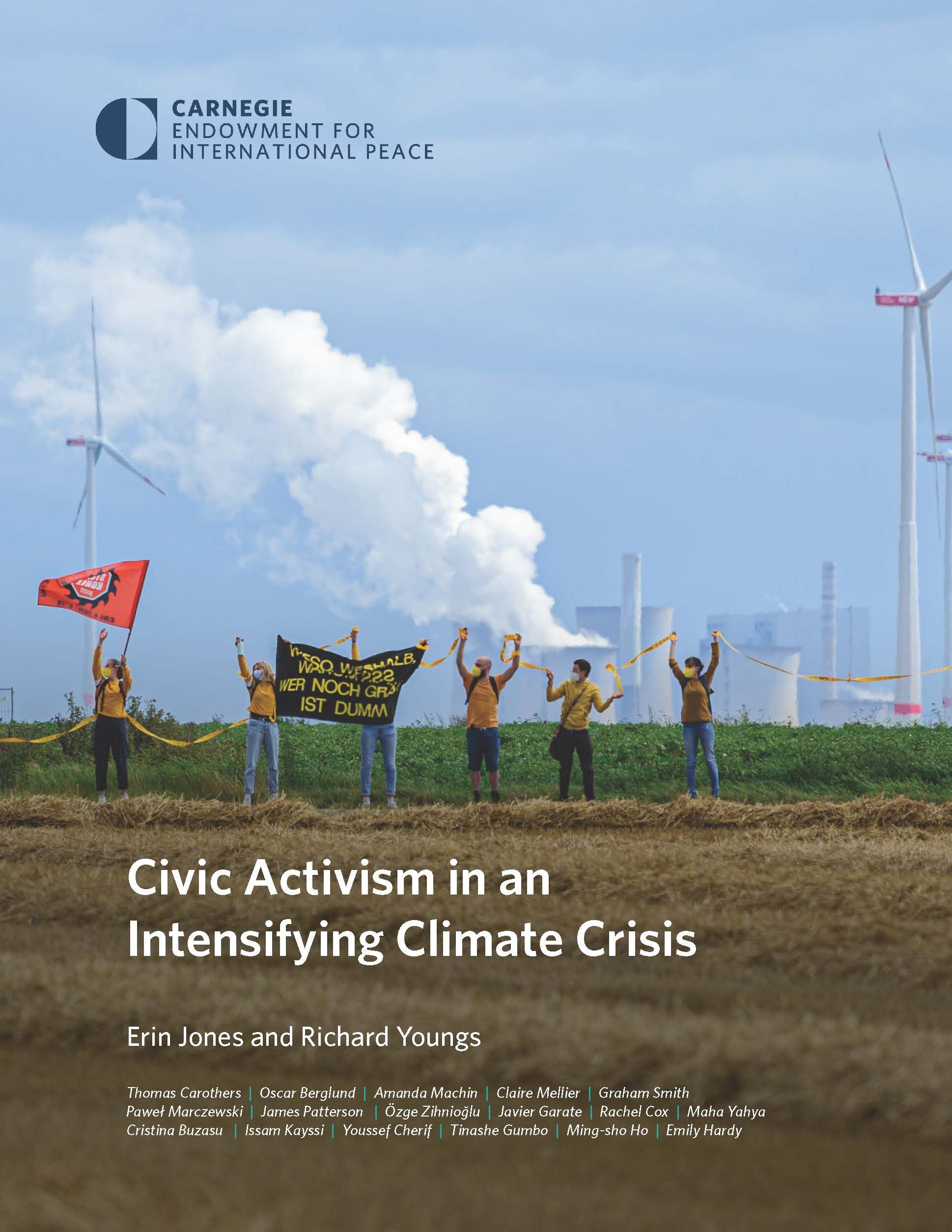
To address the deepening climate crisis, climate activism is employing a wider variety of tactics and aiming at a broader set of goals. In response, the movement faces stronger repression and civic backlash against climate action.


Erin Jones, Richard Youngs

The Gulf Cooperation Council has shifted its energy export focus to Asia, particularly India and China. This is part of a broader shift as GCC members look to expand their geopolitical alliances away from the West.

Alexandre Kateb

As members, organizers, and leaders, women continue to play an important role in the General Union of Tunisian Workers and advance its political advocacy.
Heba F El-Shazli

The emir has just put parliament and the constitution on the backburner, but for what purpose?

Nathan J. Brown