

Commentary
In an interview, Ian Lustick and Eli Clifton discuss their new book on why a prominent ally has so much influence in America.
Michael Young

REQUIRED IMAGE
Algeria’s ruling party is expected to maintain its majority in the May 17 elections, and the results will reflect rather than alter the real balance of forces within the executive branch of the state. The key issue is the power relationship between the civilian and military branches of the ruling elite.
Source: Carnegie Endowment
Algeria’s May 17 parliamentary election is just one week away. The ruling party is expected to maintain its majority, and the results will reflect rather than alter the real balance of forces within the executive branch of the state. The key issue is the power relationship between the civilian and military branches of the ruling elite. The outcome of the parliamentary elections in 1991 served as a catalyst for the army’s assumption of political power. The descent into violence that followed completed the militarization of Algerian politics and consolidated the power of the generals.
In Demilitarizing Algeria, Hugh Roberts, a specialist on North Africa, analyzes the unprecedented political role and power of Algeria’s military since the advent of formal pluralism in 1989, President Abdelaziz Bouteflika’s actions to reassert presidential authority, and the longer-term implications for democratic reform in Algeria.
Since becoming president in 1999, Bouteflika has had significant success in curbing the power of the military commanders by reining-in formal political pluralism and relying on a form of civilian authoritarianism. The reestablishment of presidential authority is not complete, since the army’s intelligence services remain effectively independent of the presidency’s nominal oversight.
The author points to several challenges that could impede future political reform. Bouteflika may use planned constitutional revisions not only to extend the term limits for his presidency, but also to reduce the already limited role of the parliament. Recent recrudescence of terrorist activity could provide a pretext for the military to reassert their authority at the president’s expense.
An aggressive campaign by western governments to promote political reform in Algeria is unlikely to succeed, but these countries—especially the U.S.—should review their policies to avoid jeopardizing the demilitarization of the political system.
“The danger of a reversal of the recent trend to a civilian government and a remilitarization of the Algerian political system is intimately linked to the global war on terrorism. It is important that Washington not encourage Algeria’s general to reassert themselves in the political sphere,” says Roberts.
A limited number of print copies of this Carnegie Paper are available.
Request a copy
About the Author
Hugh Roberts is an independent writer, lecturer, and consultant based in Cairo. From 2002 to 2007 he was the director of the North Africa Project for the International Crisis Group. He is the author of The Battlefield: Algeria 1988-2002, Studies in a Broken Polity (Verso, 2003).
Hugh Roberts
Carnegie does not take institutional positions on public policy issues; the views represented herein are those of the author(s) and do not necessarily reflect the views of Carnegie, its staff, or its trustees.

In an interview, Ian Lustick and Eli Clifton discuss their new book on why a prominent ally has so much influence in America.

Michael Young

By failing to address Palestinian representation, the current process is bound to lead to just another temporary arrangement.

Nathan J. Brown

The armed forces champion a form of capitalism that is generating revenue, but its reliance on rent faces diminishing returns, leaving the country with massive sunk costs and deferred returns, deepening dependency on external borrowing.

Yezid Sayigh

Morocco and Algeria, each in its own way, are having to navigate the global economic fallout of the U.S.-Israeli military campaign against Iran.

Yasmine Zarhloule
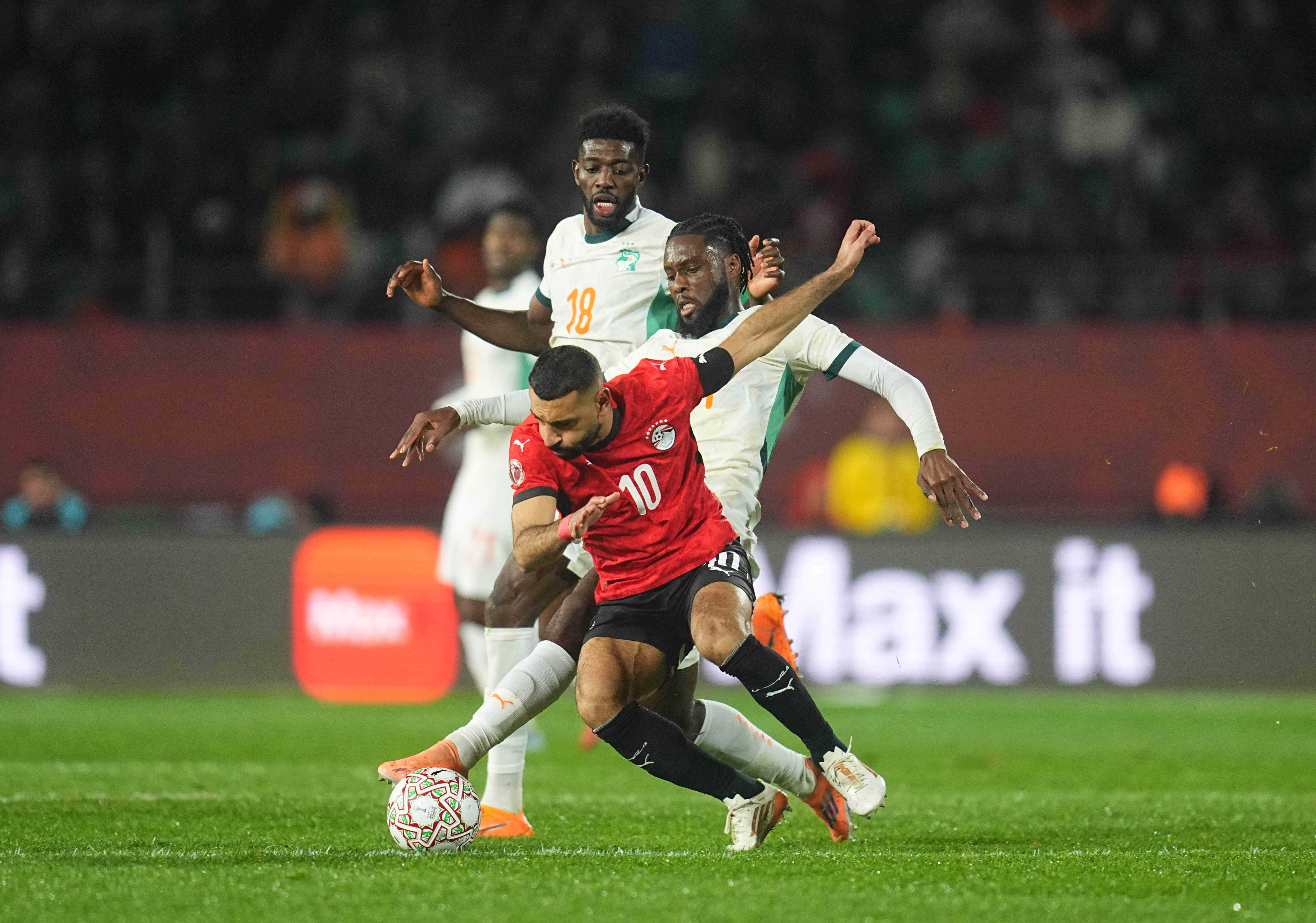
This will be the region’s most representative tournament, amid broad changes in its footballing landscape.

Issam Kayssi