

Commentary
As the U.S.-led Coalition withdraws, the Kurds’ reliance on Baghdad, and on themselves, will only increase.
Wladimir van Wilgenburg
Source: Getty
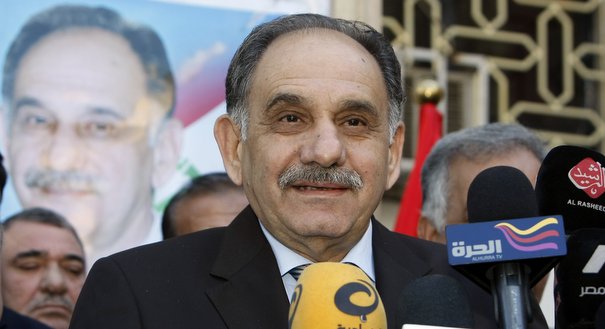
The saga of the banning and unbanning of alleged Baathists has cast a pall on the elections even before the campaign starts in earnest. Whatever the final decision on the banning issue, it is bound to be highly controversial.
Editor's Note: Read updates on the JAC ban: February 25, 2010.
In a continuation of an increasingly politicized and confusing saga, the decision of the ad hoc appeals committee that ordered the conditional unbanning of alleged former Baathists has been reversed. On February 3 the committee ruled that the banned individuals should be allowed to participate in the elections, but that all cases would be reviewed after the elections to determine whether the allegations were valid. This raised the possibility that some elected candidates would not be allowed to take their seats.
The unbanning provoked a storm of protest particularly by the predominant Shia parties, which insisted that Baathists could not be allowed to run. Prime Minister Nouri al-Maliki’s Dawa party in particular organized a number of demonstrations around Iraq to protest the decision. Responding to the outcry and to political pressures, the ad hoc committee backtracked. Claiming that it had originally misunderstood its mandate as requiring it to examine all banning cases, rather than just those of the 177 individuals who appealed the ban, it revoked the blanket unbanning and announced that it would review all appeals by February 11 to decide who is eligible to run. At the same time the election commission announced that the election campaign, originally scheduled to start on February 8, would start instead on February 12.
The saga of the banning and unbanning of alleged Baathists has cast a pall on the elections even before the campaign starts in earnest. The final ruling of the review committee will probably not put the issue to rest completely. It is bound to be highly controversial, no matter what it decides, particularly in the case of high profile candidates. Above all, a decision to maintain the ban on Saleh al-Mutlaq risks reviving threats of an election boycott by his allies in the Iraqi National Movement and by some Sunni parties. The decision to let him run would enrage Shia parties and possibly put Maliki at a disadvantage vis-à-vis his adversaries in the Iraqi National Alliance.
Carnegie does not take institutional positions on public policy issues; the views represented herein are those of the author(s) and do not necessarily reflect the views of Carnegie, its staff, or its trustees.
As the U.S.-led Coalition withdraws, the Kurds’ reliance on Baghdad, and on themselves, will only increase.
Wladimir van Wilgenburg

As the U.S. stumbles in its war with Iran, we are likely to see an acceleration of its disengagement from the region.

Michael Young
The Zaidi government’s objective to collect weapons is constrained by regional conflict, but it can take certain measures at home.
Ali Al-Mawlawi

The accord represents a pivotal moment in the region to avert a security vacuum in the Gulf.


Azeema Cheema, Mohanad Hage Ali

In an interview, Jason Burke discusses his sweeping account of the “revolutionists” who so shaped the 1970s and early 1980s.
Michael Young