

Commentary
This will be the region’s most representative tournament, amid broad changes in its footballing landscape.
Issam Kayssi
Source: Getty
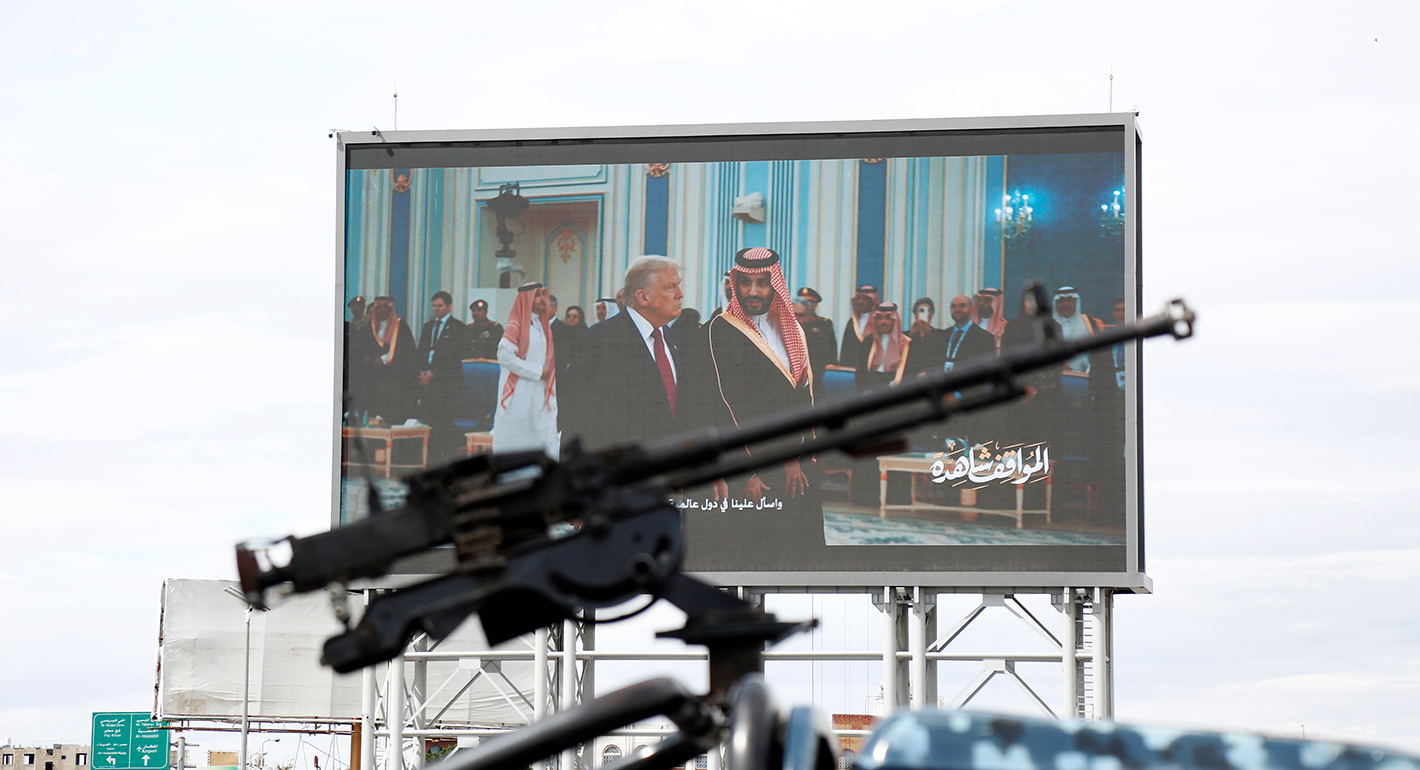
The return of war as the organizing factor in Middle Eastern politics has predictable consequences: governments are prioritizing regime stability and becoming averse to political and social reform.
The ongoing U.S.-Israel war on Iran, coupled with the intensifying pattern of Iranian attacks on Gulf states, is profoundly reshaping the political and social landscape of the Arabian Peninsula. What had previously appeared to be a cautiously evolving regional order is now under significant strain. Across the Gulf, governments are recalibrating their priorities in response to rising insecurity while societies are absorbing the consequences of heightened geopolitical tension.
Security has regained primacy in the region, leading to a broad slowdown, distortion, and in some cases contraction of already limited reform trajectories. Iranian attacks targeting infrastructure, shipping routes, and strategic facilities—whether carried out directly or through proxies—have heightened perceptions of vulnerability across Gulf states. These developments are embedded within a broader war dynamic involving the United States and Israel, which has reintroduced large-scale military confrontation into a region that had, until recently, been tentatively moving toward de-escalation. The return of war as a central organizing factor in regional politics has predictable consequences: governments are prioritizing regime stability, tightening internal controls, and becoming increasingly risk-averse regarding political and social reform.
In countries such as Oman and Qatar, the current crisis is driving a noticeable shift away from openness. Oman’s political model has long relied on quiet diplomacy, internal consensus-building, and modest reform efforts. It has played a key role in resolving regional conflicts, including facilitating the secret U.S.-Iran talks that led to the 2015 nuclear agreement and, along with Kuwait, working to end the four-year blockade of Qatar in 2021. Over the past decade, the country has pursued economic restructuring under its Vision 2040 plan (which intends to reduce dependence on hydrocarbons to below 10 percent of GDP) alongside administrative reforms aimed at improving state efficiency.
However, the regional conflict is narrowing this space. Faced with external threats and economic uncertainty, Omani authorities are increasingly prioritizing stability over experimentation. Reform initiatives are being reassessed through a risk-management lens, with heightened emphasis on preserving social cohesion and preventing internal disruption. The result is a slowing of reform momentum in government agencies as well as in civil society, and a subtle tightening of permissible public discourse in a country that already highly restricts freedom of expression and media. While this does not amount to a complete reversal, it marks a clear shift from gradual economic opening to cautious consolidation.
A similar, though distinct, trajectory is evident in Qatar. Over the past two decades, Qatar has cultivated an image of global engagement, economic dynamism, and controlled openness, hosting the World Cup and serving as the home of Al Jazeera. Qatar’s development of “Education City” in Doha, which houses branches of various American, British, and French universities, has raised the country’s profile globally. Its governance model allows for very limited participation and expression for the country’s citizens (who themselves make up a small share of the population, in comparison to expatriates), while its economy emphasizes innovation and international connectivity. Yet Qatar’s strategic position—hosting key U.S. military assets, maintaining complex regional relationships (balancing those military assets while also hosting Hamas’s political bureau), and acting as a diplomatic intermediary—makes it particularly sensitive to regional instability.
The pressures of war are reinforcing what was already strict state control over the public sphere. Qatari authorities are becoming even more vigilant in managing information flows. The emphasis is on unity and resilience, leaving little tolerance for ambiguity or contestation. As in Oman, reform has not been halted but recalibrated, with control taking precedence over openness in civil society and media arenas. Economic and technological initiatives may continue, but political space is becoming more constrained.
In contrast, in Saudi Arabia and the United Arab Emirates, the war’s impact is more clearly visible in the further tightening of already controlled public environments. Previously, both countries had embarked on ambitious transformation agendas aimed at diversifying their economies, attracting global investment, and positioning themselves as hubs of innovation and culture. These efforts were accompanied by selective social liberalization. In Saudi Arabia, reforms over the past few years have had a real impact on the country’s social life, including permitting women to drive and allowing some cinemas to exist and public concerts to take place.
However, this limited social liberalization occurred alongside increased political repression, in a country that already has a strong centralized authority and very limited political pluralism. In 2025, Saudi Arabia carried out more than 300 executions—a record number for the country. The current security environment is reinforcing this framework. The Saudi leadership’s emphasis on national transformation under external threat is leading to further consolidation of control. Public discourse is increasingly framed in terms of national security, unity, and loyalty. Saudi Arabia’s “Photography serves the enemy” campaign is a symbol of the criminalization of coverage of the current war’s impact. The country is particularly sensitive about photos and videos online that contradict the government’s public statements about the war.
The United Arab Emirates exhibits a similar pattern. In the face of Iranian attacks and regional instability, Emirati authorities are intensifying their focus on surveillance, regulatory oversight, and control of public space. The country is using its harsh Federal Penal Code and Cybercrime Law to silence anyone critical of the government. More than 100 people in the UAE, including tourists, have been arrested under these laws, and the country’s public prosecutor has blocked access to several X accounts for filming or posting information or images of the Iranian strikes. The goal is to shore up the image of the UAE as a safe and secure place and to maintain investor confidence. However, this comes at the cost of further restricting the already narrow avenues for public participation and debate.
This tightening across the Gulf reflects deeper structural dynamics. Gulf states are highly exposed to external shocks due to their hydrocarbon-dependent economic models, demographies where very small minorities of the population hold citizenship, and strategic geographies. Iranian attacks underscore the vulnerability of critical infrastructure, including energy facilities, ports, data centers, and cities, throwing in to question the image of stability and attractiveness the region has sought to project. In such an environment, governments are less willing to tolerate the uncertainties associated with political opening. The balance shifts decisively in favor of control, upending the limited reforms governments were embarking on before the current war.
At the same time, beneath the surface of heightened state control, there are growing signs of social distress and tension, particularly in countries like Bahrain and Kuwait. These cases highlight the complex interplay between external conflict and internal dynamics, as well as the limits of security-centered governance approaches.
In Bahrain, longstanding political and sectarian divisions are being exacerbated by the broader confrontation with Iran. While the government’s security-oriented policies have maintained order, they have not resolved underlying grievances related to political representation, economic opportunity, and social inclusion. The regional escalation adds a new layer of tension, as external conflict intersects with internal fault lines between the Shia majority and ruling Sunni minority. The result is a form of latent instability, where social frustrations persist beneath a surface of enforced calm.
Kuwait presents a different but equally instructive scenario. Its relatively open political system, and a tradition of public debate, distinguishes it from many of its neighbors. However, this openness also makes it more vulnerable to internal tensions during periods of external stress. Political gridlock resulting in the suspension of parliament in 2024, economic challenges, and societal divisions can become more pronounced in the context of regional conflict. The war with Iran, along with associated security and stability concerns, is contributing to uncertainty that complicates governance and strains the existing political equilibrium that has already been unraveling before the war began.
These internal dynamics are unfolding within a broader geopolitical context shaped by renewed U.S. military engagement in the region. While Gulf governments continue to rely on American security guarantees, they are also acutely aware of the historical record of U.S. interventions, particularly in Iraq. The legacy of state collapse, prolonged instability, and unintended consequences serves as a cautionary backdrop.
The current intervention risks reproducing some of these patterns by escalating tensions and contributing to a volatile regional environment. This creates a dilemma for Gulf states: they depend on external security support but also bear the costs of instability. This tension reinforces a defensive posture in which governments prioritize immediate security concerns over long-term reform agendas.
Foreign intervention also has subtler domestic effects. It strengthens hardline tendencies within states, as leaders become more risk-averse and less inclined to pursue political reform. It shifts public expectations, with populations placing greater emphasis on security and economic stability rather than political participation. It also alters the balance between state and society, reinforcing centralized and hierarchical governance structures. In this sense, the war’s impact extends beyond policy adjustments to affect the underlying logic of governance.
The cumulative effect of these dynamics is the disruption of the fragile balance that had been emerging in the Gulf between controlled reform and political stability. In recent years, several Gulf states had experimented with governance models combining economic modernization with limited social and administrative reforms. These models were inherently dependent on stable regional conditions and the absence of major external shocks. The current war represents precisely the type of shock they are ill-equipped to absorb.
As a result, reform trajectories are stalling, backsliding, or being redefined. Economic diversification efforts continue out of necessity but are increasingly decoupled from political reform. Social openings are being recalibrated to emphasize control and repression, while governance improvements related to transparency, accountability, and participation are being deferred or diluted.
This does not imply a full return to pre-reform conditions. The economic, social, and institutional changes of the past decade are too significant to be entirely reversed. However, the direction of change is shifting. Instead of gradual expansion of public space and incremental political liberalization, the region is moving toward a model of managed modernization under heightened control akin to the decade following the Iraqi invasion of Kuwait in 1990 and the decade following the U.S. invasion of Iraq in 2003.
The long-term implications of this shift are uncertain but potentially significant. Delayed or reversed reforms may weaken societal resilience, making Gulf countries more vulnerable to future shocks. Social tensions, if left unaddressed, may accumulate over time, even if they do not immediately lead to instability. Economic transformation, while essential, may prove harder to sustain without parallel improvements in governance and institutional capacity and are further challenged by a lack of investor confidence. Skilled foreign workers and tourists may be reticent to return to a region in the crossfire of conflict, new hubs for air travel may spring up to account for the massive flight disruptions due to reliance on Gulf airports, and conference organizers—whether for sporting events, entertainment or industry—may no longer consider the region a stable (or welcome) venue.
Moreover, the persistence of external conflict creates a feedback loop that further constrains reform. As long as the region remains trapped in cycles of confrontation, governments will continue to prioritize security over openness. This limits societies’ ability to adapt and innovate, reinforcing reliance on state-led development models and potentially leading to stagnation.
Ultimately, the war with Iran represents a critical juncture for the Gulf. It underscores the fragility of reform processes in the face of external shocks and highlights the importance of regional stability as a prerequisite for domestic progress. It also raises fundamental questions about the balance between security and governance, and about the capacity of Gulf states to sustain both control and change.
At present, the balance is clearly tilting toward control. Whether this shift is temporary or enduring will depend on the trajectory of the conflict and the broader regional environment. Continued tensions and external interventions are likely to keep reform space constrained. Conversely, de-escalation and diplomatic engagement could reopen opportunities to revive and recalibrate reform agendas.
For now, the Gulf is navigating a period of disruption and uncertainty. Political systems are becoming more cautious, social environments more constrained and permeated with fear, and reform trajectories more fragile. The central challenge for Gulf states is not only to manage immediate security threats but also to overcome the environment of fear and preserve the possibility of long-term development and governance improvement in an increasingly volatile regional context.

Senior Fellow, Middle East Program
Sarah Yerkes is a senior fellow in Carnegie’s Middle East Program, where her research focuses on Tunisia’s political, economic, and security developments as well as state-society relations in the Middle East and North Africa.

Director, Middle East Program
Amr Hamzawy is a senior fellow and the director of the Carnegie Middle East Program. His research and writings focus on Egypt’s and other middle powers’ involvement in regional security in the Middle East, particularly through collective diplomacy and multilateral conflict resolution
Carnegie does not take institutional positions on public policy issues; the views represented herein are those of the author(s) and do not necessarily reflect the views of Carnegie, its staff, or its trustees.
This will be the region’s most representative tournament, amid broad changes in its footballing landscape.

Issam Kayssi
In an interview, Jim Lamson discusses the ongoing regional conflict and sees an unclear picture when it comes to winners and losers.

Michael Young
Mitigating the repercussions of climate change in Kuwait is crucial for lessening economic disparities and achieving social justice.

Courtney Freer
Cairo’s efforts send a message to the United States and the region that it still has a place at the diplomatic table.

Angie Omar
Beirut’s desire to break free from Iranian hegemony may push it into a situation where it has to accept Israel’s hegemony.
Michael Young