

Paper
- +2
George Perkovich, Malcolm Chalmers, Steven Pifer, …
{
  "authors": [
    "Paul Schulte"
  ],
  "type": "legacyinthemedia",
  "centerAffiliationAll": "dc",
  "centers": [
    "Carnegie Endowment for International Peace",
    "Carnegie Europe"
  ],
  "collections": [
    "Transatlantic Cooperation"
  ],
  "englishNewsletterAll": "ctw",
  "nonEnglishNewsletterAll": "",
  "primaryCenter": "Carnegie Endowment for International Peace",
  "programAffiliation": "NPP",
  "programs": [
    "Nuclear Policy"
  ],
  "projects": [],
  "regions": [
    "Western Europe",
    "Europe",
    "North America"
  ],
  "topics": [
    "Nuclear Policy",
    "Foreign Policy"
  ]
}
Source: Getty
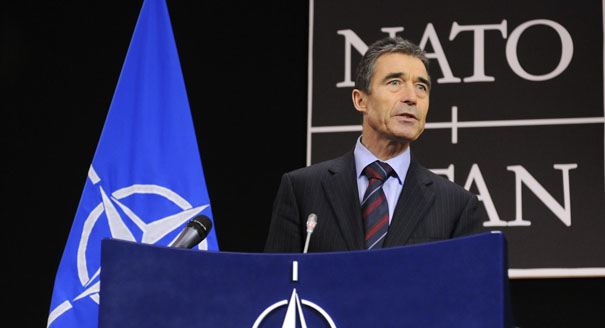
At its Chicago summit, NATO reaffirmed its commitment to its European-based arsenal of tactical nuclear weapons.
Source: World Politics Review

Schulte: The variable yield B61 bomb is the only remaining nuclear weapon in the U.S. Enduring Stockpile and the only one used in the nonstrategic role. It was first produced as long ago as 1968, and a Life Extension Program (LEP) is planned, the projected costs of which have recently risen to more than $5 billion. The LEP will extend service life; consolidate multiple variants into one modification; and improve safety, security and user control of the roughly 500 B61s. A new tail subassembly is intended to raise the B61's accuracy to latest standards.
Greater accuracy could permit smaller quantities of fissile material, lower yields, less radioactivity and more-precise and more-effective strikes against hardened targets. Especially if delivered by new stealth F-35 replacement DCAs, this would offer extra operational flexibility, facilitating future reductions in overall U.S. nuclear numbers. But critics argue it would be unnecessary and unavoidably provocative in Europe.
Schulte: Those NATO members -- Germany, Benelux and Norway -- who would prefer U.S. NSNWs be withdrawn from Europe argue that America could spend its money better elsewhere, but they are unlikely to oppose the LEP openly, since it improves safety and security. The upgrade program will, however, increase domestic opposition from anti-nuclear groups. Moreover, Russian denunciation can be taken for granted, given Moscow's past statements insisting on total American nuclear withdrawal from Europe as a precondition for talks on NSNW arms control. This may make negotiations to reduce numbers, increase transparency or reposition NSNWs even less likely to succeed.
Former Nonresident Senior Associate, Nuclear Policy Program
Schulte was a nonresident senior associate in the Carnegie Nuclear Policy Program, where his research focuses on the future of deterrence, nuclear strategy, nuclear nonproliferation, cybersecurity, and their political implications.
Recent Work

George Perkovich, Malcolm Chalmers, Steven Pifer, …
Paul Schulte
Carnegie does not take institutional positions on public policy issues; the views represented herein are those of the author(s) and do not necessarily reflect the views of Carnegie, its staff, or its trustees.

Despite public disputes over trade and immigration, the strategic partnership’s foundations remain sturdy.

Sameer Lalwani

With its public finances in shambles, the far right polling at 35 percent ahead of the 2027 presidential election, and a growing protest movement, is France’s crisis a threat to the EU’s geopolitical awakening?

Rym Momtaz, ed.

Ahead of a tough winter for Ukraine, Donald Trump’s swing back toward Russia bodes ill. But instead of panicking, Kyiv’s European allies are focusing on action.
Rym Momtaz

Without a ceasefire with Ukraine on attacking each other’s energy infrastructure—to which the Kremlin is unlikely to agree—the diesel agreement between Putin and Trump is largely for show, rather than representing a genuine increase in the volumes of Russian diesel on the global market.

Sergey Vakulenko

Funding Ukraine remains a priority for European leaders. As Russia’s war of aggression heads into another winter, two feasible options to mobilize support for Kyiv should be fast-tracked.


Vladyslav Rashkovan, Gregory P. Wilson