

Paper
- +2
George Perkovich, Malcolm Chalmers, Steven Pifer, …
{
  "authors": [
    "Paul Schulte"
  ],
  "type": "legacyinthemedia",
  "centerAffiliationAll": "dc",
  "centers": [
    "Carnegie Endowment for International Peace"
  ],
  "collections": [
    "Korean Peninsula"
  ],
  "englishNewsletterAll": "ctw",
  "nonEnglishNewsletterAll": "",
  "primaryCenter": "Carnegie Endowment for International Peace",
  "programAffiliation": "NPP",
  "programs": [
    "Nuclear Policy"
  ],
  "projects": [],
  "regions": [
    "East Asia",
    "North Korea"
  ],
  "topics": [
    "Nuclear Policy"
  ]
}
Source: Getty
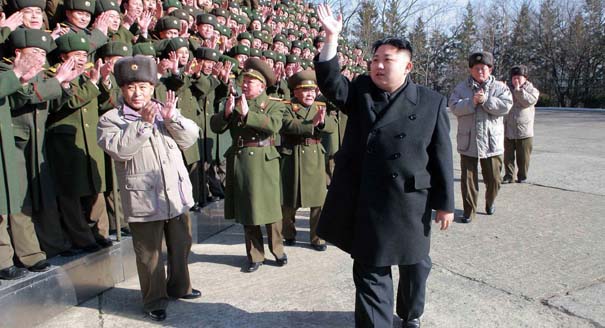
North Korea's latest rocket launch is part of an established behavior, where it hopes that generating international anxiety will bring the global community to offer aid, assistance, and toleration of the regime.
Source: Sky News

Schulte said that North Korea is "trying to go on its well established path of getting attention, generating anxiety, and hoping to get aid, assistance, and toleration of the regime." He explained that in the past the West has been irritated by these types of actions from North Korea, but has always "come up with the goods." "They have offered fuel, the South Koreans in particular have offered food, which is an important humanitarian issue because many North Koreans are in fact starving," Schulte pointed out.
Schulte added that the tactic of continually threatening and then hinting that if the goods were delivered relations would improve has paid off in the past. "It's a form of nuclear extortion," he said.
Regarding China's support for the North Korean regime, Schulte explained that China is standing behind North Korea and has suggested that the real solution to the problem is to improve relations between America and North Korea. "China has a formal military alliance with them," Schulte said.
"North Korea seems determined to have nuclear weapons," Schulte concluded. "They've declared that it's their right and their intention."

Former Nonresident Senior Associate, Nuclear Policy Program
Schulte was a nonresident senior associate in the Carnegie Nuclear Policy Program, where his research focuses on the future of deterrence, nuclear strategy, nuclear nonproliferation, cybersecurity, and their political implications.
Recent Work

George Perkovich, Malcolm Chalmers, Steven Pifer, …
Paul Schulte
Carnegie does not take institutional positions on public policy issues; the views represented herein are those of the author(s) and do not necessarily reflect the views of Carnegie, its staff, or its trustees.

The nuclear relationship between China and the United States is increasingly shaped by widening perception gaps rather than deliberate strategic design.

Tong Zhao

A look at why states without nuclear weapons are seeking naval nuclear propulsion, whether they can legally and technically deliver it, what it will cost them, and what responsible stewardship of the capability would look like.

Jamie Kwong

U.S. trading partners in Asia are closely watching the dispute for signs of how it may affect their own interests.

Barbara Weisel
Congress should ask tough questions about the agreement’s more unique features and whether they advance U.S. interests or compromise them.

Jane Darby Menton
Nuclear and maritime communities face a long and challenging journey to deploy commercial nuclear applications at sea.

Jamie Kwong, Toby Dalton