

Paper
Lora Saalman
{
  "authors": [
    "Lora Saalman"
  ],
  "type": "legacyinthemedia",
  "centerAffiliationAll": "",
  "centers": [
    "Carnegie Endowment for International Peace",
    "Carnegie China"
  ],
  "collections": [
    "China’s Foreign Relations"
  ],
  "englishNewsletterAll": "",
  "nonEnglishNewsletterAll": "",
  "primaryCenter": "Carnegie Endowment for International Peace",
  "programAffiliation": "",
  "programs": [],
  "projects": [],
  "regions": [
    "South Asia",
    "India",
    "East Asia",
    "China"
  ],
  "topics": [
    "Security",
    "Foreign Policy"
  ]
}
Source: Getty
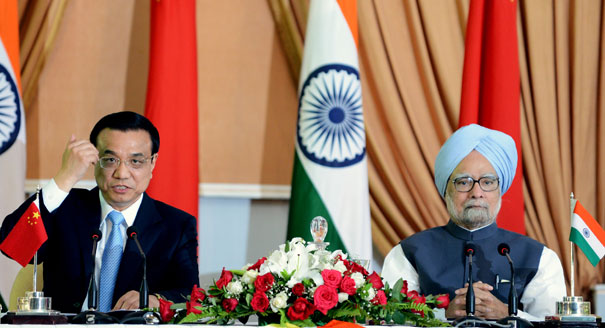
The recent border dispute between China and India may initiate a more comprehensive system between the two countries for communicating on territorial issues and other points of contention.
Source: News X
Speaking to News X, Carnegie-Tsinghua’s Lora Saalman detailed the Chinese rationale behind the three-week Ladakhi border stand-off between China and India. Saalman stated that Beijing does not consider its troop movements an incursion into India since the Line of Actual Control remains undefined. While instead declaring the maneuver a tactical move, she noted that, despite the spike in tensions, China views its territorial disputes in the East and South China Sea as “much more pressing.”
From a political standpoint, Saalman discussed how Beijing has advocated for new mechanisms and for stronger strategic bilateral discussions. She noted that the Chinese recognize the potential for small incidents to escalate quickly and derail political and economic relations. Saalman concluded by noting that the incident may initiate “healthy discourse between the two countries.”

Former Nonresident Associate, Nuclear Policy Program
Saalman was a nonresident associate in the Nuclear Policy Program at the Carnegie Endowment for International Peace. Her research focuses on China’s nuclear and strategic policies toward India, Russia, and arms control.
Recent Work
Lora Saalman
Lora Saalman
Carnegie does not take institutional positions on public policy issues; the views represented herein are those of the author(s) and do not necessarily reflect the views of Carnegie, its staff, or its trustees.

AI capabilities are moving fast. Most institutions—including governments—can’t keep up.


Anton Leicht, Scott Singer

The Bureau of Industry and Security needs to adjust its focus and practices to maintain its position as the U.S. government’s primary champion of international technological competition.

Geoffrey Irving
They face an uphill climb, but they could draw on a strategy that other diplomats have used in the past.


Shana Tabak, Alejandro Martin Rodriguez

European Commission President Ursula von der Leyen is about to give her annual address on the state of the EU. Here’s what she won’t—but should—say.

Rym Momtaz

Understanding the climatic pain points is necessary for policymakers hoping to minimize the war’s negative environmental consequences.


Alejandro Martin Rodriguez, Joy Arkeh, Sarah Yerkes