

Commentary
The domestic impacts of how long it is taking to end the war in Ukraine have pushed the French electorate to the political extremes and compromised the country’s diplomatic capacity.
Rym Momtaz
{
  "authors": [
    "Uri Dadush",
    "Beatriz Leycegui"
  ],
  "type": "other",
  "centerAffiliationAll": "",
  "centers": [
    "Carnegie Endowment for International Peace"
  ],
  "collections": [],
  "englishNewsletterAll": "",
  "nonEnglishNewsletterAll": "",
  "primaryCenter": "Carnegie Endowment for International Peace",
  "programAffiliation": "",
  "programs": [],
  "projects": [],
  "regions": [
    "North America",
    "United States",
    "South America",
    "East Asia",
    "Southeast Asia"
  ],
  "topics": [
    "Economy",
    "Trade",
    "Foreign Policy"
  ]
}
Source: Getty
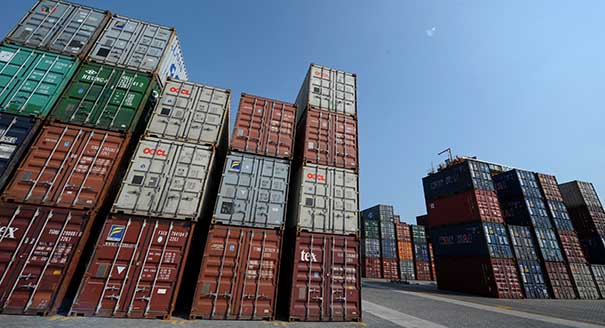
There is a large unfinished agenda in the integration of the North American economy, a gap which TPP could help fill.
Source: Wilson Center
While the three North American countries, Canada, Mexico, and the United States, together acccount for a large share of TPP GDP and intra-TPP trade, their trade is also already governed by NAFTA. Though NAFTA is a far-reaching and long-standing mega-regional agreement, there is a large unfinished agenda in the integration of the North American economy, a gap which TPP could help fill.
This paper compares TPP and NAFTA as they affect the trade of the NAFTA countries. It will argue that TPP is likely to advance trade of the NAFTA block with the other TPP members, and within the NAFTA block, and make the whole TPP block, including NAFTA, more attractive as an investment destination.The paper also examines the motivation of NAFTA countries in joining TPP as well as the additionality of market access commitments, followed by an assessment of how the rules negotiated in TPP modify pre-existing NAFTA commitments. Finally, the paper briefly considers how TPP might help promote other crucial interests of the NAFTA countries, including integration in North and South America, and the vitality of the WTO...

Former Senior Associate, International Economics Program
Dadush was a senior associate at the Carnegie Endowment for International Peace. He focuses on trends in the global economy and is currently tracking developments in the eurozone crisis.
Beatriz Leycegui
Carnegie does not take institutional positions on public policy issues; the views represented herein are those of the author(s) and do not necessarily reflect the views of Carnegie, its staff, or its trustees.

The domestic impacts of how long it is taking to end the war in Ukraine have pushed the French electorate to the political extremes and compromised the country’s diplomatic capacity.

Rym Momtaz
Soft power on its own is insufficient to meet U.S. national security needs, but hard power also has its limits. Soft power allows for more effective and efficient use of hard power than hard power alone, as it encourages cooperation and compliance which deters the need for hard power.

Sarah Yerkes

A deep dive into the policy ecosystems behind battery development in China, South Korea, Japan, the European Union (including some of its member states), the United States, Canada, and India.



Milo McBride, Herbert Crowther, Darcie Draudt-Véjares, …

In an interview, Ian Lustick and Eli Clifton discuss their new book on why a prominent ally has so much influence in America.

Michael Young

Germany, India, and other middle powers can’t build frontier AI alone, and they risk being cut off if they depend on the United States or China. The way through is to build the capacity for a frontier sprint while hoping never to use it.


Anton Leicht, Sam Winter-Levy