

Article
Paul Stronski
{
  "authors": [
    "Paul Stronski"
  ],
  "type": "legacyinthemedia",
  "centerAffiliationAll": "dc",
  "centers": [
    "Carnegie Endowment for International Peace"
  ],
  "collections": [],
  "englishNewsletterAll": "ctw",
  "nonEnglishNewsletterAll": "",
  "primaryCenter": "Carnegie Endowment for International Peace",
  "programAffiliation": "russia",
  "programs": [
    "Russia and Eurasia"
  ],
  "projects": [
    "Changing Geopolitics of Eurasia"
  ],
  "regions": [
    "Caucasus",
    "Azerbaijan"
  ],
  "topics": [
    "Political Reform"
  ]
}
Source: Getty
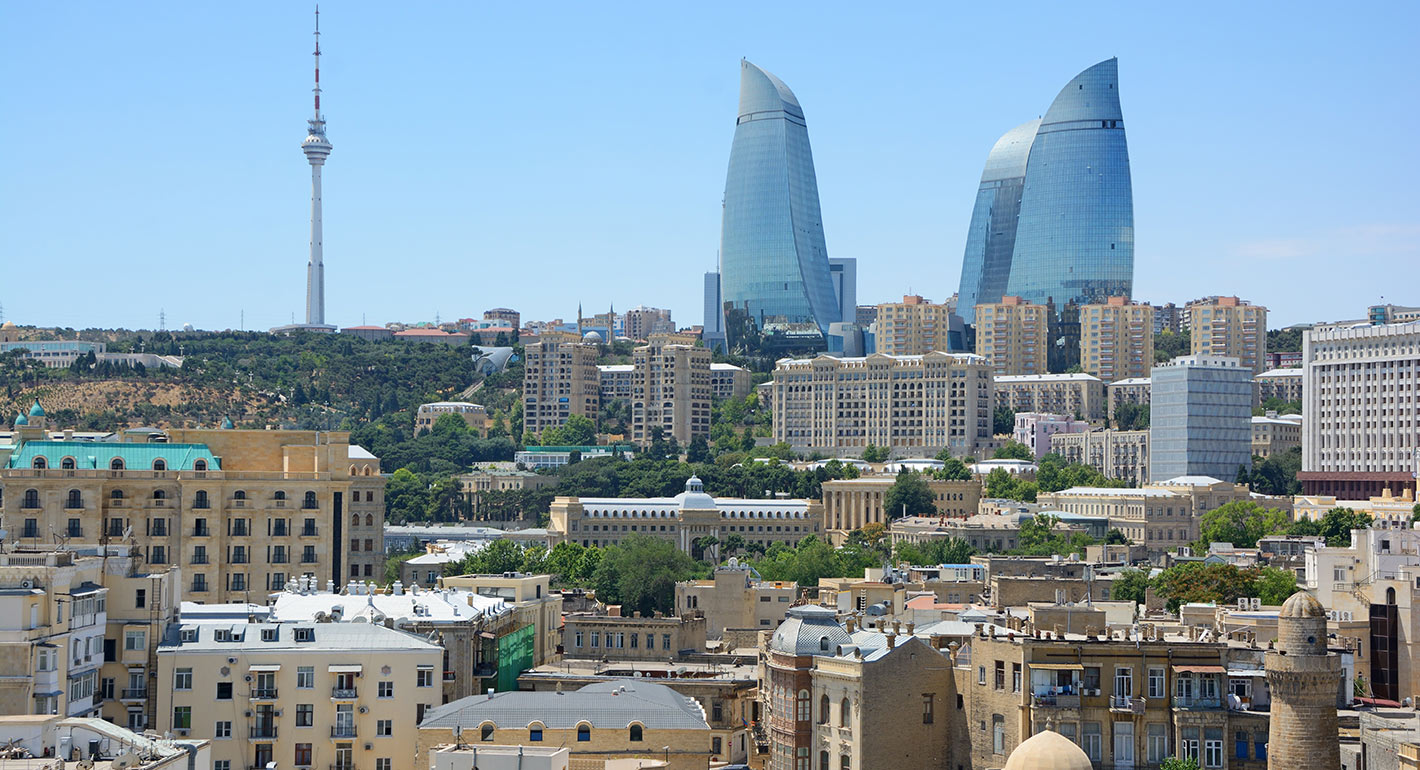
While Azerbaijan will not become a Western-style liberal democracy anytime soon, recent trends point to a society that is changing—and a government that may now recognize the need to change along with it.
Source: World Politics Review
Azerbaijan’s parliament voted to dissolve itself last week, triggering legislative elections on Feb. 9. Some observers speculate that the move sets the stage for President Ilham Aliyev to eventually hand over power to his wife, First Vice President Mehriban Aliyeva. She has assumed a much higher profile on policy issues in the past few years, most recently highlighted by a six-day solo diplomatic mission to Moscow in late November. It is unclear why Aliyev would want to transfer power, but he has been in office for more than 15 years, and the opposition has peddled unsubstantiated rumors about his health.
Azerbaijani politics are opaque, and dynastic succession has been the norm: Aliyev took over as president from his father, Heydar Aliyev, in 2003. The recent dissolution of the largely rubber-stamp parliament could be the first stage of another undemocratic transfer of power. But behind the rumors of succession, there are a series of deeper and more revealing shifts taking place in Azerbaijan today. While the country will not become a Western-style liberal democracy anytime soon, recent trends point to a society that is changing—and a government that may now recognize the need to change along with it....
This piece was originally published in the World Politics Review.
Former Senior Fellow, Russia and Eurasia Program
Paul Stronski was a senior fellow in Carnegie’s Russia and Eurasia Program, where his research focuses on the relationship between Russia and neighboring countries in Central Asia and the South Caucasus.
Recent Work
Paul Stronski
Paul Stronski
Carnegie does not take institutional positions on public policy issues; the views represented herein are those of the author(s) and do not necessarily reflect the views of Carnegie, its staff, or its trustees.

Sergei Kiriyenko used Russia’s parliamentary vote to further hone his strategy of corporate mobilization that is designed to maximize votes for United Russia.

Andrey Pertsev

Before the next wave of EU enlargement takes place, the union needs to grapple with thorny questions of how power is distributed among its members.


Emil Sondaj Hansen, Ditte Brasso Sørensen

The European far right might fail to steer EU policy in the direction Russia wants, but they will create enough chaos inside Europe to benefit the Kremlin.

Dimitar Bechev

If the Russian-speaking community in Latvia cannot articulate their interests without being seen as disloyal, they could end up embracing a pro-Kremlin agenda.

Sergejs Potapkins

Russia’s ruling party would have benefited from Putin appearing as its distant patron, but as an active frontman imposing his views on the public, he has done nothing but harm both the party’s election campaign and the ruling system overall.
Andrey Pertsev