

Commentary
Andrei Kolesnikov
{
  "authors": [
    "Andrei Kolesnikov"
  ],
  "type": "commentary",
  "blog": "Carnegie Politika",
  "centerAffiliationAll": "",
  "centers": [
    "Carnegie Endowment for International Peace",
    "Carnegie Russia Eurasia Center"
  ],
  "collections": [],
  "englishNewsletterAll": "",
  "nonEnglishNewsletterAll": "",
  "primaryCenter": "Carnegie Russia Eurasia Center",
  "programAffiliation": "",
  "programs": [],
  "projects": [],
  "regions": [
    "Russia"
  ],
  "topics": [
    "Political Reform",
    "Economy"
  ]
}
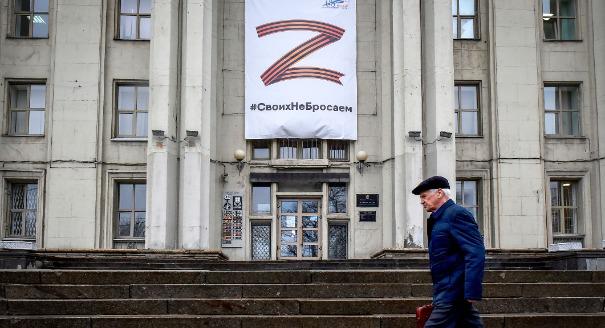
Source: Getty
The nation is finding itself in a psychological crisis. In response, some Russians are fervently supporting the operation with patriotic zeal. Others are engaging in endless squabbles.
This article was originally published in Russian in the New Times.
One hundred days is too long for something called a “special operation.” As the Ukraine conflict drags on and becomes routine, the interest of the general public wanes. One might think that this works in Russian President Vladimir Putin’s favor, but the growing apathy is resulting in demobilization. What Putin needs from the masses is the exact opposite. Furthermore, as the conflict becomes increasingly routine, even his strongest supporters can’t shrug off the endless nightmare that has shattered their past and stolen their future.
One thing we can say for sure is that however the conflict ends, Russians will still be outcasts, equated in Western public opinion to the Germans in 1945. With 14 million people pushed from their homes, a truly staggering number, Russians will continue to face isolation and condemnation.
Public support for the “special operation” remains impressive: in the Levada Center’s May survey, the number of respondents who “definitely support” the “special operation” was a little under half, with the strongest support coming from the “55 plus” age group. Another 30 percent “rather support” it.
However, some difficult internal moral work is under way in society: despite the increasing routineness of the conflict and the resulting decline in attention to it, Russians are beginning to think about their own responsibility for what is happening. This is something new: about a third of respondents believe that “people like them” are responsible “for the deaths of civilians and the destruction in Ukraine.” Over the course of a month, the number of respondents who are pausing to think has grown by 8 percentage points. These are the indicators that deserve attention more than the infamous “80 percent” cited by both those who consider all Russians moral degenerates and those who use sociology to justify the continued archaization of the political regime (including presidential press secretary Dmitry Peskov).
The nation is finding itself in a psychological crisis. In response, some Russians are fervently supporting the operation with patriotic zeal. Others are engaging in endless squabbles. Those who have left Russia blame those who have stayed behind for everything, even those who oppose the regime. Meanwhile, those who remain in Russia challenge their critics to return home and conduct civil and political resistance in the face of a brutal police dictatorship.
The unthinkable has become routine. That includes absurd debates about “good” and “bad” Russians, and the persecution of dissidents. Russian human rights lawyer Pavel Chikov estimates that as of the end of May, 53 criminal cases have been launched into “fake news” about the Russian armed forces and 2,029 administrative cases involving the alleged maligning of the armed forces. The list of “foreign agents” is expanded, like clockwork, every Friday. And in a development that brings together all types of frustrations with the continuing catastrophe, the supporters of opposition leader Alexei Navalny recently called for sanctions against Alexei Venediktov, the former editor in chief of Echo of Moscow radio station who has been branded by the Kremlin as a “foreign agent.” In other words, groups on very different sides of the barricades are attacking the very same man for very different reasons.
Ordinary citizens are doing whatever they can to distract themselves from the situation. Consider trends in the book market: Russians are no longer reading business and self-help books. Instead, sales of fiction are growing, particularly escapes from reality such as romance novels, science fiction, and fantasy. Several years ago Russians were buying Karl Marx’s Das Kapital and Thomas Piketty’s Capital in the Twenty-First Century. Today, sales of George Orwell’s 1984 are up.
The hot new production on Moscow’s theater scene is Cabaret, a musical drama directed by Yevgeny Pisarev. The setting is the same as that in Bob Fosse’s classic 1972 film version: a Germany descending into the Nazism that Putin and his spin doctors frequently claim is happening right next door. However, the allusions are obvious to everyone, particularly those in the lines of the actor playing the Master of Ceremonies. But it’s clear in this production that the actors are not talking about mythical Banderites but rather about things that are brewing on the eastern side of the Russia-Ukraine border.
“The departing year was not easy,” says the Master of Ceremonies. “But a new year is starting, 1931. Germany is rising up from its knees to a new position that we are promised will bring us happiness and prosperity.”
Only theater critics from state-owned media outlets can pretend that the “Germany” in the production is the Germany of 1931 and not the Russia of 2022. Today, it is almost impossible to get tickets to Cabaret. Everyone is eager to hear the Master of Ceremonies say, at the end of the play, “So, you still think you have problems?” and to flirt with their silent but burgeoning feeling of protest against the archaism imposed on Russia by Putin.
A joke is told on stage: “Hitler, Goering, and Goebbels are sitting in a bunker. If a bomb hits the bunker, who will be saved? Germany will be saved.”
How does the audience react when they hear terms like “rising up from its knees” or “bunker,” which are part and parcel of everyday conversations among the Russian intelligentsia about their country’s leader? And yet how could the authorities censor the play? Ostensibly, it is about the Nazism that the official Kremlin propaganda attacks and about other Western degradation. Who could possibly object to any of that?
But nothing is as simple as it looks for Russia Inc. It is slowly turning into a hysterical Russian version of Cabaret. Not every Russian supports the regime and the “special operation” to rob Russia of its future. And clever Russians are still finding ways to protest. While a brave few are taking to the streets, others are putting up funny fake propaganda stickers, complete with the trademark “Z” symbol, that read “For the President’s Ass!” (These are a takeoff from the words of rock musician Yuri Shevchuk, who was unsuccessfully persecuted for telling a crowd, “The Motherland is not the president’s ass.”) That’s why it’s so hard to get tickets to Cabaret, which doubles as an outlet for protest and a therapeutic experience.
Former Senior Fellow, Carnegie Russia Eurasia Center
Kolesnikov was a senior fellow at the Carnegie Russia Eurasia Center.
Recent Work
Andrei Kolesnikov
Andrei Kolesnikov
Carnegie does not take institutional positions on public policy issues; the views represented herein are those of the author(s) and do not necessarily reflect the views of Carnegie, its staff, or its trustees.
The front-runner to succeed Ilia II, Metropolitan Shio, is prone to harsh anti-Western rhetoric and frequent criticism of “liberal ideologies” that he claims threaten the Georgian state. This raises fears that under his leadership the Georgian Orthodox Church will lose its unifying role and become an instrument of ultraconservative ideology.

Bashir Kitachaev
The future trajectory of the U.S.-Iran war remains uncertain, but its impact on global energy trade flows and ties will be far-reaching. Moscow is likely to become a key beneficiary of these changes; the crisis in the Gulf also strengthens Russia’s hand in its relationships with China and India, where advantages might prove more durable.

Sergey Vakulenko
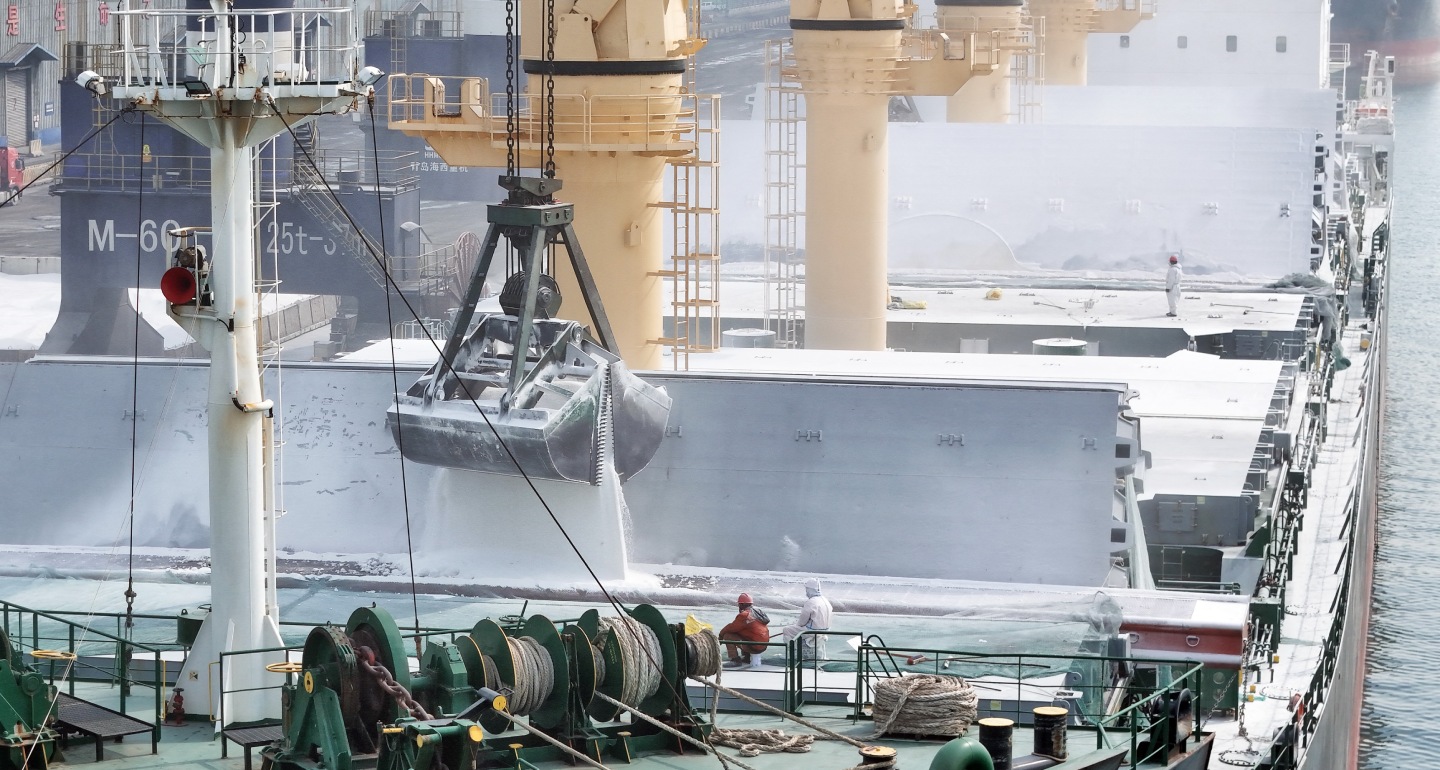
The Kremlin expects to not only profit from rising fertilizer prices but also exact revenge for the collapse of the 2023 grain deal.
Alexandra Prokopenko
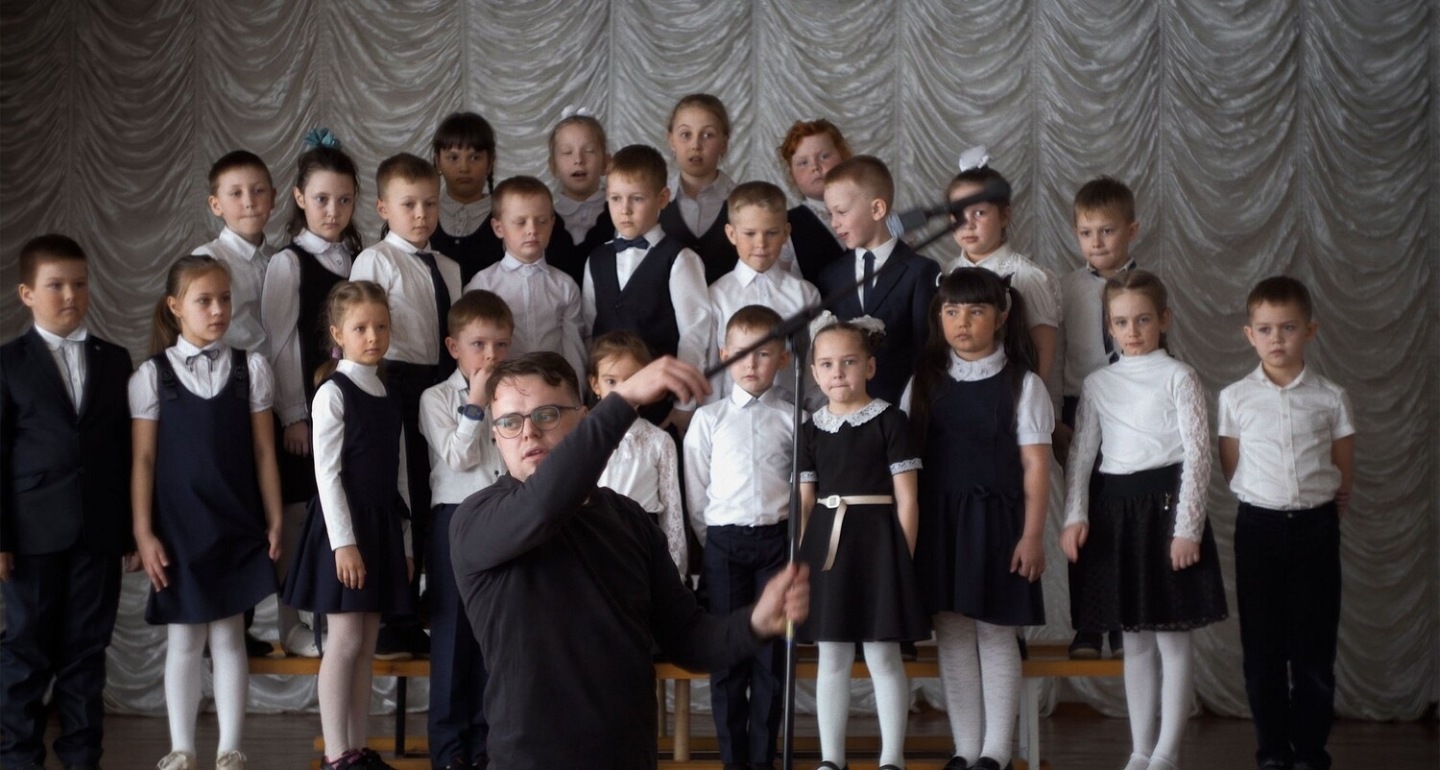
Talankin and Borenstein’s documentary is a unique inside look at a regime that threatens the world and has killed thousands of people in its neighboring country. And many critics and general viewers alike draw parallels between the Putin regime and their own governments.

Ekaterina Barabash
The history of Telegram’s relations with the Russian state offers a salutary lesson for international platforms that believe they can reach a compromise with the Kremlin.

Maria Kolomychenko