

Commentary
Konstantin Skorkin
{
  "authors": [
    "Konstantin Skorkin"
  ],
  "type": "commentary",
  "blog": "Carnegie Politika",
  "centerAffiliationAll": "dc",
  "centers": [
    "Carnegie Endowment for International Peace",
    "Carnegie Russia Eurasia Center"
  ],
  "collections": [],
  "englishNewsletterAll": "ctw",
  "nonEnglishNewsletterAll": "",
  "primaryCenter": "Carnegie Russia Eurasia Center",
  "programAffiliation": "russia",
  "programs": [
    "Russia and Eurasia"
  ],
  "projects": [],
  "regions": [
    "Russia",
    "Eastern Europe",
    "Ukraine",
    "Caucasus"
  ],
  "topics": [
    "Foreign Policy",
    "Economy"
  ]
}
Source: Getty
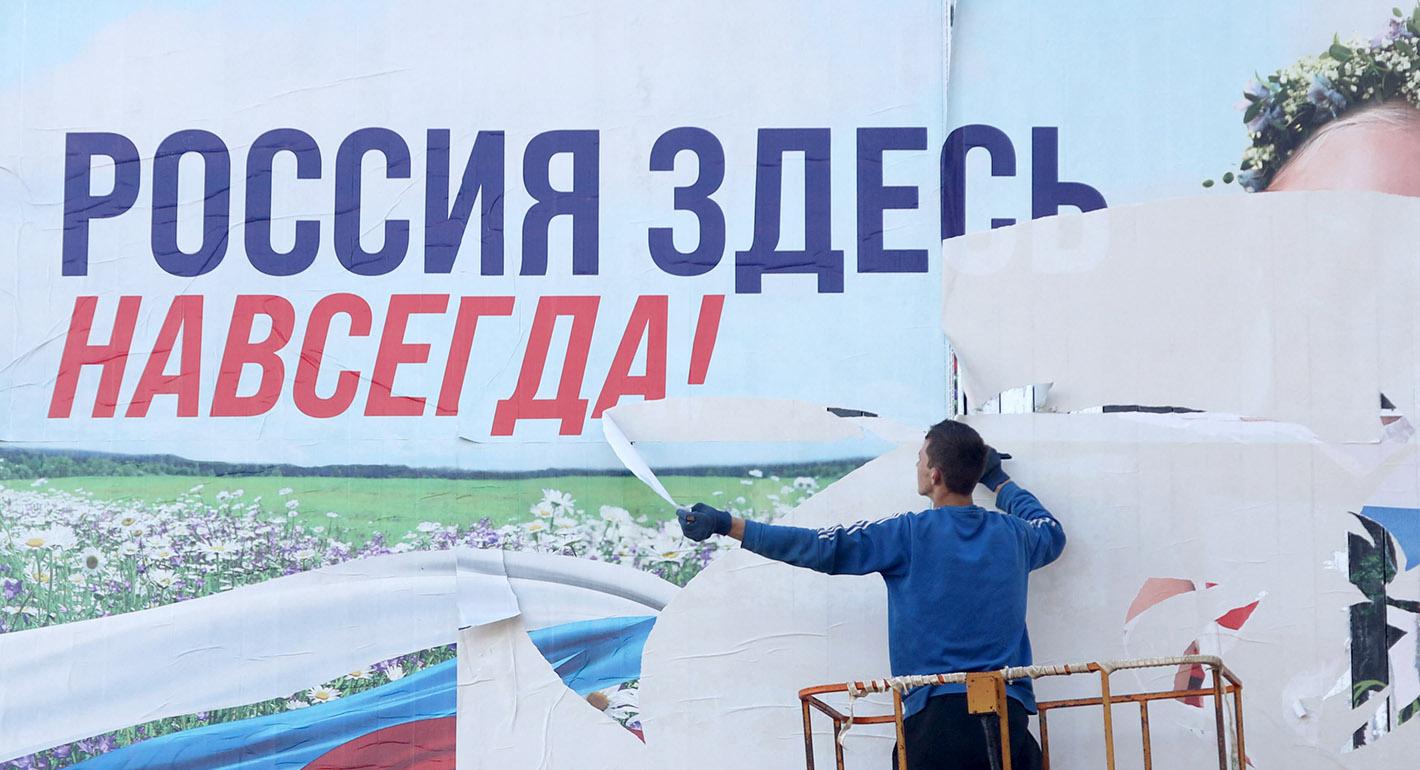
No matter how the war in Ukraine ends, it’s very difficult to imagine the reemergence of pro-Russian political parties there, leaving a political void in the country’s southeast.
Ukraine’s successful counteroffensive in the Kharkiv and Kherson regions means that a large chunk of the country’s Russian-speaking southeast is returning to the Ukrainian political arena. As the heartland of pro-Russian political parties, this region has always held a distinct place in the country’s politics, and even after 2014, sought to offer an alternative to Kyiv’s Euro-Atlantic trajectory. Now, following Russia’s devastating invasion, Ukraine’s southeast is in search of a new identity and political leaders.
Ironically, the regions that have borne the brunt of Russia’s invasion are those that were always most likely to vote for pro-Russian political parties. Just two years ago, Viktor Medvedchuk’s pro-Russian Opposition Platform–For Life bloc won local elections for the Zaporizhzhia, Mykolaiv, Odesa, and Kherson regional legislatures.
In recent years, despite growing tensions with Russia and the threat of war, this part of Ukraine had retained generally positive attitudes toward its neighbor to the east: 53 percent in Ukraine’s east and 45 percent in the south viewed Russia favorably. Some—though not many—went as far as to support unification with Russia: 22 percent in the Luhansk region, and 11 percent in the Kherson region.
Russia’s invasion largely put an end to this pro-Russian sentiment: by May 2022, only 4 percent in Ukraine’s east and 1 percent in the south still had a positive view of Russia. Support for Ukraine joining NATO, on the other hand, had surged to record highs: 69 percent in the east and 81 percent in the south, up from 36 percent in the east and 48 percent in the south, according to a poll taken on February 16 and 17 of this year.
Cultural and historical preferences have also changed dramatically. Sixty-eight percent of respondents from the south and 53 percent from the east now describe Ukrainian as their native language, though 49 percent of people in the south and 47 percent in the east still said they used both Ukrainian and Russian in their everyday life.
These sea changes in public opinion leave little room for political projects based on the idea of a separate southeastern identity, while anything Russia-related is now toxic. Local politicians can either call it quits or adapt. Odesa Mayor Gennadiy Trukhanov is a case in point: up until this summer, he opposed the dismantling of the city’s monument to Catherine the Great, but now supports it.
Back in 2014, when the fighting in the Donbas began and Russia annexed Crimea, the local elites in those areas faced no such dilemma. Indeed, most of them found a place in the political structures Russia created. This time around, collaboration in the occupied territories is rare. The Opposition Platform faction in Kherson City Council, for instance, condemned the Russian occupation of the city. For the most part, local pro-Russian politicians were corrupt opportunists who opposed Kyiv to protect their fiefdoms rather than out of any fervent ideological beliefs.
Only a few risked going over to Russia’s side, such as former Party of Regions member Vladimir Saldo, who was the mayor of Kherson from 2002 to 2012 and now heads the Russian-appointed regional administration (albeit no longer from Kherson). Despite earlier reports of his death, Saldo appears to be holding onto his position for now, but many others have apparently paid the price of switching sides.
Saldo’s deputy Kirill Stremousov died in a mysterious car accident on the eve of the Russian withdrawal from Kherson. Alexei Kovalev, a Kherson businessman who once represented Ukrainian President Volodymyr Zelensky’s Servant of the People party in the Ukrainian parliament and later showed up at a meeting with Kremlin official Sergei Kiriyenko as a “farmers’ representative,” was murdered in unclear circumstances. Ukraine’s Territorial Defense is alleged to have killed Kreminna Mayor Vladimir Struk, who had supported pro-Russian separatists in the Luhansk region, while Russian looters in Bucha killed former parliamentarian Alexander Rzhavsky, who had actively advocated for dialogue with Russia.
The treason committed by some of the country’s pro-Russian politicians has given the government carte blanche to crack down on all former political projects in the southeast. Twelve political parties have been banned, including the pro-Russian Opposition Platform–For Life and the more moderate Opposition Bloc. The parties’ factions in the national parliament and local legislatures were also disbanded.
Individual politicians with ties to the Kremlin, meanwhile, have scattered to the wind. Viktor Medvedchuk was arrested and later handed over to Russia in exchange for Ukrainian prisoners of war. The Opposition Platform leaders Vadim Rabinovich and Taras Kozak fled the country on the eve of the Russian invasion. The party’s more moderate wing, linked to Yuri Boyko and Sergei Levochkin, is trying to register a new parliamentary faction, but the chances of them regaining their once powerful clout are slim.
Unsurprisingly, some formerly pro-Russian politicians are trying to adapt to the new reality by adopting a pro-Ukrainian stance. The colorful ex-governor of the Kharkiv region, Mikhail Dobkin, has joined the ranks of the Ukrainian army, while Alexander Vikul, once the Opposition Bloc’s candidate for president, was appointed head of the defense command center of the city of Kryvyi Rih.
The “Russian-speaking Ukraine” political project is in tatters. Having failed to formulate an attractive alternative to the Euro-Atlantic vector within the nation state, its proponents chose to look to the Russian authoritarian model, and hence came to be associated with Soviet nostalgia and post-Soviet corruption.
Still, it was the Kremlin itself that dealt the final blow to pro-Russian forces in Ukraine by unleashing its war machine against historically loyal regions, leaving the Ukrainian government to pick off their remnants—with overwhelming public support.
No matter how the current war in Ukraine ends, it’s very hard to imagine the reemergence of pro-Russian political parties. Ukrainian officials have already said repeatedly that they will not allow that to happen.
Yet the collapse of the old system effectively leaves the formerly pro-Russian southeast with no political representation. While it’s hard to discern the future outlines of Ukrainian politics through the fog of war, it’s possible that Zelensky’s Servant of the People party, which was already quite popular in the region before the war, will try to fill the void.
New regional leaders are already emerging, such as Mykolaiv regional governor Vitaly Kim, who has become a household name in Ukraine thanks to his video addresses during the city’s defense this spring. Others will join him in what will become a wartime democracy of sorts, made up of combat veterans, public activists, and volunteers.
Ukrainian nationalist populism will likely blossom in the country’s southeast, although it will come with its own regional flavor of “Russian-language patriotism”: after all, the linguistic makeup of the region is not likely to change significantly over one generation. But there will no longer be any significant fertile ground for pro-Russian forces. That is firmly in the past.

An independent journalist.
Recent Work
Konstantin Skorkin
Konstantin Skorkin
Carnegie does not take institutional positions on public policy issues; the views represented herein are those of the author(s) and do not necessarily reflect the views of Carnegie, its staff, or its trustees.

Despite a new textbook, an influx of Russian teachers and managers, and an end to the teaching of Ukrainian, the Kremlin is unlikely to have “reprogrammed” locals.
Konstantin Skorkin

For every ruble allocated to social policy, health, and education in 2027, double that amount is earmarked for the army, the police, and the security services.

Alexandra Prokopenko

Cargo traffic through Russia’s Northern Sea Route has increased because of the disruption caused by the conflict in the Middle East, the Ukraine war, and U.S.-China tensions.

Mikhail Korostikov
An analysis of traffic accident data suggests that Ukrainian drone attacks caused a material but not disastrous fall in Russian gasoline consumption over the summer.

Sergey Vakulenko

Sergei Kiriyenko used Russia’s parliamentary vote to further hone his strategy of corporate mobilization that is designed to maximize votes for United Russia.

Andrey Pertsev