

Commentary
Artyom Shraibman
{
  "authors": [
    "Artyom Shraibman"
  ],
  "type": "commentary",
  "blog": "Carnegie Politika",
  "centerAffiliationAll": "dc",
  "centers": [
    "Carnegie Endowment for International Peace",
    "Carnegie Russia Eurasia Center"
  ],
  "collections": [],
  "englishNewsletterAll": "ctw",
  "nonEnglishNewsletterAll": "",
  "primaryCenter": "Carnegie Russia Eurasia Center",
  "programAffiliation": "russia",
  "programs": [
    "Russia and Eurasia"
  ],
  "projects": [],
  "regions": [
    "Eastern Europe",
    "Belarus"
  ],
  "topics": [
    "Economy"
  ]
}
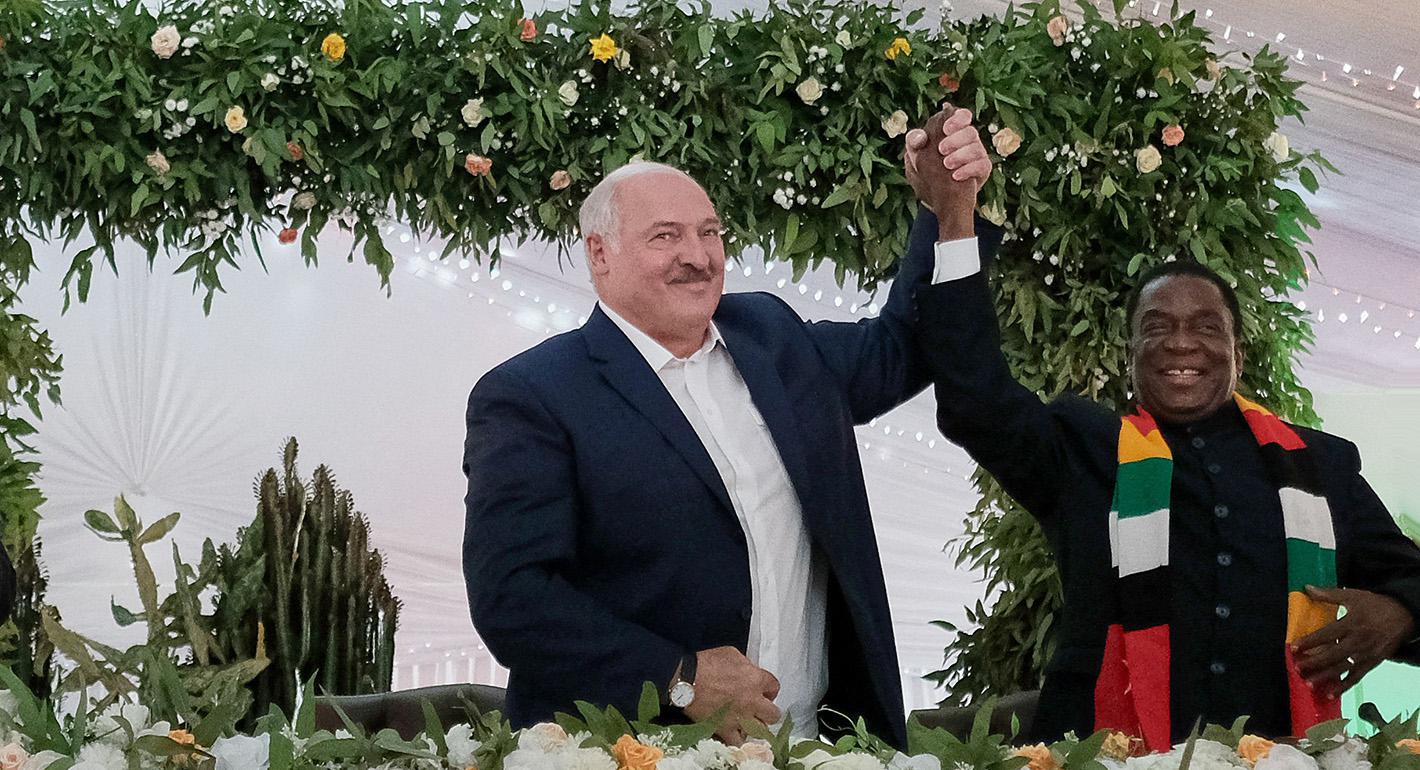
Source: Getty
There has never been such a gaping chasm between Lukashenko’s foreign policy ambitions and Minsk’s sheer irrelevance in the eyes of those whose attention he seeks.
If Belarus’s foreign policy has been given any international media coverage in recent months, it has been in the context of the regular meetings between the country’s leader Alexander Lukashenko and his Russian counterpart Vladimir Putin, each of which prompted the usual fears of the annexation of Belarus, yet concluded with few visible results.
In recent weeks, however, Lukashenko has clearly been trying to broaden his diplomatic horizons. He appears to have overcome his traditional lack of enthusiasm for foreign trips, having recently visited Zimbabwe, the United Arab Emirates, and China, and is next due to go to Iran, while Hungary’s foreign minister was recently received in Minsk. All of Lukashenko’s meetings and trips have one goal: to demonstrate to Belarusians and the West that attempts to isolate their country have failed, and that Minsk still has plenty of partners other than Russia around the world.
To be sure, there was a practical agenda to all of the visits. The UAE has long been Minsk’s partner in the arms trade, among other shady industries, and experts suspect the Middle Eastern country is enabling Belarusian companies to export their sanctioned goods to the EU via intermediaries, while Zimbabwe’s experience of lithium mining is reportedly now of interest to Minsk.
Hungary’s Peter Szijjártó was the first European foreign minister to visit Minsk since the mass protests against fraud in the 2020 presidential elections, but his visit likely simply reflects Budapest’s desire to show its anti-mainstream position and willingness to talk to those whom the rest of the EU is demonstratively ignoring.
The visits to Iran and China are also billed as part of the process of replacing Belarus’s traditional markets. Indeed, some Belarusian exports go via Russian ports and the Caspian Sea. Yet the trade turnover between Iran and Belarus is an insignificant $100 million. China is a more important trading partner for Belarus, which sold $1.8 billion worth of goods there last year.
While in China, Lukashenko wholeheartedly endorsed Beijing’s recent twelve-point “peace plan” on Ukraine, making him the only leader from the region to side with China on the matter: every other stakeholder rejected at least some of President Xi Jinping’s peace proposals.
Arguably, this is the only relative trump card Lukashenko can offer to China. Minsk’s traditional pitch as a stable and orderly transit hub for Chinese goods on their way to the EU has lost value due to Western sanctions and the logistical disruptions caused by them. It remains to be seen, however, whether there are any real diplomatic services that Minsk can provide to the Chinese. Lukashenko’s agency is reduced, and he remains too toxic for anyone in the region—except Russia—to properly engage with.
With the exception of China, the scale of the partnerships with the countries visited by Lukashenko does not generally require top-level visits, and certainly does not warrant the hype afforded to them by Belarusian propaganda. The flurry of meetings is intended to send a clear signal that two and a half years of pressure on Belarus have not worked and will not work, so the West may as well lift sanctions. Lukashenko’s desire to go back to the way things were appears to be sincere—unlike his insistent messaging that Belarus does not need the West, which only shows that the opposite is true.
In conversation with Western journalists, Lukashenko invited U.S. President Joe Biden to Minsk to meet with him and Putin to resolve the Ukraine conflict. He also recalled how just a few years ago, then U.S. national security advisor John Bolton and secretary of state Mike Pompeo—whom the autocrat referred to as “decent people […] though with their own interests”—had flown to Belarus.
Lukashenko’s nostalgia for the past is hardly surprising, given the irreversible extent of his dependence on Moscow. In this respect, his whirlwind trips to other countries are also an attempt to relaunch Belarus’s multi-vector foreign policy by finding new friends.
Still, no matter how many foreign visits Lukashenko embarks upon, the reality remains that nearly 70 percent of Belarusian exports last year went to Russia, while a significant proportion of the remaining goods were transported to their buyers via Russian railways and ports.
Europe—particularly Ukraine with its enormous demand for Belarusian oil products, Poland as a large market and transit window to the EU, and Lithuania and Latvia as the nearest ports—were natural partners for the economy that Lukashenko had spent decades building. It’s impossible to substitute these severed ties, or to balance out dependence on Russia with trips to Africa, speeches at the symbolic Shanghai Cooperation Organization, or announcements about the new heights scaled in relations with China.
Given these unpalatable truths, the West’s approach to Belarus is becoming increasingly uncomfortable for Lukashenko. It’s no longer righteous indignation at Lukashenko’s harsh crackdown on the mass protests that followed the 2020 presidential election: the actions of the Russian army in Ukraine have eclipsed Lukashenko’s brutality so entirely that no one has much bandwidth left to be shocked by the Belarusian dictator anymore.
Nor is the West inclined any longer to try to prize Minsk from Russia’s clutches. There are few left in Europe who believe this goal to be possible and therefore worthy of devising new methods of inciting Lukashenko to reach a balance.
Now the West views Lukashenko’s regime as simply a part of the threat posed by Russia. There is zero desire to invest in Belarus’s multi-vector policy. On the contrary: wartime logic dictates that the priority is to contain the enemy and deprive it of resources.
Amid this paradigm shift, the EU is preparing to introduce the first new sanctions against Belarus since last summer. They are not designed to stop Lukashenko from getting further involved in the war, or to try to push him away from Putin’s embrace. They are simply aimed at undermining Belarus’s potential to assist Russia in its aggression against Ukraine, regardless of how they affect Belarusian sovereignty, which is already in tatters.
Nor are humanitarian considerations any longer an issue. Belarus’s EU neighbors are even prepared to close down major border crossings, and have imposed a partial transport blockade on the country in response to Lukashenko’s crackdown on the ethnic Polish minority. Neither the EU nor Minsk’s individual neighbors to the west had previously gone as far as to impede the movement of people and goods through Belarus. But now they see no other option, simply because most other sanctions routes have been exhausted, and Lukashenko himself is now seen in the West exclusively through the prism of the ongoing war, which leaves little room for sentimentality.
There has never been such a gaping chasm between Lukashenko’s foreign policy ambitions—and how he sees his role in the region—and Minsk’s sheer irrelevance in the eyes of those whose attention he seeks. For years, the West tried everything it could to draw Belarus closer, despite its archaic pro-Russian regime. Now, amid the cold harsh reality of war, it has given up.

Nonresident Scholar, Carnegie Russia Eurasia Center
Artyom Shraibman is a nonresident scholar at the Carnegie Russia Eurasia Center.
Recent Work
Artyom Shraibman
Artyom Shraibman
Carnegie does not take institutional positions on public policy issues; the views represented herein are those of the author(s) and do not necessarily reflect the views of Carnegie, its staff, or its trustees.
Moldova’s reintegration plan was drawn up to demonstrate to Brussels that Chișinău is serious about the Transnistria issue—and to get the West to react.
Vladimir Solovyov
Lukashenko is willing to make big sacrifices for an invitation to Mar-a-Lago or the White House. He also knows that the clock is ticking: he must squeeze as much out of the Trump administration as he can before congressional elections in November leave Trump hamstrung or distracted.
Artyom Shraibman
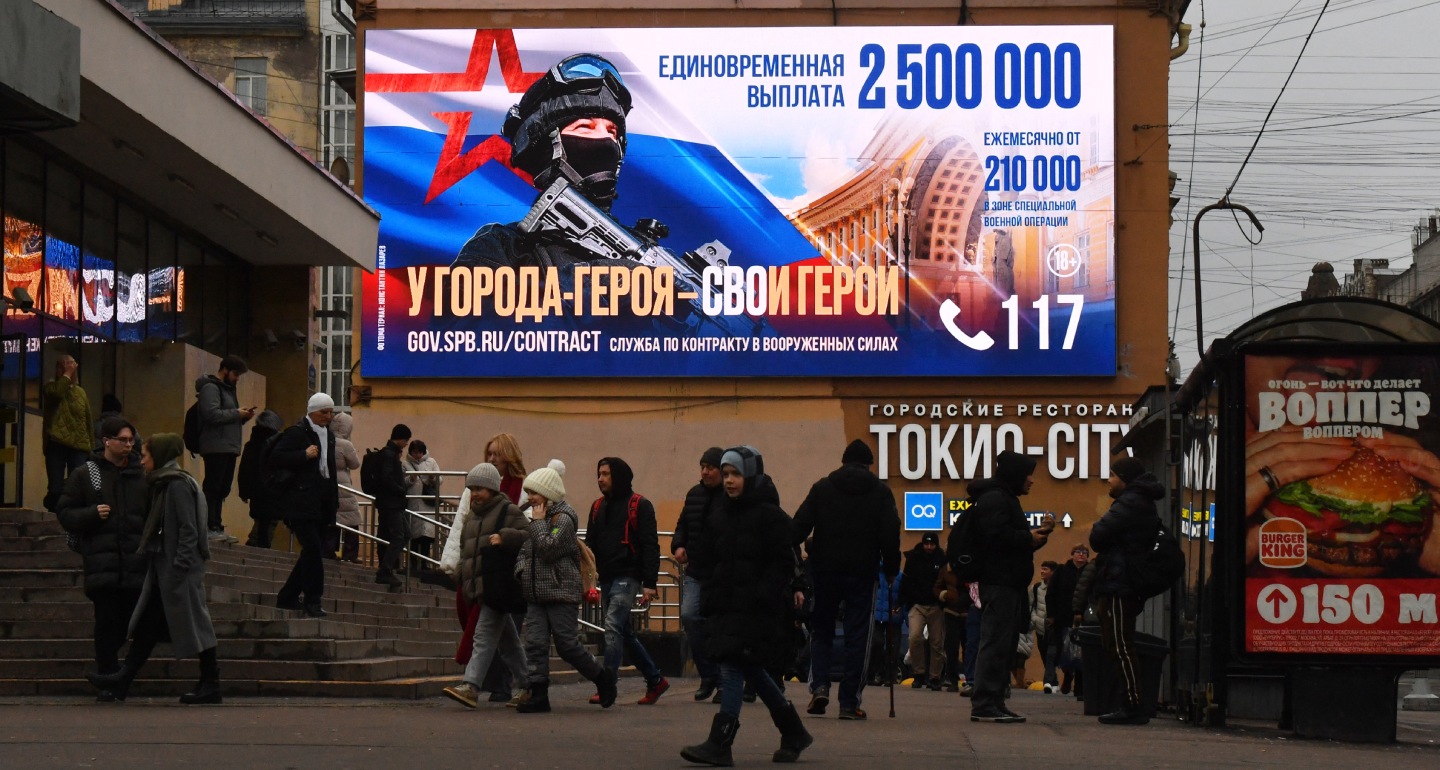
The Russian army is not currently struggling to recruit new contract soldiers, though the number of people willing to go to war for money is dwindling.

Dmitry Kuznets

The risk posed by Lukashenko today looks very different to how it did in 2022. The threat of the Belarusian army entering the war appears increasingly illusory, while Ukraine’s ability to attack any point in Belarus with drones gives Kyiv confidence.
Artyom Shraibman
What should happen when sanctions designed to weaken the Belarusian regime end up enriching and strengthening the Kremlin?

Denis Kishinevsky