

Commentary
The war in Ukraine and a change in ownership led VK to neglect its commercial ventures in favor of implementing the Kremlin’s online agenda. Now it’s been sanctioned by the EU.
Maria Kolomychenko
{
  "authors": [
    "Vadim Dubnov"
  ],
  "type": "commentary",
  "blog": "Carnegie Politika",
  "centerAffiliationAll": "dc",
  "centers": [
    "Carnegie Endowment for International Peace",
    "Carnegie Russia Eurasia Center"
  ],
  "collections": [],
  "englishNewsletterAll": "ctw",
  "nonEnglishNewsletterAll": "",
  "primaryCenter": "Carnegie Russia Eurasia Center",
  "programAffiliation": "russia",
  "programs": [
    "Russia and Eurasia"
  ],
  "projects": [],
  "regions": [
    "Russia",
    "Caucasus"
  ],
  "topics": [
    "Political Reform",
    "Economy",
    "Domestic Politics"
  ]
}
Source: Getty
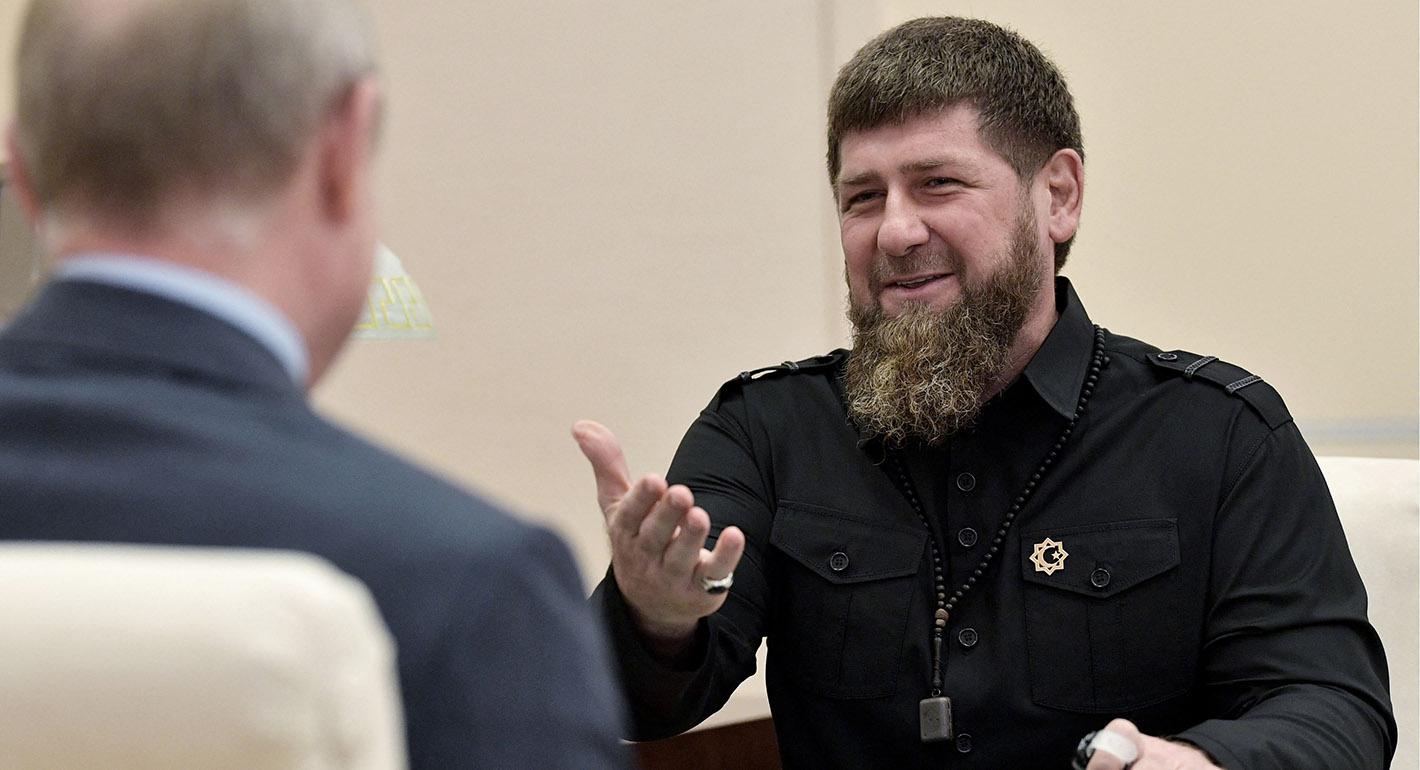
Ramzan Kadyrov treats his unique relationship with the Kremlin as a sort of family crest. His status may be less and less special, but the Chechen leader has an image to maintain.
When Russian President Vladimir Putin met in March with Akhmad Kadyrov, the seventeen-year-old son of the controversial Chechen leader Ramzan Kadyrov, many saw it as a signal of an impending power transition in the southern Russian republic. This perception was strengthened by rumors that the Chechen leader had serious kidney problems. A closer look at the state of affairs in Chechnya, however, offers no grounds to expect such a profound change.
The claim about Kadyrov’s ill health originates with his émigré rival Akhmed Zakayev, who is hardly a credible source. No other sources have confirmed that information, and there are no signs that Kadyrov’s political trajectory is about to change course. Given his appalling track record on human rights, even the most horrifying developments have now become the norm in Chechnya, and the situation there appears stable.
The Chechen government remains centered around the supreme leader, while its economic model is still based on an enormous cash-out scheme established in the early 2000s, following two brutal wars fought by separatists in the Muslim-majority republic against the federal center. In the aftermath of the Second Chechen War, the Chechen authorities rebuilt the region using mostly the money they collected from local businesses or held back from state employees’ salaries. Chechen officials then submitted vastly inflated reconstruction costs to Moscow. The Finance Ministry was perfectly cognizant of the ruse and allocated far lower amounts than requested, but the final payout was still much greater than the actual costs, which satisfied everyone.
Several years ago, Russian Finance Minister Anton Siluanov legitimized this scheme by publicly admitting that Chechnya was financed differently than other regions: that the federal government allocated money to Chechnya based on the republic’s spending. As a result, some experts estimate that over 80 percent of Chechen expenditure is subsidized by Moscow (even the officially acknowledged number was forty-eight percent in 2020).
In any event, Kadyrov no longer publicly berates federal agencies over inadequate subsidies, as he was doing five years ago. Effectively, nothing has changed, but Chechnya no longer triggers accusations of “overfeeding” the Caucasus region. Moscow has long wanted to portray Chechnya as a regular Russian region, and is steadily moving toward that goal.
The composition of the Chechen ruling elite also remains unchanged. At its core are Chechen war veterans who ultimately followed Akhmad Kadyrov—Ramzan’s father and predecessor—and switched sides to join Moscow. They have almost nothing to lose, since the only person able to take anything from them is Ramzan Kadyrov himself.
The outer layer of the system is made up of technocrats skilled at budgetary issues, among other things. These people are not part of Kadyrov’s inner circle, nor are they too eager to join it, lest they incur the leader’s wrath.
Members of the inner circle bear numerous grudges against each other and use immunity bestowed on them by Kadyrov to settle old scores. This infighting was likely responsible for the recent attempted poisoning of Chechen military commander Apti Alaudinov, who is currently fighting in the Donbas.
Anyone who ends up taking control of the current Chechen power system would face a choice of adopting it to their needs or reforming it. There is no one right now who would do either—not even among those close to Kadyrov—and Moscow is hardly likely to want to break a working system. This is especially true at a time when Russia is fighting a war against Ukraine, when nobody knows what might happen next. In short, Kadyrov has no reason to leave, and the Kremlin has no reason to replace him.
Looking into the reasons for Putin’s personal meeting with Kadyrov’s adolescent son, it’s worth recalling that when Kadyrov’s father Akhmad pledged his loyalty to Moscow, he insisted on talking with Putin directly: no intermediaries. That was the price the Kremlin paid for getting the Kadyrovs to switch sides. The same formula remained in effect when Ramzan Kadyrov came to power, his father Akhmad having been assassinated in 2004.
The Kremlin-Kadyrov symbiosis later weakened, but never disappeared. Ramzan Kadyrov has always believed exclusive federal status to be essential to his political existence. Unlike other regional leaders, he sought horizontal rather than vertical relations with the Kremlin, even if they were merely in the form of declarations.
This condition has been a permanent fixture of his contract with the Kremlin, no matter what else changed. In fact, Kadyrov has become a regional leader of federal stature, even as Putin reined in all the other provincial executives.
In reality, Kadyrov’s status is gradually becoming not so special, but the Chechen leader treats his unique relationship with the Kremlin as a sort of family crest, and needs to maintain his image as having a privileged status. He is quite content with this symbolic asset, and does not in fact harbor the far-reaching ambitions his speeches might sometimes suggest.
He simply seeks to protect his domain, knowing how short his political life will be without Putin. He is therefore quite sincere in describing himself as Putin’s foot soldier. Meanwhile, other decisionmakers—especially those in military uniform—are still his enemies.
Kadyrov’s lack of allies forces him to search for ways to affirm his exclusivity, and the war in Ukraine is very helpful in this respect, allowing him to expand his influence horizontally rather than vertically. Military and police detachments deployed in Chechnya are formally part of the ministries of defense and internal affairs, but they effectively answer to Kadyrov. He also took advantage of protests organized by mothers of Chechen draftees to the war in Ukraine to take control of the mobilization campaign in his region.
In this context, the much-hyped alliance between Kadyrov and the Wagner mercenary group founder Yevgeny Prigozhin is a purely ad hoc arrangement, since their objectives are very different. Wagner and the war in Ukraine offer Prigozhin an opportunity to strengthen his positions within the Kremlin elite. Kadyrov, on the other hand, wants to be as autonomous as possible from that elite in order to retain at least a degree of exclusivity in his relationship with Putin.
Interestingly, the Chechen head has talked about founding his own private military company upon retirement. If the Chechen republic does ever require a new leader, Kadyrov could assume some other position of power, and may well have use for a private army.
But Chechnya is not ready for a new ruler just yet. The meeting between Putin and Akhmad Kadyrov only strengthens the current head of the republic’s position by effectively recognizing his family political clan. Putin isn’t willing to offer Kadyrov anything more than exclusivity, and that’s also all Kadyrov happens to want right now.
Vadim Dubnov
Carnegie does not take institutional positions on public policy issues; the views represented herein are those of the author(s) and do not necessarily reflect the views of Carnegie, its staff, or its trustees.

The war in Ukraine and a change in ownership led VK to neglect its commercial ventures in favor of implementing the Kremlin’s online agenda. Now it’s been sanctioned by the EU.

Maria Kolomychenko
A regime founded on force, coercion, and repression does not want its propaganda, with all its flaws of logic, omissions, and outright lies, to be competing with the most simple of all messages: Thou shalt not kill.
Leonid Bershidsky

The greater threat to Zelensky comes not from Fedorov alone, but from the convergence between the former defense minister’s political campaign and the anti-corruption investigations moving ever closer to the presidential administration.

Balázs Jarábik
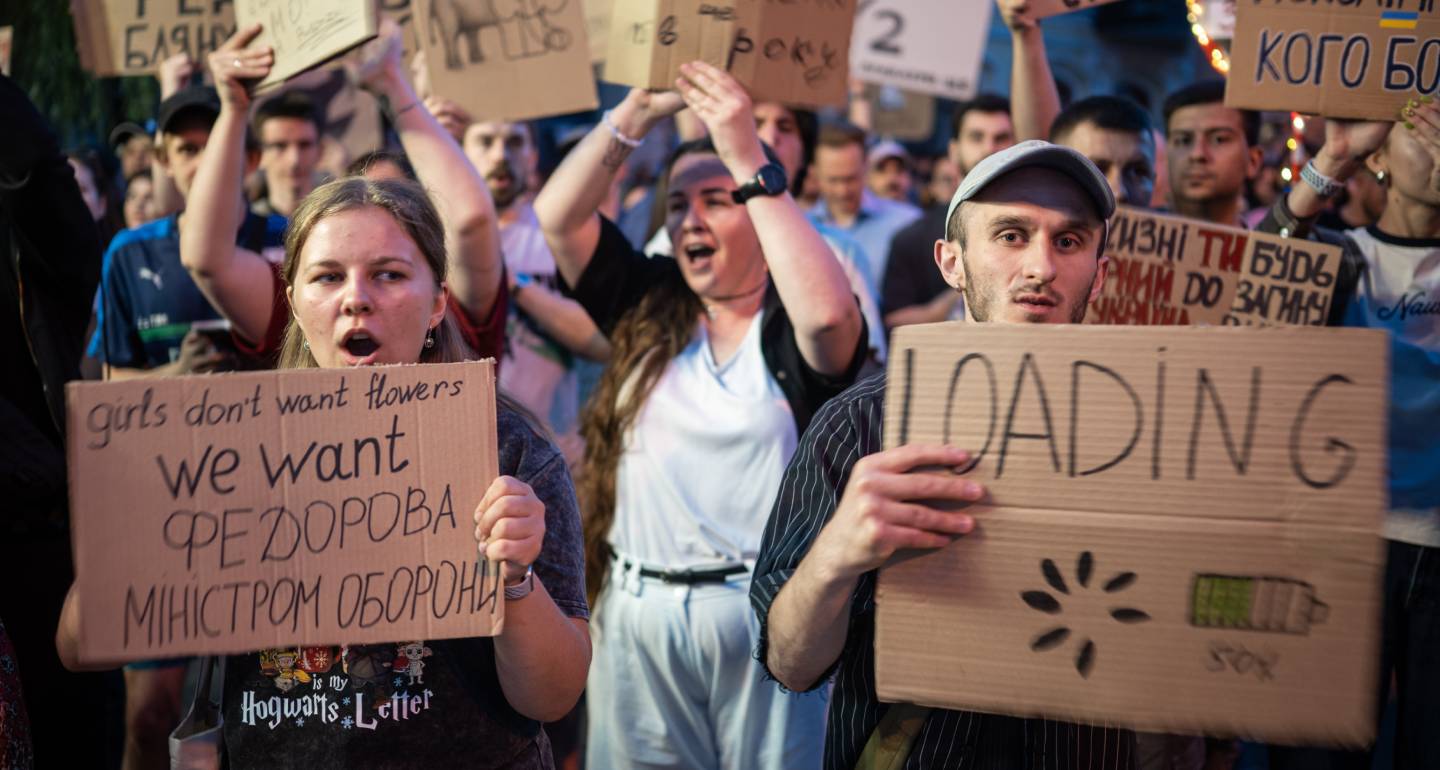
With his public call for new elections in Ukraine, ex-defense minister Mykhailo Fedorov has opened Pandora’s box.

Konstantin Skorkin
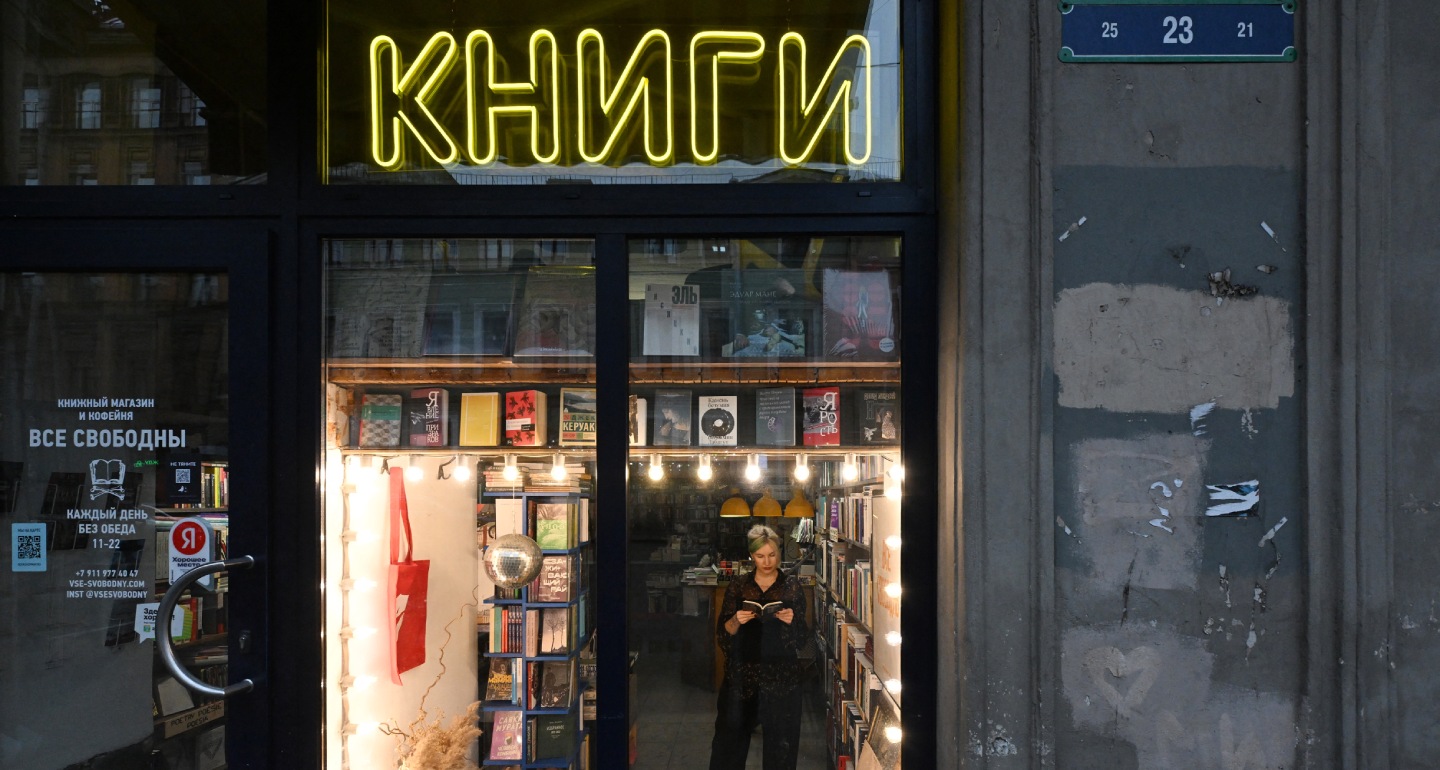
Political pressure and economic headwinds are closely intertwined problems for Russian publishers and booksellers. Together, they risk propelling Russia into a “post-literate” era.
Galina Yuzefovich