

Commentary
The prospect of a total block on Russia’s most popular messaging app has sparked disagreement between the regime’s political managers and its security agencies.
Andrey Pertsev
{
  "authors": [
    "Vladimir Solovyov"
  ],
  "type": "commentary",
  "blog": "Carnegie Politika",
  "centerAffiliationAll": "dc",
  "centers": [
    "Carnegie Endowment for International Peace",
    "Carnegie Russia Eurasia Center"
  ],
  "collections": [
    "Aso Tavitian Initiative"
  ],
  "englishNewsletterAll": "ctw",
  "nonEnglishNewsletterAll": "",
  "primaryCenter": "Carnegie Russia Eurasia Center",
  "programAffiliation": "russia",
  "programs": [
    "Russia and Eurasia"
  ],
  "projects": [],
  "regions": [
    "Caucasus",
    "Georgia",
    "Russia"
  ],
  "topics": [
    "Foreign Policy",
    "Economy"
  ]
}
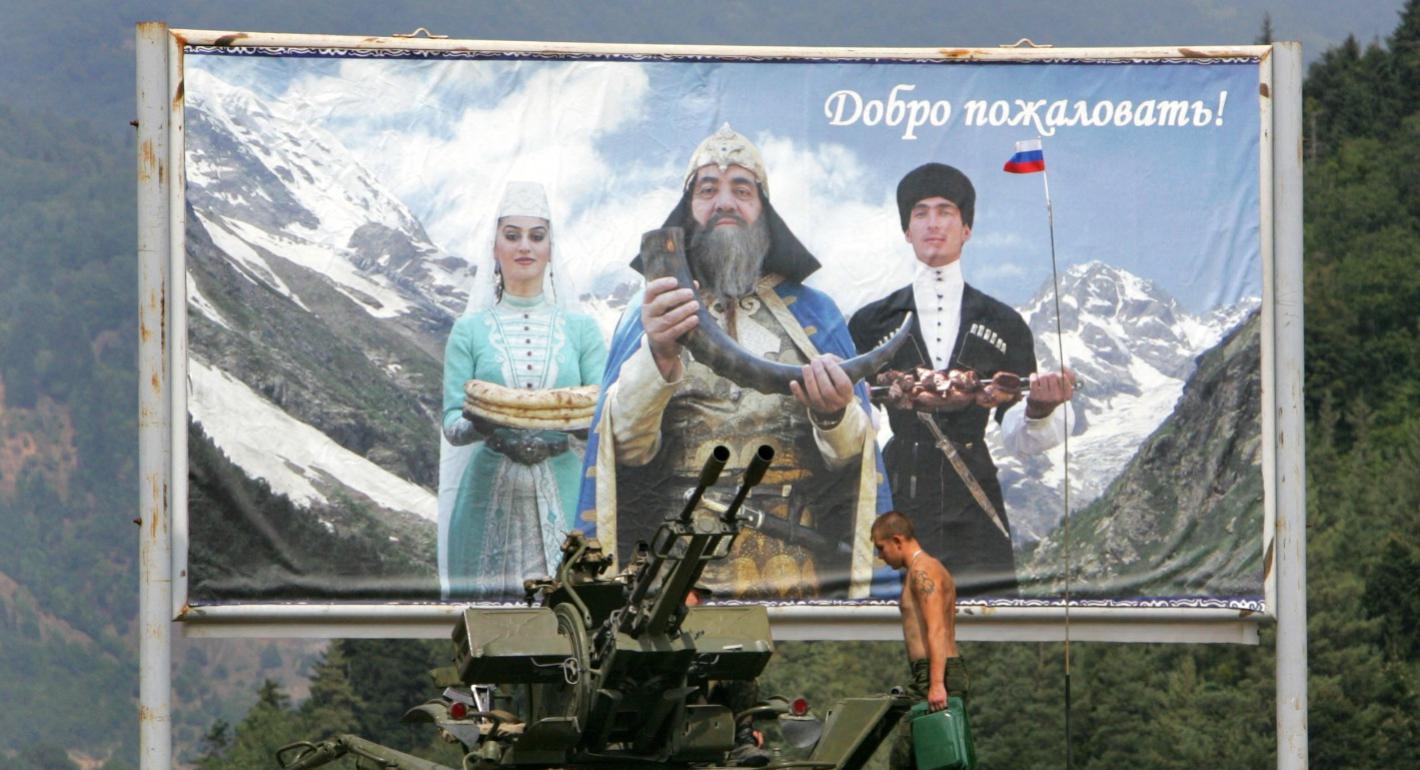
Source: Getty
Even if Georgia knew nothing about Russia’s decision beforehand, the current arrangement suits both the Kremlin and official Tbilisi: it helps Georgian Dream to hold on to power, while Russia is building on barely existent ties with Georgia that may lead to greater gains for Moscow in the future.
Russian President Vladimir Putin’s recent decision to abolish long-standing visa requirements for Georgian nationals and lift the ban on direct flights between the two countries came as a surprise to many, even though it was already under discussion in Russia at the end of last year. After all, Russia has not been in the habit of making goodwill gestures toward its neighbors in recent years, which inevitably begs the question: Does Moscow have an ulterior motive?
Abolishing visa requirements and restarting flights to Georgia had been on Moscow’s agenda for a long time. The new visa regulations have been awaiting Putin’s signature since 2019, but the protests sparked by the visit of Russian parliamentarian Sergei Gavrilov to Tbilisi that same year caused another round of tensions between the two countries. It was at this time that Russia stopped direct flights to Georgia again, citing security reasons (having previously interrupted air travel between the countries twice: in 2006, when relations were strained, and in 2008, when Russia and Georgia fought a five-day war).
Now, even as it wages war on another neighbor—Ukraine—Russia appears to be making a conciliatory gesture to Georgia. The Russian Foreign Ministry said the ruling was aimed at facilitating contact between Russian and Georgian nationals, despite the absence of diplomatic relations, which were severed by Tbilisi in the wake of the 2008 war.
There had reportedly been no communication between Moscow and Tbilisi on visas and flights in recent months, and Russia’s announcement on May 10 caught the Georgian government by surprise. Eventually, Foreign Minister Ilia Darchiashvili and Prime Minister Irakli Garibashvili welcomed the move, but that did little to quell suspicions of a hidden Russian agenda.
The most obvious motive in this case would be to drive a wedge between Georgia—which aspires to join both NATO and the EU—and the West. Sure enough, Russia’s announcement met with sharp criticism, not only from the Georgian opposition and President Salome Zourabichvili, but from the EU and the United States too.
Brussels noted that given Georgia’s application for EU candidate status, it should be complying with sanctions against Russia, while the U.S. State Department observed that “the entire Western community has distanced itself from this brutal regime, and now is not the time to expand engagement with Russia.”
In response to EU criticism, Prime Minister Garibashvili pointed out that Georgian-Russian trade amounts to around $1 billion a year: the equivalent of four days’ trade between Russia and the EU. He also recalled that the West had continued to do business with Russia as usual following Moscow’s 2008 war against Georgia.
For Georgia, the resumption of flights is far more important than the scrapping of visa requirements. Sources in Tbilisi estimate there are around 113,000 ethnic Georgians in Russia right now, of whom only 20,000 are Georgian nationals. In other words, an influx of Georgian nationals into Russia is unlikely. The number of Russians visiting Georgia, however, will certainly grow, especially now, when many popular destinations are off limits to Russian travelers as a result of the war and ensuing Western sanctions. Tourism is an important part of the Georgian economy.
For Russia, meanwhile, it’s important to provide a source of revenue for its airlines and travel agencies in these difficult times. Still, the geopolitical aspects of the decision are more important. Relations between Georgia and the West took a hit a year ago, when Ukraine and Moldova were granted EU candidate status and Georgia was not. Moscow has decided to exploit those tensions, and if the resumption of flights prompts further delays in Georgia attaining candidate status, relations between Tbilisi and the West will deteriorate even further.
Russia’s decision may also impact Georgia’s relations with Ukraine, which would be a bonus for Russia. The Ukrainian government closely monitors the other former Soviet states’ dealings with Russia. It has repeatedly criticized Georgia—effectively an ally and fellow EU aspirant—for failing to join sanctions against Russia, and now Tbilisi is actually strengthening its ties with Moscow.
For Russia, Georgia has become a testing ground for various painful experiments. In 1999, amid friction with Tbilisi during the Second Chechen War, Georgia became the first country in the Commonwealth of Independent States—which then consisted of most of the former Soviet countries—to be unilaterally slapped with visa requirements at the behest of then prime minister Vladimir Putin. It was also one of the first CIS countries to bear the brunt of a Russian trade embargo, when Moscow banned imports of popular Georgian wine and mineral water in 2006.
In 2008, Georgia became the first country since the breakup of the Soviet Union to be invaded by Russian troops. Following that brief war, Russia recognized the independence of two breakaway Georgian regions, Abkhazia and South Ossetia. At that juncture, Moscow managed to avoid a serious decline in its relations with the West, but Georgia withdrew from the CIS after the war and severed diplomatic relations with Russia. Nevertheless, Georgia unilaterally abolished visa requirements for Russians in 2012: a decision made by then president Mikheil Saakashvili, whom Moscow considered its worst enemy.
The two countries were able to put their relations on a more even keel after the Georgian Dream party came to power in 2012, despite the occasional spat. Georgia still aspires to join the EU and NATO, and insists that Russia has occupied part of its territory, but that doesn’t stop Russia from being one of its biggest foreign trade partners, nor does it prevent Russian tourists from visiting Georgia in droves.
There may be no diplomatic relations, but both sides regularly communicate within the Geneva multilateral format launched in 2008. Since 2012, there have also been bilateral discussions between Georgian and Russian representatives.
Tbilisi has consistently put economic considerations before politics, even after Russia’s invasion of Ukraine. But Moscow is clearly hoping for more, such as Georgia’s involvement in the proposed “3+3” format (three South Caucasus countries—Georgia, Armenia, and Azerbaijan—plus Iran, Russia, and Turkey).
Russia understands that any closer ties with Georgia will only be possible if Georgian Dream remains in power, and so is willing to throw the current Georgian leadership a bone from time to time. Under the alternative—Saakashvili’s fiercely anti-Russian United National Movement—any hint of further Russian-Georgian cooperation would be out of the question.
Georgian Dream has branded the opposition as proponents of war with Russia, while presenting itself as a constructive force. The influx of money from Russian tourists will lend credibility to these arguments on the eve of the 2024 parliamentary elections. Even if Georgia knew nothing about Russia’s decision beforehand, the current arrangement suits both the Kremlin and official Tbilisi: it helps Georgian Dream to hold on to power, while Russia is building on barely existent ties with Georgia that may lead to greater gains for Moscow in the future.
Vladimir Solovyov
Journalist
Carnegie does not take institutional positions on public policy issues; the views represented herein are those of the author(s) and do not necessarily reflect the views of Carnegie, its staff, or its trustees.

The prospect of a total block on Russia’s most popular messaging app has sparked disagreement between the regime’s political managers and its security agencies.

Andrey Pertsev
Not only does the fighting jeopardize regional security, it undermines Russian attempts to promote alternatives to the Western-dominated world order.

Ruslan Suleymanov
Moldova’s reintegration plan was drawn up to demonstrate to Brussels that Chișinău is serious about the Transnistria issue—and to get the West to react.
Vladimir Solovyov
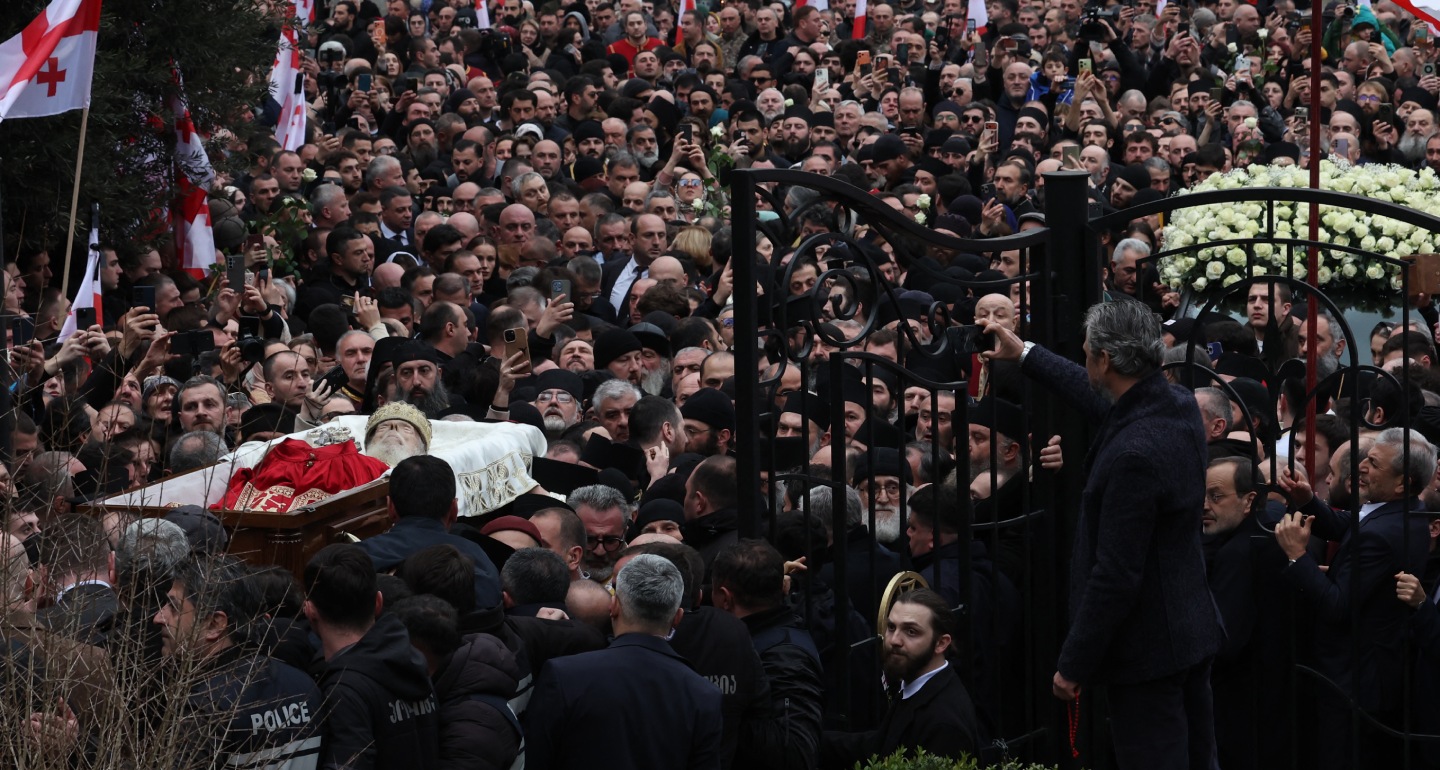
The front-runner to succeed Ilia II, Metropolitan Shio, is prone to harsh anti-Western rhetoric and frequent criticism of “liberal ideologies” that he claims threaten the Georgian state. This raises fears that under his leadership the Georgian Orthodox Church will lose its unifying role and become an instrument of ultraconservative ideology.

Bashir Kitachaev
Lukashenko is willing to make big sacrifices for an invitation to Mar-a-Lago or the White House. He also knows that the clock is ticking: he must squeeze as much out of the Trump administration as he can before congressional elections in November leave Trump hamstrung or distracted.

Artyom Shraibman