

Commentary
Galiya Ibragimova
{
  "authors": [
    "Galiya Ibragimova"
  ],
  "type": "commentary",
  "blog": "Carnegie Politika",
  "centerAffiliationAll": "dc",
  "centers": [
    "Carnegie Endowment for International Peace",
    "Carnegie Russia Eurasia Center"
  ],
  "collections": [],
  "englishNewsletterAll": "ctw",
  "nonEnglishNewsletterAll": "",
  "primaryCenter": "Carnegie Russia Eurasia Center",
  "programAffiliation": "russia",
  "programs": [
    "Russia and Eurasia"
  ],
  "projects": [],
  "regions": [
    "Eastern Europe",
    "Moldova"
  ],
  "topics": [
    "Economy"
  ]
}
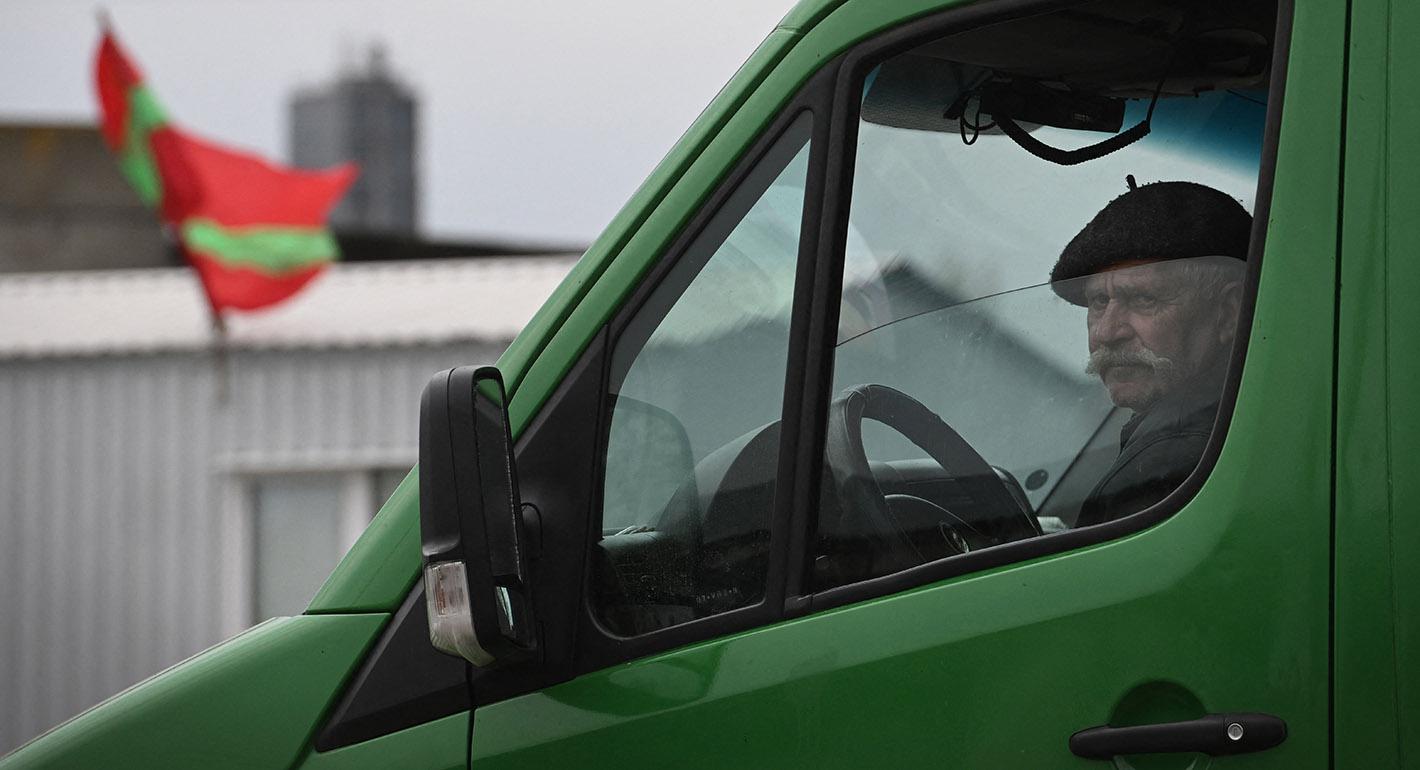
Source: Getty
Not only will reabsorbing the breakaway region be expensive and complicated, but Russia is unlikely to cede its influence without a fight.
Russia’s full-scale invasion of Ukraine initially sparked fear in Moldova. But when Moscow’s troops failed to reach the pro-Russian breakaway region of Transnistria, anxiety gave way to confidence. Moldova now sees a historic opportunity to end a long-running conflict and reintegrate Transnistria. The obstacles, however, are daunting—and success is far from guaranteed.
Above all, the war has radically changed Transnistria’s economic fortunes. Until Moscow sent tanks across the border in February 2022, Ukraine accounted for about a quarter of Transnistria’s trade. Moreover, contraband, estimated to be worth hundreds of millions of dollars, flowed to Transnistria via the Black Sea port of Odesa.
Following the invasion, however, Ukraine closed its border with Transnistria, which hosts 1,500 Russian troops, on national security grounds. As a result, trade between Kyiv and Tiraspol contracted sharply, cutting Transnistria off from revenue streams—legal and illegal. What’s more, Transnistria’s trade volumes with Russia declined 22 percent in 2022 (the figures exclude natural gas, which Transnistria receives free of charge from Moscow). Today, barring a dramatic turnaround in Moscow’s fortunes on the battlefield, Moldova is Transnistria’s only way to access the outside world.
To be fair, Chisinau already had a major role in the Transnistrian economy. Thanks to Moldova’s access to the European Union, a third of Transnistria’s exports go to the EU market. And Chisinau imports more goods from Transnistria than any other country (Russia’s share of Transnistrian exports never exceeded 9 percent). Even so, Moldova’s current grip on Transnistria’s external trade is unprecedented.
It is easy, then, to understand Moldova’s optimism about Transnistria’s direction of travel. However, Chisinau is not waiting around for Tiraspol to return to the fold of its own accord. Rather, Moldova’s strategy is to hurry the process along by making life as difficult as possible.
Chisinau’s first step was to amend its criminal code to make separatism a crime punishable by imprisonment. This unsettled officials in Tiraspol, who, fearing arrest, now avoid traveling to Chisinau. While no one has yet been charged, the mere possibility of jail time is a lever for Moldova to compel Transnistria’s leadership to moderate its separatist rhetoric.
Then, Moldova tightened customs checks. In November 2023, it blocked deliveries to Russia from three Transnistrian factories, deeming the goods dual-use and therefore banned under EU sanctions.
Most controversially, Moldova stripped Transnistrian businesses of customs privileges at the start of 2024 with little advance warning. This means Transnistria-based companies must pay duties to both Transnistria and Moldova. Tiraspol’s response was to impose tax hikes on the approximately 2,000 Moldovan enterprises in Transnistria.
While Transnistria continues to receive free Russian gas (associated revenues make up the bulk of Transnistria’s income), Chisinau’s pressure campaign has proven painful, but not deadly.
Indeed, Moldova remains the end user of much of the electricity generated from Russian gas imported into Transnistria. At a cost of 1.19 leu ($0.07) per kilowatt, the current arrangement is hard to beat for value. On the European market, where Moldova was forced to buy electricity in the winter of 2022 amid Russian attacks on Ukraine’s energy infrastructure, the cost was as high as 3.72 leu per kilowatt.
For a period at the end of 2022, Chisinau lost access to cheap Transnistrian electricity after Russian state-owned gas giant Gazprom cut supplies by a third. In response, rather than divide up the remaining imports, Moldova allocated all of it to Transnistria. This ensured that both Tiraspol’s heating-season energy needs were met, and Chisinau could continue buying cheap electricity. At the same time, Moldova turned to the European market for gas, eroding Gazprom’s monopoly.
However, if the agreement on Russian gas transit through Ukraine is not extended in December 2024, Transnistria could end up without any Russian gas. In such a scenario, it’s possible that Chisinau could come to an agreement with Kyiv to keep Transnistria supplied. But it’s difficult to imagine Russia and Ukraine making an exception for Moldova if no wider deal is struck. Another option is Russian gas being delivered via the Trans-Balkan pipeline or TurkStream—but capacity would be limited, and conversion into electricity unprofitable.
Absent a resolution, Moldova will have to buy gas on the market for both itself and Transnistria, which is home to over 338,000 Moldovan citizens. Chisinau is already studying how much gas would be required to heat Transnistria’s home.
The issue of factories in Transnistria is even thornier. In the case of an absence of cheap Russian gas supplies, about 90 large and mid-sized enterprises would face closure, or at least increased costs and decreased demand. Whether Chisinau is prepared for such an economic shock is unclear. Should Transnistria be reintegrated with Moldova, the region’s jobless would look to Chisinau for support.
Reintegration would also spark a debate about the ownership of assets in Transnistria. This would create conflict between Chisinau, which does not recognize the privatizations in Transnistria that followed the collapse of the Soviet Union, and elites such as Viktor Gushan and his Sheriff business holding, who have taken control of much of the local economy.
In any case, reintegration will take time, not least because Russia is unlikely to cede its influence in Transnistria without a fight. Despite the war, Moscow continues publicly to insist that nothing has changed in the region’s circumstances, and is still pushing for the federalization of Moldova—the only solution it has ever endorsed.
If the separatist regime in Transnistria were to survive, this would put a brake on Chisinau’s aspirations to join the EU. Even though Brussels has said Moldova could accede in its current form, it’s difficult to imagine member states being happy with Russian soldiers stationed in the bloc.
Nor will reintegration be the end of the problem. The absorption of Transnistria’s population—largely pro-Russian and alienated by Chisinau’s antagonism toward Moscow—will inevitably generate tensions. Politically, it could change the electoral map by creating a pro-Russian majority.
Nevertheless, Moldova continues to seek common ground with the inhabitants of Transnistria, recently making it easier for them to switch their driver’s licenses for Moldovan ones and more straightforward to become Moldovan citizen, and offering them the chance to learn Romanian (a state language in Moldova) for free. All this matters—it’s just the start of a long, difficult process.

Expert on Central Asia and Eastern Europe
Recent Work
Galiya Ibragimova
Galiya Ibragimova
Carnegie does not take institutional positions on public policy issues; the views represented herein are those of the author(s) and do not necessarily reflect the views of Carnegie, its staff, or its trustees.

Russian strikes are weakening the economy sustaining Ukraine’s war effort. Closing the growing funding gap will require more European support and politically contentious reforms in Kyiv.

Balázs Jarábik

For every ruble allocated to social policy, health, and education in 2027, double that amount is earmarked for the army, the police, and the security services.

Alexandra Prokopenko

If the Russian-speaking community in Latvia cannot articulate their interests without being seen as disloyal, they could end up embracing a pro-Kremlin agenda.

Sergejs Potapkins

Depleted financial reserves and a shrinking tax base mean it is no longer possible to simultaneously deliver high defense spending, price stability, and economic growth.
Alexandra Prokopenko
Whether PAS can refocus on the unfinished business of state-building may ultimately prove more consequential for Moldova’s European future than the pace of its accession negotiations.
Balázs Jarábik