

Commentary
If the Russian-speaking community in Latvia cannot articulate their interests without being seen as disloyal, they could end up embracing a pro-Kremlin agenda.
Sergejs Potapkins
{
  "authors": [
    "Mikhail Vinogradov"
  ],
  "type": "commentary",
  "blog": "Carnegie Politika",
  "centerAffiliationAll": "dc",
  "centers": [
    "Carnegie Endowment for International Peace",
    "Carnegie Russia Eurasia Center"
  ],
  "collections": [],
  "englishNewsletterAll": "ctw",
  "nonEnglishNewsletterAll": "",
  "primaryCenter": "Carnegie Russia Eurasia Center",
  "programAffiliation": "russia",
  "programs": [
    "Russia and Eurasia"
  ],
  "projects": [],
  "regions": [
    "Russia",
    "Caucasus"
  ],
  "topics": [
    "Political Reform",
    "Security",
    "Domestic Politics"
  ]
}
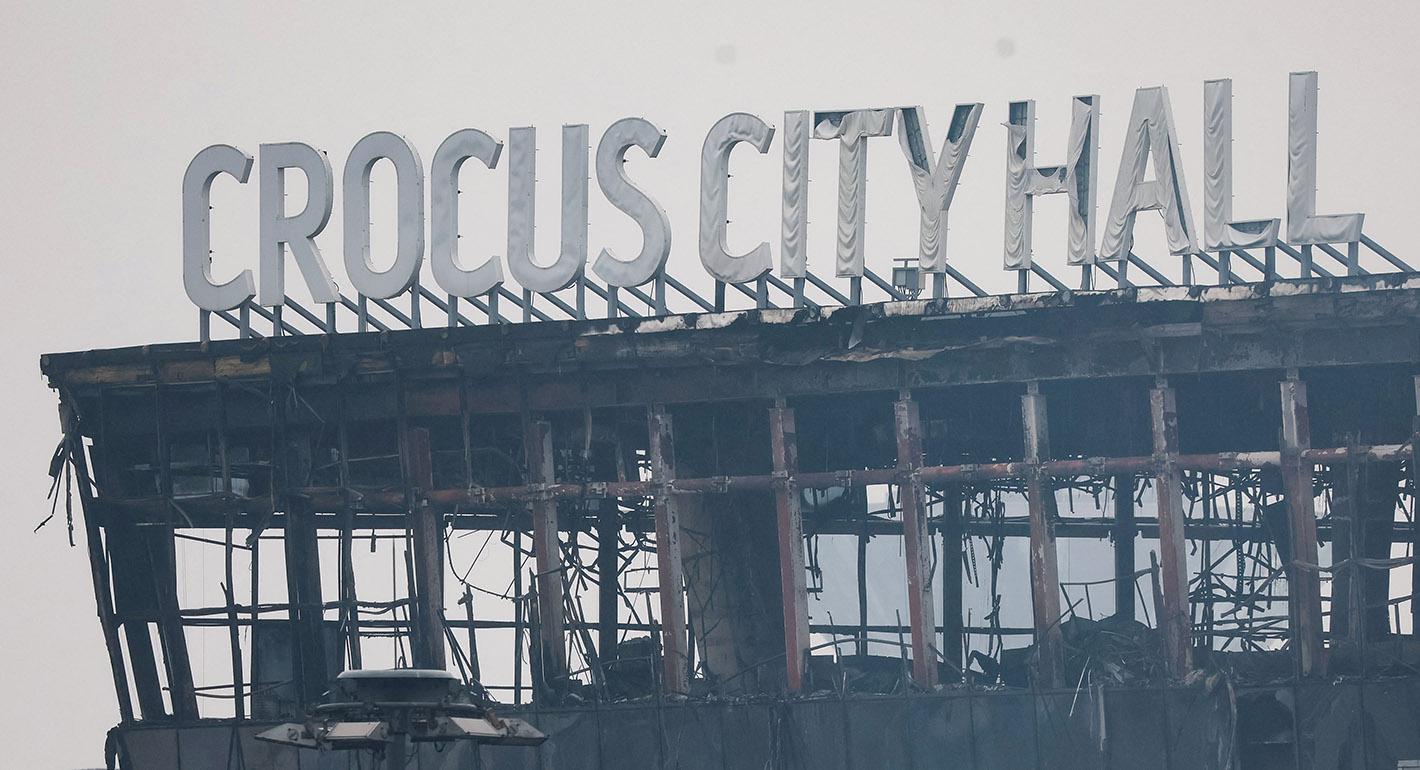
Source: Getty
Rather than radical anti-terrorist measures or some kind of “retribution against Ukraine,” the return of the death penalty and a stricter migration policy are being touted as possible responses to the attack at Crocus City Hall. But neither of those initiatives is guaranteed or imminent.
When confronted with a shocking event that puts the Russian regime under stress, the Kremlin’s reaction is often drastic and sometimes asymmetrical. This tactic allows the country’s leadership to conceal its confusion, regain the initiative, and take advantage of the public shock to strengthen its own position. In 2004, for example, following the Beslan school hostage crisis in which over 300 people were killed, including nearly 200 children, the Kremlin cited the tragedy as a reason to scrap direct elections for regional governors.
Other stressful events for the Kremlin, from the deadly bombing of the St. Petersburg metro in 2017 to mercenary leader Yevgeny Prigozhin’s failed mutiny last summer, passed without political consequences. Right now, it’s unclear into which category the terrorist attack on Moscow’s Crocus City Hall concert venue on March 22 will fall. So far, the Russian leadership has avoided making any definitive declarations, and most statements by public figures are simply attempts to guess the Kremlin’s future response.
Over the past two decades, the Russian regime has shown a flexible approach when it comes to the image of Russia’s biggest enemy. At various times, that role has been assigned to Caucasian separatists, Georgian revolutionaries, and the Islamic State. At some point in 2021, however, Kyiv emerged as the clear winner for the dubious title of an anti-Russian instrument of the collective West. Now it appears that even the monstrous terrorist attack by four gunmen at Crocus City Hall, in which at least 137 people were killed and hundreds of others injured, is not enough to make the Russian authorities adjust their worldview and admit that in their efforts to subjugate neighboring Ukraine, they have neglected the threat from Islamist extremists.
The Kremlin insists there is a trail from the tragedy at Crocus City Hall leading back to Ukraine, but it has failed to provide any evidence or detail. As a result, initial calls for mobilization and massive strikes against Ukraine in response to Putin’s hints at Kyiv’s ultimate accountability for the attack—for which Islamic State itself has claimed responsibility—are fading fast, and the authorities seem ready to adopt the alternative approach of putting the tragedy behind them as quickly as possible.
Even members of the elite may soon “forget” about the terrorist attack—despite the fact that it exposed enormous vulnerabilities in the country’s security system. Indeed, the structures created for just such an emergency reacted sluggishly, but that is not the first time this has happened in Russia, so there is little hope of any meaningful reforms.
The organizers of the terrorist attack had clearly spent time and effort identifying those vulnerabilities. The country’s law enforcement and general security were relatively relaxed, having been ramped up during the presidential election on March 15–17. The location for the attack was carefully chosen, too. Situated on the border of the Moscow region and the capital itself, Crocus City Hall is in a geographically isolated area comparable to an island: on one side is the Moscow River, on the other is the massive Moscow Ring Road. The traffic on a Friday evening, when the attack took place, makes it very difficult to get there in an emergency.
Moreover, previous high-profile attacks had unfolded differently, with suicide bombers taking people hostage and issuing demands. In the attack at Crocus City Hall, four marauding gunmen shot anyone they came across and then set fire to the building, inflicting maximum damage before initially escaping (and apparently being arrested several hours later), all while the security forces were still planning to storm the building, having fully expected the militants to entrench themselves.
It’s obvious there were failings in the system for preventing terrorist attacks, yet the security forces apparently did not think they warranted an immediate response. Most likely they are counting on the fact that in the current wartime climate, no one will dare to conduct a public postmortem of the events. In any case, terrorist attacks in Russia only led to sackings back in the 1990s.
Far more likely is the leaking of inside information as part of a struggle within the state apparatus for places in the government following the cabinet reshuffle that will take place in May. So far, the main target has been the Interior Ministry, with reports circulating that a police van was parked outside the concert hall throughout the attack, and questions over what police officers based in precincts close to Crocus City Hall did (or didn’t) do: there is no evidence yet of their having saved any lives.
Right now, neither radical anti-terrorist measures nor any kind of “retribution against Ukraine” looks likely. Among those trying to guess the authorities’ next steps, two proposals are most often voiced: the return of the death penalty and a stricter migration policy (the four men arrested on suspicion of having carried out the attack are all nationals of Tajikistan). Still, neither of those initiatives is guaranteed or imminent.
The topic of the death penalty comes up regularly in Russia, where it has not been abolished but has been subject to a moratorium for decades. The Russian elites, however, are wary of its return. Many people remember that in Soviet times, it wasn’t terrorists who were executed, but underperforming managers. Besides, there is no shortage of opportunities for extrajudicial reprisals against “enemies,” even without the death penalty.
A drastic change in migration policy also looks doubtful. Shortages on the labor market have only worsened over the past two years since Russia’s full-scale invasion of Ukraine: Russia has lost some of its appeal as a work destination for people from other former Soviet nations due to the depreciation of the ruble and the risk of ending up at the front.
Russia relies heavily on migrant labor, and a significant exacerbation in labor market shortages would impact the quality of public services, as well as push up prices for many goods and services. In any case, migrants are largely loyal to Russia’s legal and political system.
While the topics of the death penalty and immigration policy will likely remain in the news for some time, and certain regulations may be tightened, no drastic decisions are likely, and any activity will be unrelated to the heart of the issue. Such steps will not help solve real problems, whether terrorism, the war against Ukraine, or the feeling of helplessness experienced by ordinary Russians. What they can do, however, is give the regime time to adapt to new stressors without changing its worldview.
Mikhail Vinogradov
Carnegie does not take institutional positions on public policy issues; the views represented herein are those of the author(s) and do not necessarily reflect the views of Carnegie, its staff, or its trustees.

If the Russian-speaking community in Latvia cannot articulate their interests without being seen as disloyal, they could end up embracing a pro-Kremlin agenda.

Sergejs Potapkins

Russia’s ruling party would have benefited from Putin appearing as its distant patron, but as an active frontman imposing his views on the public, he has done nothing but harm both the party’s election campaign and the ruling system overall.

Andrey Pertsev

Depleted financial reserves and a shrinking tax base mean it is no longer possible to simultaneously deliver high defense spending, price stability, and economic growth.

Alexandra Prokopenko
Blurring the line between humans and animals is a long-standing tradition in social utopian prose. In his latest novel, Leonid Bershidsky reminds us that in social experiments, people are often treated no differently than animals.

Alexander Baunov

In the tenth year of his presidency, President Mirziyoyev’s system is becoming even more personalized than that of his predecessor Karimov.

Galiya Ibragimova