

Commentary
A leak of Russian gas price data helps establish that China is paying Russia far less than Central Asian countries and Gazprom’s former European customers.
Sergey Vakulenko
{
  "authors": [
    "Dmitri Kartsev"
  ],
  "type": "commentary",
  "blog": "Carnegie Politika",
  "centerAffiliationAll": "",
  "centers": [
    "Carnegie Endowment for International Peace",
    "Carnegie Russia Eurasia Center"
  ],
  "englishNewsletterAll": "",
  "nonEnglishNewsletterAll": "",
  "primaryCenter": "Carnegie Russia Eurasia Center",
  "programAffiliation": "",
  "programs": [],
  "projects": [],
  "regions": [
    "Russia"
  ],
  "topics": [
    "Foreign Policy",
    "Global Governance",
    "Domestic Politics",
    "Defense"
  ]
}
Source: Getty
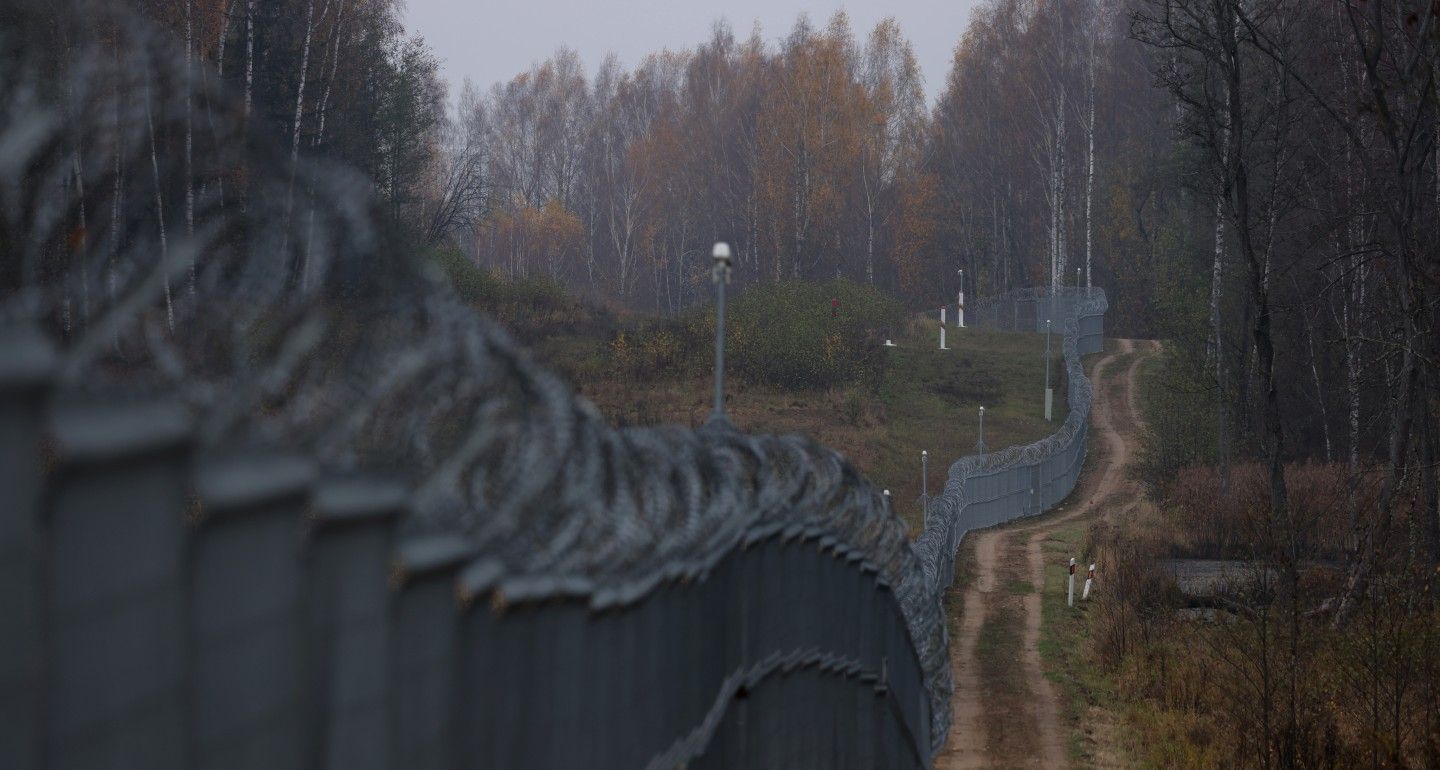
When Vladimir Putin calls Ukraine an “artificial state,” he is largely projecting Russia’s own problems onto it. After all, the considerations that produced Russia’s current borders aren’t exactly transparent.
Russian President Vladimir Putin’s infamous 2016 quip that “there is no end to Russia’s borders” felt threatening even then. Post-February 24, 2022, it seems to be his regime’s foreign policy creed—especially considering that an ultimatum for the United States and NATO to curb their military presence in former Warsaw Pact countries preceded the Kremlin’s full-scale invasion of Ukraine.
Putin’s rhetoric around international relations is often said to have a neo-imperialist bent: one in which independent states conducting their own foreign policy are a problem that must be solved, rather than a reality that must be accepted. Since conventional nation-states cannot exist without territory, redrawing borders is a key instrument of imperialist policy.
This explanation, which situates the Putin regime’s behavior within a centuries-old Russian political tradition, is quite convincing, but it begs the key question of why old imperial approaches have gained newfound relevance in Russia’s latest political turn. What convinced the Russian leadership that redrawing the map was worth the many risks involved?
Before 2014, the idea of redrawing post-Soviet borders was monopolized in Russia by the nationalist left-leaning opposition, particularly the Communist Party. Many rejected the 1991 Belovezha Accords that declared the end of the Soviet Union and created the Commonwealth of Independent States in its place. The Soviet collapse figured heavily in Communist parliamentarians’ impeachment case against Russia’s first president, Boris Yeltsin, in 1999. Six years earlier, the Russian parliament, still made up largely of Soviet-era Communist Party functionaries, had attempted to declare the Crimean port city of Sevastopol part of Russia.
But a quarter of a century later, what made the Putin regime so preoccupied with redrawing borders? Ask an expert close to the Kremlin, and they will probably mention the so-called Kosovo precedent. Moscow routinely invoked it in 2008, when it recognized the breakaway Georgian regions of Abkhazia and South Ossetia as independent, and again in 2014, when it annexed Crimea.
The argument goes that the West was the first to disregard existing state borders when it recognized the former Serbian province of Kosovo as independent, and Russia merely followed its example. However, that comparison is full of logical inconsistencies. Rather, we should ask whether there was any point in post-Soviet Russian history when the idea of redrawing borders was truly alien to the country’s leadership. The short answer is no.
In the 1990s, the nationalist left criticized Yeltsin’s promise to Russia’s autonomous republics of “as much sovereignty as you can swallow.” Yet that quote originated in his earlier conflict with the Soviet leadership and was taken out of context by his critics. Indeed, the promise was aimed precisely at preventing the breakup of Russian territory. The rest of Yeltsin’s rhetoric often pointed in a very different direction. He played to Russian ressentiment as early as 1989 and 1990, claiming that within the Soviet Union, Russia had become an “appendage of the center” that received much less attention and privileges than the other union republics.
Yeltsin mainly directed his ire against the union center, which he accused of infringing on Russian national interests. Even then, he based this on comparisons with other Soviet republics. Yeltsin’s theses about Russia’s future constitution contain such expressions as “national revival” and even the “revival of national greatness.” This shows that Russian exceptionalism was a common idea among the late and post-Soviet elite long before 2014.
Yeltsin’s sentiments differ somewhat from Putin’s expansionism and are more reminiscent of American isolationism. But their emotional charge is the same: dissatisfaction with Russia’s standing in the region.
An analytical line from Russian exceptionalism to redrawing post-Soviet borders was sketched out by none other than Anatoly Sobchak, St. Petersburg mayor and Putin’s immediate boss in the early 1990s. In 1992, just after the Soviet collapse, Sobchak declared that its founding republics, having annulled the treaty on its formation, should return to the borders in which they had entered. This was a transparent allusion to annexing Crimea. Curiously, but perhaps not surprisingly, Putin went on to directly cite his mentor in his prewar article “On the historical unity of Russians and Ukrainians.”
Russia’s special status within the Soviet Union might explain that early resurgence of revisionism. Unlike the other Soviet republics (and even Russia’s own autonomous republics), Russia lacked a separate party organization at a time when presence in the party state was itself a key manifestation of power. Ordinary citizens might not have cared much that their republic did not have its own Central Committee, but it was especially painful for the Russian elite.
The specific way in which the Soviet Union disintegrated only added insult to injury. Russia’s leadership went from being the union center’s adversary to its successor overnight. It inherited the Soviet Union’s global ambitions while still clinging to its old ressentiment. The Weimar metaphor for Russia was almost a truism even then.
What’s more, unlike in Germany, revisionism’s triumph in Russia did not require an alternative political force to seize power and co-opt part of the old elite. A readiness to revamp borders, no matter whose they were, matured in the group that had run Russia from the very beginning of its independent existence.
Today, when Putin calls Ukraine an “artificial state,” he is largely projecting Russia’s own problem onto it. After all, the considerations that produced Russia’s current borders aren’t exactly transparent.
Many parts of Russia could easily have become full-fledged republics themselves and therefore independent states after the fall of the Soviet Union. Soviet premier Nikita Khrushchev had not only handed Crimea to Ukraine (a fact mentioned regularly in Kremlin propaganda), but also stripped Karelia of union republic status, which is less often remembered. If Khrushchev had not done so, the region’s fate could have been completely different.
To overcome anxieties about its own “artificiality,” Russian propaganda manipulated the term “historical Russia,” refashioning a weak position into a strong one and legitimizing the right of modern Russia to dispute the borders of any territory previously belonging to Muscovite princes, Russian czars, and Soviet general secretaries.
In his book The Wages of Destruction: The Making and Breaking of the Nazi Economy, the British historian Adam Tooze notes that Hitler’s “eastward push” was driven in many ways by his incorrect assumption that without claiming new territory in the east, Germany would be doomed to lose its economic race against the United States. However, a development program devised by Weimar-era chancellor and foreign minister Gustav Stresemann rendered those concerns irrelevant, and it was largely realized in postwar Germany.
Is there a similar meaningful component to the Russian leadership’s fears that could be removed without harming other countries and peoples? Unlike the Nazis, the modern Russian elite did not pursue redrawing others’ borders as a key objective. Rather, many factors seem to have led it to settle on revisionism. That gives hope that, in different circumstances, there might be other ways for Russia to conquer the fear of its own “artificiality.” One of those ways might be a referendum—or, more likely, more than one—on who wants to remain part of Russia and in what form.
A German version of this piece was published in the magazine Ost-West.
Dmitri Kartsev
Carnegie does not take institutional positions on public policy issues; the views represented herein are those of the author(s) and do not necessarily reflect the views of Carnegie, its staff, or its trustees.
A leak of Russian gas price data helps establish that China is paying Russia far less than Central Asian countries and Gazprom’s former European customers.

Sergey Vakulenko

Japan’s long-term security policy is driven by concerns about China, and there is little appetite for (or interest in) pursuing a confrontation with Moscow.

James D.J. Brown

The truth of the strategic situation is that Europe and Russia are extremely unlikely to be able to “turn the page” on their confrontation within the next two decades.

Arkady Moshes
Russia spent years building a “sovereign internet,” concentrating web infrastructure exclusively within Russian territory. Ukrainian drone attacks have shown how vulnerable that approach has left the Russian internet.

Maria Kolomychenko

Putin’s conservative staffing policies and search for ever greater control have cemented parliament’s transformation into a bureaucratic appendage of the executive branch.

Andrey Pertsev