

Commentary
Alexander Baunov
{
  "authors": [
    "Alexander Baunov"
  ],
  "type": "commentary",
  "blog": "Carnegie Politika",
  "centerAffiliationAll": "",
  "centers": [
    "Carnegie Endowment for International Peace",
    "Carnegie Russia Eurasia Center"
  ],
  "englishNewsletterAll": "",
  "nonEnglishNewsletterAll": "",
  "primaryCenter": "Carnegie Russia Eurasia Center",
  "programAffiliation": "",
  "programs": [],
  "projects": [],
  "regions": [
    "Russia",
    "United States",
    "Ukraine"
  ],
  "topics": [
    "Foreign Policy",
    "Security",
    "Military",
    "Global Governance"
  ]
}
Source: Getty
Putin thinks exploiting Trump’s desire to be seen as swift and decisive is the best way to get what he wants in Ukraine.
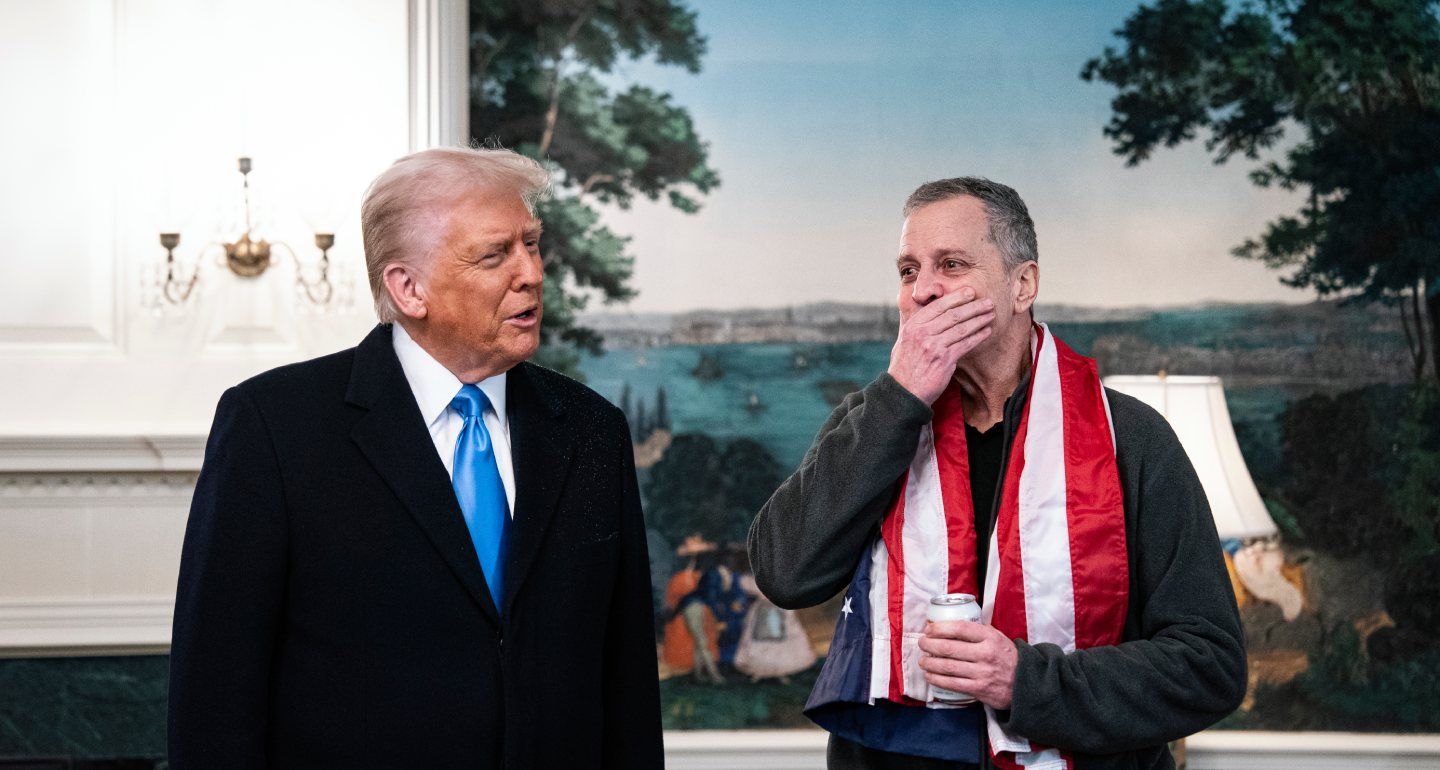
The release last week of Marc Fogel, a U.S. citizen detained in Russia on dubious drug charges, was obviously meant to put U.S. President Donald Trump in a good mood and serve as a respectable reason for him to talk to his Russian counterpart Vladimir Putin. After all, calling to thank someone for showing mercy to an unfortunate compatriot needs little explanation.
Putin seeks to exploit Trump’s desire to be seen as swift and decisive. Therefore, resuming communication to hand him his first success was a logical step, especially since it was so easy. All Putin had to do was arrest an American citizen, then release him.
Putin is ready to hand Trump the same kind of win with respect to Ukraine: he started the war and will stop it if certain conditions are met and the right words are spoken.
Throughout his quarter century in power, Putin has proposed that Russia and the United States work together to defeat a common enemy, from Islamic terrorists and Somali pirates to COVID-19 and even global warming. He believed that such a victory would bring the two countries closer, transcending political and ideological barriers, differences between changeable and unchangeable power, and even Russian domestic repression, as Stalin and Roosevelt managed to do in the 1940s.
Paradoxically, Putin has come closer to his goal at a time when it would seem he should be further from it than ever, having become the West’s common enemy. Trump’s account of his phone call with Putin casts a war seemingly independent of the Russian president, and not the man himself, as the common enemy worth defeating.
This is not the first time Putin has used force and made himself necessary to deal with the consequences. However, never before has this tactic been used so blatantly or been so readily accepted.
The friendly, even flattering tone of Trump’s personal account of his call with Putin contrasts sharply with his usual brash style, suggesting that Trump is trying just as hard to please Putin. Following what he called a “lengthy and highly productive phone call,” Trump listed the common ground covered—and did not mention a single conflict, which is highly unusual for an account of a conversation with someone who is still an opponent.
“We discussed Ukraine,” Trump wrote. Mentioning it first signifies its primacy for Trump in relations with Russia.
But immediately after Ukraine came the Middle East: an extremely positive development for Putin. Its inclusion in the list means that Trump considers Russia not merely an aggressor that must be stopped (even at the cost of concessions from the victim), but a global player whose participation is needed to solve global problems. It is quite possible that Putin inserted the Middle East into the conversation to secure this status for himself.
Third in the list of topics mentioned was energy, which could mean that Trump threatened Putin with a potential decrease in global oil prices. However, nothing in the tone of the conversation suggests that. Rather, the word denotes a shared commitment to conventional energy and mutual skepticism toward an accelerated energy transition that is not in the interest of major oil and gas-exporting countries.
The phrase “We both reflected on the Great History of our Nations, and the fact that we fought so successfully together in World War II,” is music to Putin’s ears, lending support to his position that greatness must be sought in the past, that the old world is superior and should be returned.
Mutual recognition of greatness is a kind of agreement with the idea of a supporting world structure, in which “great nations” are the true subjects of history while less great nations are its objects. Both Washington and Moscow’s initiation of a direct conversation about Ukraine and Europe’s curious absence from Trump and the Kremlin’s summaries of the call confirm this.
The promise to visit each other’s countries—not just meet on neutral territory—is another important success for Putin. In a way, a visit by an American president to any dictatorship is the highest form of international legitimization, a magic ritual to lift a diplomatic curse.
Now frantic work will begin to combine the talking points of a great history and shared war with a visit by Trump timed to coincide with the Russian Victory Day public holiday on May 9 commemorating the Allied victory in World War II. A ceasefire in Ukraine could be timed to coincide with it too: there is already talk of accomplishing this by Easter, which falls on April 20 this year for both Western and Orthodox believers. If the U.S. president attends Russia’s Victory Day parade, Kremlin propaganda will spin it as victory over Nazism past and present—that is, in Ukraine.
The combination of Trump’s comments that “Millions of people have died in a War that would not have happened if I were President” and “I want to thank President Putin for his time and effort with respect to this call” essentially shifts symbolic responsibility for the Ukraine war from Putin to former U.S. president Joe Biden. In other words, the war happened not because Putin amassed troops and sent them to conquer a neighbor, but because Trump was not president.
Trump’s statement ends with confidence in the imminent success of negotiations. The basis for these negotiations is quite clear. Trump sees Russia as only a “party to the conflict” and an equal participant in its resolution. He neglects Putin’s role in starting the war and gives him a new role as peacemaker, alongside himself.
Trump seeks a quick end to the conflict, regardless of the terms, and the Kremlin appears ready to help him. Not only has Putin shown that he is willing to tell Trump what he wants to hear (the 2020 presidential election was stolen; he would have stopped the Ukraine war from happening; Zelensky is swindling America) and signaled that he is ready for peace, he has also handed Trump a free win by releasing a jailed American.
It is not at all clear how ending the war under Trump’s oversight will enshrine the global anti-imperialist uprising Putin supposedly leads. But the Russian leader is so fixated on Ukraine that he will equate the recognition of his rights there with the new world order itself. If killing Trump with kindness gets Putin closer to his goals, then that is what he will do.

Senior Fellow, Editor-in-Chief, Carnegie Russia Eurasia Center
Baunov is a senior fellow and editor-in-chief at the Carnegie Russia Eurasia Center.
Recent Work
Alexander Baunov
Alexander Baunov
Carnegie does not take institutional positions on public policy issues; the views represented herein are those of the author(s) and do not necessarily reflect the views of Carnegie, its staff, or its trustees.

Putin’s conservative staffing policies and search for ever greater control have cemented parliament’s transformation into a bureaucratic appendage of the executive branch.

Andrey Pertsev

Russia’s AI-driven propaganda campaigns operate in a fragmented, chaotic, and often illogical manner. That’s not necessarily a problem for the Kremlin, though: It’s much easier to mimic genuine public debate that way.

Ilya Klishin

Without a ceasefire with Ukraine on attacking each other’s energy infrastructure—to which the Kremlin is unlikely to agree—the diesel agreement between Putin and Trump is largely for show, rather than representing a genuine increase in the volumes of Russian diesel on the global market.

Sergey Vakulenko

Russian strikes are weakening the economy sustaining Ukraine’s war effort. Closing the growing funding gap will require more European support and politically contentious reforms in Kyiv.

Balázs Jarábik

Despite a new textbook, an influx of Russian teachers and managers, and an end to the teaching of Ukrainian, the Kremlin is unlikely to have “reprogrammed” locals.

Konstantin Skorkin