

Commentary
Alexander Atasuntsev
{
  "authors": [
    "Alexander Atasuntsev"
  ],
  "type": "commentary",
  "blog": "Carnegie Politika",
  "centerAffiliationAll": "",
  "centers": [
    "Carnegie Endowment for International Peace",
    "Carnegie Russia Eurasia Center"
  ],
  "collections": [
    "Aso Tavitian Initiative",
    "Politika: The Best of 2025"
  ],
  "englishNewsletterAll": "",
  "nonEnglishNewsletterAll": "",
  "primaryCenter": "Carnegie Russia Eurasia Center",
  "programAffiliation": "",
  "programs": [],
  "projects": [],
  "regions": [
    "Russia",
    "Azerbaijan"
  ],
  "topics": [
    "Foreign Policy",
    "Security",
    "Military",
    "Global Governance"
  ]
}
Source: Getty
Old patterns of diplomatic behavior are making a comeback in the South Caucasus after a period in which Russia was distracted by the war in Ukraine.
Three years of full-scale war in Ukraine have given birth to a new model of relations between Moscow and the countries of the South Caucasus. The Kremlin’s preoccupation with the fighting in Ukraine meant that Georgia, Armenia, and Azerbaijan were able to be more assertive in their relations with Moscow and enjoyed greater freedom to shape their own foreign policy. Now, however, this “new reality” appears to be on borrowed time. The negotiations between Moscow and Washington have raised hopes of a swift end to the war in Ukraine—and as a result, have forced politicians in the region to eye a return to old diplomatic ways.
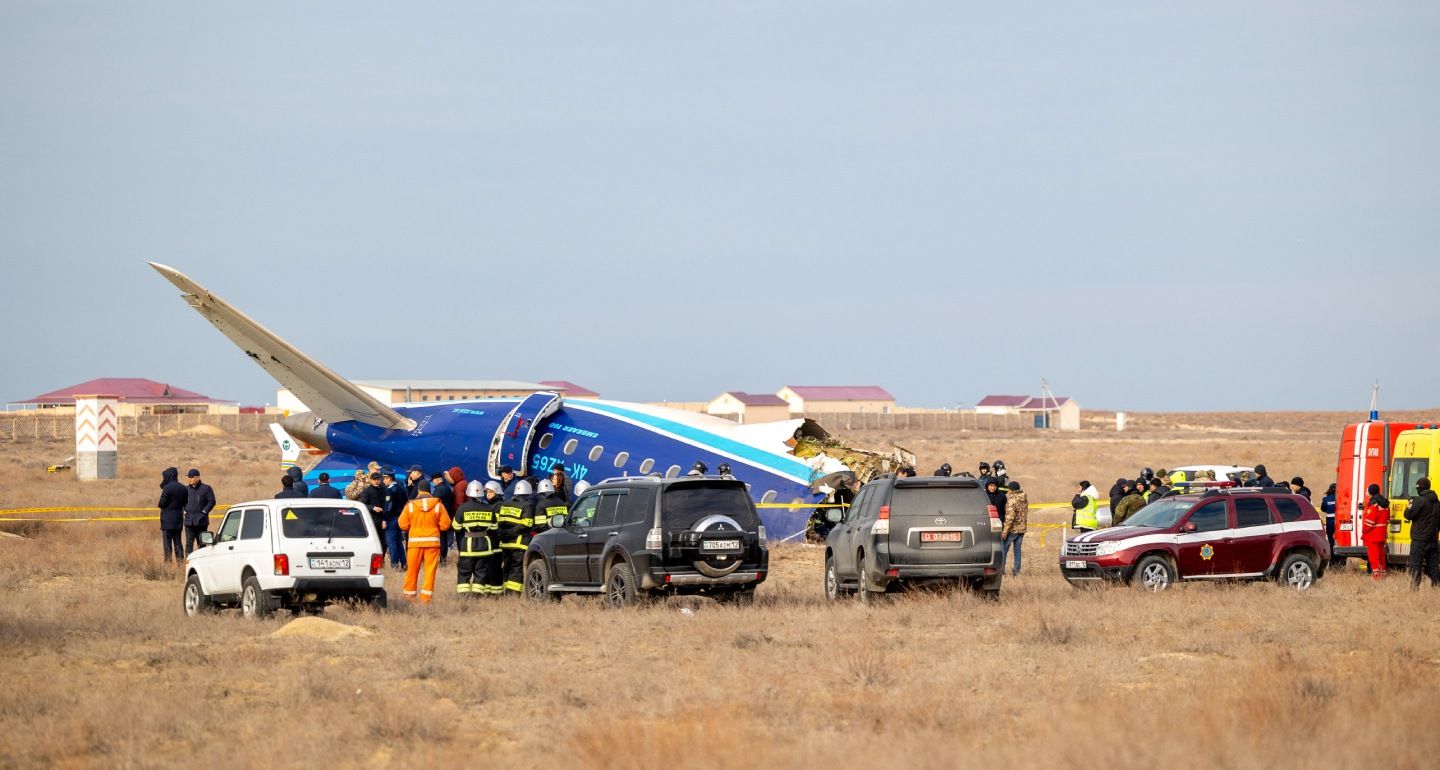
Since 2022, Armenia has frozen its membership in the Moscow-led Collective Security Treaty Organization and started work on laws to begin the process of European Union integration. Azerbaijan, meanwhile, has achieved the early withdrawal of Russian peacekeepers from the disputed region of Nagorno-Karabakh; closed the Baku offices of Rossotrudnichestvo, the Russian government’s cultural promotion and unofficial soft power agency; and refused to gloss over the apparent downing of an Azerbaijan Airlines passenger jet by Russian air defenses in December 2024.
Azerbaijani President Ilham Aliyev publicly demanded that Moscow apologize for the fatal crash, launch an investigation, and punish those found guilty—and he repeated those demands several times before ordering the closure of Rossotrudnichestvo and Russian state-controlled media outlet Sputnik. It all appeared to be leading to a major rupture in Russian-Azerbaijani relations. But three months later, the two sides seem to have settled their differences in a very traditional way: a mixture of political gesture and financial compensation.
First, Chechen leader Ramzan Kadyrov presented awards to the surviving crew of the Azerbaijan Airlines flight. Then, before the results of any official investigation into what happened, Russian insurers announced they would pay compensation to the victims. Around the same time, work was begun on a monument to former Azerbaijani leader (and Ilham Aliyev’s father) Heydar Aliyev in downtown Moscow.
The political rapprochement continued when the Kremlin arranged for the Order of Friendship to be given to Sahiba Gafarova, the speaker of the Azerbaijani parliament. Russian Federation Council speaker Valentina Matviyenko was received by President Aliyev himself when she made an official visit to Baku in March. In the meanwhile, the Azerbaijani leader accepted the Kremlin’s invitation to visit Moscow on May 9 for the Victory Parade.
Even the expulsion of the Russian state organizations did not result in bad blood. It helped that Baku explained the decision as one of “political sovereignization,” and simultaneously kicked out dozens of other groups, including the United Nations, the Red Cross, USAID, and media outlets Bloomberg and the BBC.
However, it’s extremely unlikely that it was solely the political overtures from Moscow that succeeded in assuaging Baku. The Azerbaijani leadership also realized the international situation was evolving, and decided that entering into a conflict with Moscow could cost it dearly.
Above all, it was the possibility of a ceasefire in Ukraine that changed the calculation in Baku. Since the full-scale invasion in 2022, Aliyev has become adept at exploiting Russian President Vladimir Putin’s obsession with Ukraine, correctly guessing that he could be much more assertive on certain issues. For example, he timed Azerbaijan’s successful military operation in Nagorno-Karabakh in 2023 for when Moscow was dealing with a Ukrainian counteroffensive. But this time, the Azerbaijani leader apparently sensed he was reaching the limits of what Moscow would tolerate.
Baku also took note of a shift in neighboring Armenia, with which it had fought over Nagorno-Karabakh. In March, Armenian Prime Minister Nikol Pashinyan ordered state agencies to restore relations with their Russian counterparts and take part in joint events because of the “latest geopolitical changes.”
Armenia is very interested in improving ties with Russia. If the fighting ends in Ukraine, then it’s possible the Russian defense industry will end up with significant spare capacity, and might ramp up arms exports (it was delays in arms deliveries that caused a chill in Armenia-Russia relations in 2022). Of course, exports won’t begin immediately because Russia will need time to rebuild its badly mauled military. But even the prospect of a resumption of Russian military aid to Armenia would strengthen Yerevan’s position vis-à-vis Baku.
Armenia is even sending signals that it would be happy to pause its push for EU integration. These signals began immediately after the Armenian parliament passed a law on “Beginning the Process of Membership of the Republic of Armenia in the European Union” on March 26. Armenian lawmaker Arman Yeghoyan, who heads the parliament’s commission on European integration, said soon after that Yerevan wasn’t planning on filing an application to join the EU. There were also press reports that Yerevan only wanted to use the threat of EU integration to pressure Moscow.
It seems that the mere possibility of an end to the war in Ukraine has brought down the curtain on a period in which South Caucasus nations were able to conduct a foreign policy that was more independent of Moscow: publicly contradicting the Kremlin, coming to agreements with one another without any external mediation, and freely seeking the help of other global powers.
On top of this, the EU’s failure to protect Ukraine from Russian aggression has damaged Europe’s allure. This is not only visible in Armenia, but also in Georgia, where the ruling party Georgian Dream has managed to convince a large chunk of the mostly pro-EU electorate that there is a real risk of a war with Russia if the country does not maintain decent relations with Moscow.
All of this looks a lot like how former Soviet nations managed their relationships with Russia before the full-scale invasion of Ukraine: regularly seeking to negotiate more favorable terms with Moscow, prioritizing pragmatism, and keeping disagreements out of the public eye.

Independent journalist
Recent Work
Alexander Atasuntsev
Alexander Atasuntsev
Carnegie does not take institutional positions on public policy issues; the views represented herein are those of the author(s) and do not necessarily reflect the views of Carnegie, its staff, or its trustees.

Japan’s long-term security policy is driven by concerns about China, and there is little appetite for (or interest in) pursuing a confrontation with Moscow.

James D.J. Brown

The truth of the strategic situation is that Europe and Russia are extremely unlikely to be able to “turn the page” on their confrontation within the next two decades.

Arkady Moshes

Russia spent years building a “sovereign internet,” concentrating web infrastructure exclusively within Russian territory. Ukrainian drone attacks have shown how vulnerable that approach has left the Russian internet.

Maria Kolomychenko

Putin’s conservative staffing policies and search for ever greater control have cemented parliament’s transformation into a bureaucratic appendage of the executive branch.

Andrey Pertsev

Russia’s AI-driven propaganda campaigns operate in a fragmented, chaotic, and often illogical manner. That’s not necessarily a problem for the Kremlin, though: It’s much easier to mimic genuine public debate that way.

Ilya Klishin