

Commentary
Maria Kolomychenko
{
  "authors": [
    "Maria Kolomychenko"
  ],
  "type": "commentary",
  "blog": "Carnegie Politika",
  "centerAffiliationAll": "",
  "centers": [
    "Carnegie Endowment for International Peace",
    "Carnegie Russia Eurasia Center"
  ],
  "englishNewsletterAll": "",
  "nonEnglishNewsletterAll": "",
  "primaryCenter": "Carnegie Russia Eurasia Center",
  "programAffiliation": "",
  "regions": [
    "Russia"
  ],
  "topics": [
    "Technology",
    "Security",
    "Domestic Politics",
    "Defense",
    "Military"
  ]
}
Source: Getty
With the blocking of Starlink terminals and restriction of access to Telegram, Russian troops in Ukraine have suffered a double technological blow. But neither service is irreplaceable.
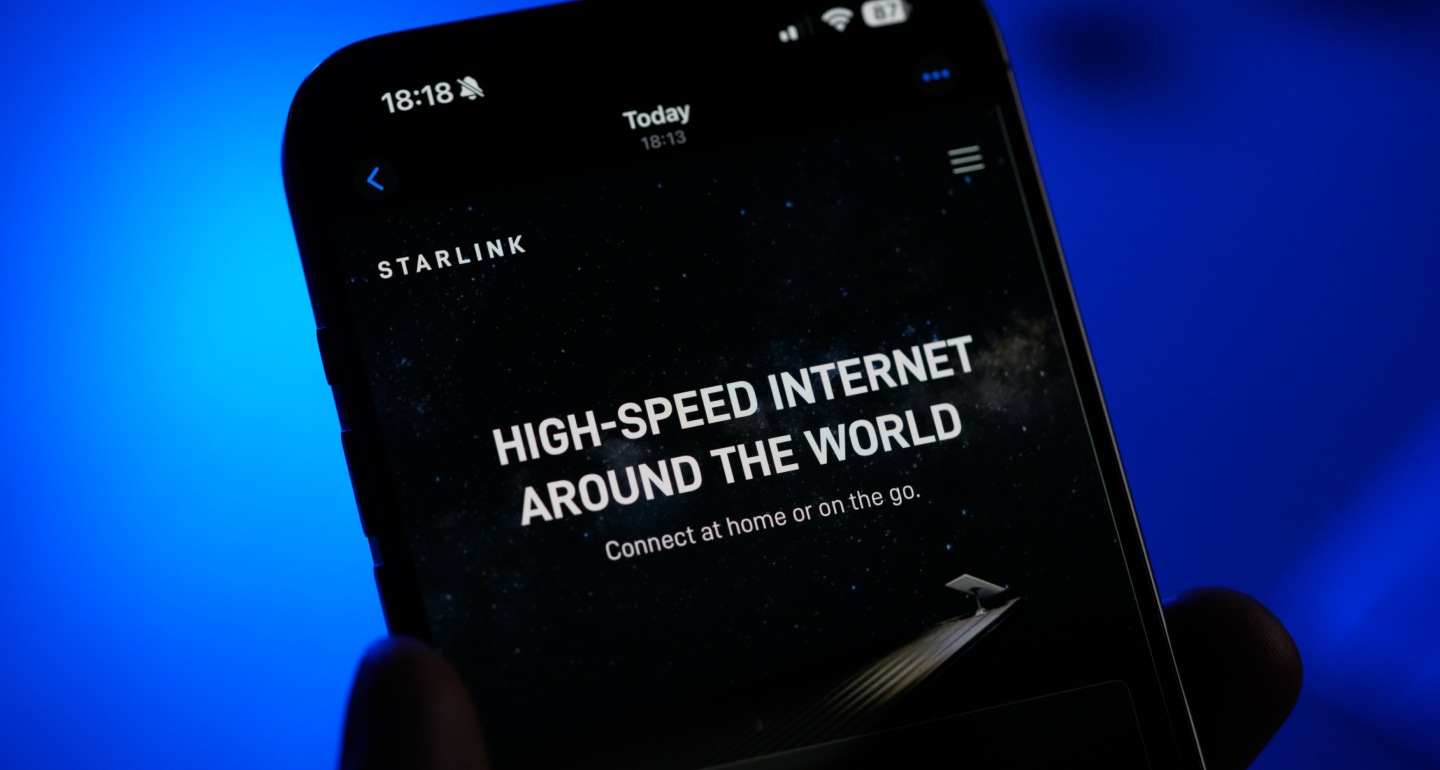
At the beginning of February, billionaire Elon Musk’s company SpaceX reached an agreement with the Ukrainian authorities to curtail the Russian army’s unauthorized access to Starlink satellite internet. SpaceX began deactivating Starlink terminals operating in Ukraine that had not been registered with either DELTA, a Ukrainian military communication platform, or Diia, a Ukrainian civilian portal. Starlink terminals are also now shut down if they travel faster than 90 kilometers per hour, to prevent them from being attached to Russian attack drones.
Russian troops have also been affected by a February 10 decision of the country’s internet censor, Roskomnadzor, to slow the functionality of the popular messaging app Telegram. Although the Kremlin has repeatedly claimed that Russian soldiers do not use either Starlink or Telegram, it’s clear that in reality both are important elements of military communication. Pro-war bloggers in Russia have characterized recent events as Moscow “shooting itself in the foot.”
Starlink plays an important role for both Russia’s and Ukraine’s militaries—though Russia uses the system illegally. Following a formal agreement between Musk and Kyiv in 2022, the Ukrainian military acquired hundreds of thousands of terminals. At the front, Starlink is used to direct Ukrainian drones, gather intelligence, and ensure reliable communications in areas lacking secure networks.
In Russia, Starlink has—at least officially—never been on sale. However, in 2024, reports emerged that terminals had been imported via third countries and registered to front men, and were being operated by troops in occupied Ukraine. In particular, Russian soldiers were using them to provide internet access at the front and relay drone feeds. At the end of 2025, Starlink antennae were even attached to Russian drones capable of striking targets up to 80 kilometers behind the lines.
It was the use of Starlink on drones that appeared to galvanize Kyiv and SpaceX into action. Ukrainian Defense Minister Mykhailo Fedorov announced that Kyiv would set up a “whitelist” of terminals (to prevent any unofficially activated terminals being used by the Ukrainian army from being affected), and that SpaceX would disable all other terminals in Ukraine.
Inevitably, the Russian military quickly began seeking workarounds. There have been efforts to recruit Ukrainian citizens to activate contraband terminals, and there are Telegram bots claiming they can remotely activate terminals. Ruslan Leviev, founder of the investigative group Conflict Intelligence Team, said Russian soldiers might be able to tamper with terminals and change their serial numbers.
Like Starlink, Telegram was never a formal part of Russia’s military communications. But in reality, it too played an important role. Many units have their own Telegram groups, via which they send coordinates, communicate with headquarters, share drone footage, and coordinate air defenses. One pro-war blogger said Telegram hosts many groups for air defense crews and commanders, where they share information about drone sightings and strikes.
The Russian army also uses Telegram to communicate with the outside world. Videos from the front, commentary from soldiers, and images of the fighting often appear on Telegram channels before they are mentioned in official reports. Soldiers give material to Telegram channel administrators, who provide the necessary spin and set the news agenda. Telegram is also used by pro-war Russian volunteers, including to raise funds for military equipment and supplies.
Formally, the Kremlin accuses Telegram of disseminating prohibited information and failing to take sufficient steps to combat fraud, but in reality, the authorities simply do not like the fact that, like WhatsApp, Telegram is not under their control.
Russia first slowed the functionality of WhatsApp and Telegram in 2025 after launching and heavily promoting its own messaging app, MAX. However, military lobbying against the restrictions began after the most recent crusade against Telegram—leading to the kind of public debate now rarely seen in Russia. The head of the pro-Kremlin A Just Russia party, Sergei Mironov, fiercely criticized the blocking of Telegram, claiming the app was the only way for Russian soldiers to keep in touch with loved ones.
Eventually, the head of the State Duma’s IT committee, Sergei Boyarsky, said Telegram just needed to take “a few steps” to resolve the standoff. If pressure from the military really does lead to Roskomnadzor backtracking and reestablishing full access to Telegram, this would be the first unblocking of a major internet service since the full-scale invasion—a significant precedent. So far, the authorities have agreed only to postpone the slowing down of Telegram in the war zone in order to give the armed forces more time to switch to MAX.
The Russian army’s active use of both Starlink and Telegram was born out of necessity. Military communication platforms should provide such services—but the fact is that Russia’s platforms cannot offer the same capabilities as these two private companies. For decades, Russia has been developing a Unified Tactical-Level Control System (UTLCS)—Sozvezdie-M2—for the armed forces, which is supposed to link up headquarters, reconnaissance, artillery, aviation, and commanders in a secure digital network with real-time intelligence transmission and target designation. But despite hundreds of billions of rubles in investment and years of testing, it’s still not fully functional.
As a result, at the start of the full-scale invasion, Russian soldiers turned to civilian apps like WhatsApp and Telegram. While they stopped using WhatsApp when its owner, Meta, was designated “extremist” by the Russian authorities, Telegram has remained popular.
Similar deficiencies led to the adoption of Starlink. Russia did not have a comprehensive, widely accessible satellite communications network that could be used by frontline soldiers. There is, of course, the Gonets satellite communication system, which has been in development since the 1990s, but slow data transmission speed means only short text messages can be sent via Gonets. Russia’s Gazprom Space Systems network has slow signal transmission speeds because it uses geostationary satellites (unlike the low-orbit Starlink).
Despite their importance, neither Starlink nor Telegram are indispensable for Russia’s military communication, according to experts. Russian troops continue to use traditional means of communication, such as VHF and HF radio networks, military radio stations, and specialized transmission devices. They also use fixed-line channels, including fiber-optic cables laid behind the front lines.
Restrictions on the use of Starlink and Telegram will, however, create significant tactical challenges for Russian military units—particularly when it comes to the speed of communications, coordination of mobile groups, and transmission of drone feeds. It will mean inconvenience and inefficiency, but not the collapse of command systems.

Special correspondent for The Bell
Recent Work
Maria Kolomychenko
Maria Kolomychenko
Carnegie does not take institutional positions on public policy issues; the views represented herein are those of the author(s) and do not necessarily reflect the views of Carnegie, its staff, or its trustees.
A leak of Russian gas price data helps establish that China is paying Russia far less than Central Asian countries and Gazprom’s former European customers.

Sergey Vakulenko

Japan’s long-term security policy is driven by concerns about China, and there is little appetite for (or interest in) pursuing a confrontation with Moscow.

James D.J. Brown

The truth of the strategic situation is that Europe and Russia are extremely unlikely to be able to “turn the page” on their confrontation within the next two decades.

Arkady Moshes

Russia spent years building a “sovereign internet,” concentrating web infrastructure exclusively within Russian territory. Ukrainian drone attacks have shown how vulnerable that approach has left the Russian internet.
Maria Kolomychenko

Putin’s conservative staffing policies and search for ever greater control have cemented parliament’s transformation into a bureaucratic appendage of the executive branch.

Andrey Pertsev