

In The Media
Minxin Pei
{
  "authors": [
    "Minxin Pei"
  ],
  "type": "legacyinthemedia",
  "centerAffiliationAll": "dc",
  "centers": [
    "Carnegie Endowment for International Peace"
  ],
  "collections": [],
  "englishNewsletterAll": "asia",
  "nonEnglishNewsletterAll": "",
  "primaryCenter": "Carnegie Endowment for International Peace",
  "programAffiliation": "AP",
  "programs": [
    "Asia"
  ],
  "projects": [],
  "regions": [
    "United States",
    "China"
  ],
  "topics": [
    "Military",
    "Foreign Policy"
  ]
}
REQUIRED IMAGE
Source: Carnegie
Reprinted with permission from the The Straits Times, April 29, 2002
In most countries, China and the United States included, the vice-president's job is often confined to performing necessary but mostly ceremonial tasks such as attending state funerals, cutting ribbons, or paying goodwill visits to countries the president is too busy to bother with.
Thus, it has surprised many that the upcoming US visit of China's Vice-President, Mr Hu Jintao, has generated enormous interest, not only in Beijing and Washington, but also in many capitals in East Asia.
But Mr Hu is no ordinary vice-president. If the leadership transition unfolds as expected later this year, he is poised to take over both the presidency and the post of Communist Party general secretary.
Because of his unique status as the heir apparent of President Jiang Zemin, his scheduled meetings with President George W. Bush and other senior US leaders have taken on the trappings of a quasi-summit.
BUSH'S UNUSUAL INVITATION
To the U.S. political elite, he remains a political enigma. The Bush administration's invitation is unusual on two counts. First, Washington is not in the habit of inviting Chinese vice-presidents for serious talks.
Second, given Mr Hu's sensitive status as China's leader-to-be and much uncertainty surrounding his political prospects, the Bush administration may have overestimated the utility of a short 'nice-getting-to-know-you' visit that is, by all accounts, devoid of substance.
Indeed, Mr Bush and his foreign-policy advisers are likely to end up learning little beyond what they already know about him: that he is an intelligent, well-informed and cautious leader who does not reveal his cards prematurely.
Despite Washington's apparent indifference to the pending leadership transition in Beijing, much is at stake.
Sino-US relations, which have remained highly unstable since the end of the Cold War, could experience new volatility if a messy transition paralyses China's foreign policy-making or endangers the current leadership's moderate stance towards Washington.
It is not that the US is necessarily afraid to confront a hostile China. But the White House's top priority now is to fight international terrorism, not take on the East Asian giant.
Thus, by giving Mr Hu a reception fit for a future head of state and engaging him in a serious dialogue, Washington may not only gain some insights into the thinking of China's new leader, but also reassure him of the US intention of maintaining a cooperative relationship with Beijing.
For Mr Hu, the political stakes cannot be higher.
In contemporary Chinese politics, no designated heir has ever been given such a high-profile diplomatic assignment so close to the anticipated transfer of power.
Although he has visited major Western European countries, the US trip poses a qualitatively different challenge to his diplomatic skills and political judgment.
For one thing, his mission is poorly defined and has no specific goals other than to improve ties through direct high-level talks - and that limits the political gains for him.
He will most likely get a friendly reception in Washington, but few expect any substantive deals.
On the other hand, downside political risks can be substantial. Any glitches that make him appear either too soft or unskilled could damage his political stock on the eve of the transition.
He may be forced to stick to Beijing's official positions and fail to engage his American interlocutors in a more candid and forceful dialogue. This will disappoint his Washington hosts.
In addition, he may find his American hosts distracted by other more pressing events, such as the Palestinian-Israeli conflict.
Even though there is no crisis in bilateral ties, a White House preoccupied with other issues may not pay enough attention to a visit that may look purely symbolic but actually has enormous long-term implications for one of the most important but fragile major-power relations in the 21st century.
That would be truly unfortunate. Despite the rhetoric of cooperation, the US and China may soon be headed into another crisis over Taiwan with tensions building up over the past year.
There have been specific incidents, such as the unprecedented package of arms sales to Taiwan approved a year ago and the recent meeting between Taiwan's Defence Minister and the Pentagon's No 2 man, Mr Paul Wolfowitz.
US-TAIWAN TIES WORRY BEIJING
For Beijing, these steps have amounted cumulatively to a systematic evisceration of Washington's declared one-China policy. What worries Beijing more is that its protests appear to have had no effect on Washington.
Many in Beijing fear that Washington's tilt towards Taipei will soon make it impossible for China not to respond, not just with words, but with action that can change qualitatively the nature of Sino-US relations.
What puzzles Chinese leaders is Mr Bush's role in these developments. Although Beijing knows that anti-China hands have effectively taken over many key Pentagon posts, and are pushing vigorously for upgrading US-Taiwan ties, it does not know for sure whether the White House is directly behind these initiatives.
Thus, Mr Hu's real mission to Washington is to deliver Beijing's message on Taiwan. He will focus on the Taiwan issue in order to bring to Mr Bush's attention directly the urgency and unease felt by Beijing over the current US policy.
These sessions should help Beijing decide whether the US shifts in the past year were no more than random events or whether they indeed constitute a fundamental change in Washington's one-China policy.
But two questions remain. First, Chinese leaders are not known to be good at delivering candid messages that grab the attention of their targets.
So, Mr Hu may couch Beijing's message in such cliched terms that Mr Bush may see nothing new or urgent in it.
Second, Mr Bush may get the message, but decide to ignore it because those pushing for a reversal of the one-China policy are among his core political constituencies - the Republican Party's right wing.
If his record on decision-making is any indication, he may likely bow to pressure and maintain a policy that will increase greatly the risks of a serious deterioration, or even a collapse, in ties.
That, indeed, would be a tragedy both for Mr Bush and Mr Hu.
For Mr Bush, it is hard to imagine that any fundamental American national interest could be served by forcing China into a corner over Taiwan, especially at a time when the US faces the threats of international terrorism and turmoil in the Middle East.
For Mr Hu, apart from being viewed as an ineffectual messenger, he may find himself assuming power at a time when he is forced to make the toughest decisions regarding China's most important bilateral relationship.
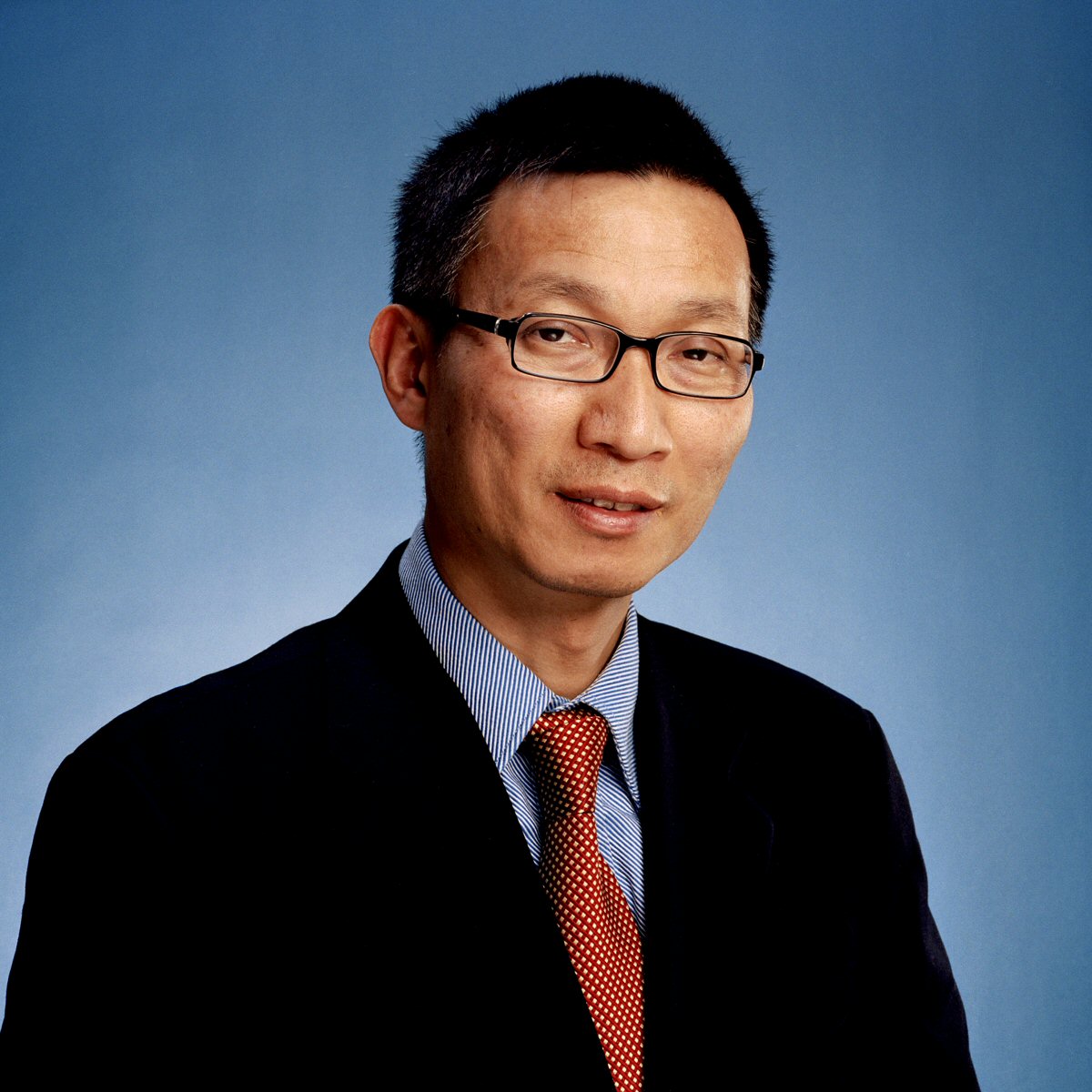
Former Adjunct Senior Associate, Asia Program
Pei is Tom and Margot Pritzker ‘72 Professor of Government and the director of the Keck Center for International and Strategic Studies at Claremont McKenna College.
Recent Work
Minxin Pei
Minxin Pei
Carnegie does not take institutional positions on public policy issues; the views represented herein are those of the author(s) and do not necessarily reflect the views of Carnegie, its staff, or its trustees.
This year’s wars have made alternative routes to transit through Russia no less risky for Central Asian countries.

Galiya Ibragimova
Reestablishing a dialogue with Moscow is not a goal in its own right. The goal is to guarantee the independence of Ukraine and the peace and security of Europe.
Arkady Moshes
By fueling the arguments of both supporters and opponents of Armenian Prime Minister Nikol Pashinyan, Azerbaijan wants to ensure he is re-elected with a weaker mandate.

Bashir Kitachaev
By reminding the world that Lukashenko is a threat to NATO and Ukraine, Kyiv is trying to return the focus to why the Belarusian regime needs to be contained rather than rewarded.

Artyom Shraibman
The demands of the Kremlin’s war in Ukraine, demographic problems, and public hostility toward Central Asians mean Russia does not have enough workers.
Salavat Abylkalikov