

In The Media
Minxin Pei
{
  "authors": [
    "Minxin Pei"
  ],
  "type": "legacyinthemedia",
  "centerAffiliationAll": "dc",
  "centers": [
    "Carnegie Endowment for International Peace",
    "Carnegie China"
  ],
  "collections": [],
  "englishNewsletterAll": "asia",
  "nonEnglishNewsletterAll": "",
  "primaryCenter": "Carnegie China",
  "programAffiliation": "AP",
  "programs": [
    "Asia"
  ],
  "projects": [],
  "regions": [
    "East Asia",
    "China",
    "Southeast Asia"
  ],
  "topics": [
    "Security",
    "Military"
  ]
}
Source: Getty
Recent tensions between China and Vietnam over islands and energy exploration in the South China Sea have demonstrated the need for Beijing to implement more intense diplomatic initiatives to forge a multilateral solution to the South China Sea disputes.
Source: Diplomat

As we now know, Clinton’s remarks in Hanoi in July 2010 marked a watershed in two important aspects. It decisively shifted the perception of the balance of power in the region. Prior to the Clinton statement, China was thought to have gained the upper hand in the region through years of painstakingly pursuing a ‘charm offensive.’ After the Clinton shock, which all Association of Southeast Asian Nations countries secretly cheered, China appeared to have been isolated on the issue of territorial disputes in the South China Sea. In addition, China’s clumsy response, consisting of thinly veiled threats to its neighbours, only added to the series of diplomatic blunders that made 2010 the worst year in Chinese foreign policy since 1989.
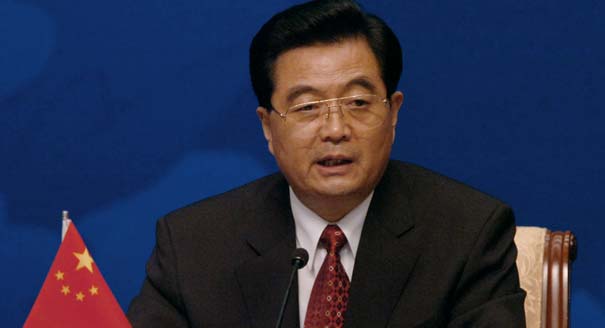
To regain its diplomatic initiative and repair self-inflicted damage, China has recently embarked on another charm offensive that has yielded some encouraging results. Ties with the United States have stabilized since Chinese President Hu Jintao visited Washington in January. US-China military-to-military dialogue has resumed. Even relations with Japan have improved considerably in recent months.
So at this stage, an ugly and potentially dangerous clash with Vietnam is the last thing China wants.
But at the same time, Beijing also needs to show that it won’t compromise on territorial disputes. Unfortunately, in Vietnam, China now encounters an equally tough and uncompromising contestant.
Of all the territorial claims in the South China Sea, the Sino-Vietnamese dispute is the most likely to lead to armed conflict. First, both countries have engaged in naval skirmishes in the South China Sea before. In 1974, the Chinese navy gained complete control of the Paracel islands after routing the South Vietnamese navy. In 1988, China and Vietnam fought a brief naval battle in the Spratlys. Second, Chinese claims in the Spratlys are generally considered weak under international law because, based on the United Nations Convention on the Law of the Seas, China would have difficulty proving the reefs it currently occupies meet the standards of self-sustaining and inhabitable islands (which then will have a 200 miles exclusive economic zone, or EEZ). But that isn’t the case with the Paracels, which China has effective control over, but which Vietnam continues to claim. The 200-mile EEZ of the Paracels and the 200-mile EEZ extending from Vietnam’s coastal line overlap. According to reports, the incident in which a Chinese patrol boat severed the multi-million dollar seismic survey cable operated by a PetroVietnam research vessel took place in this disputed zone.
In the past, the Chinese response to exploration activities conducted by the other claimants in the South China Sea has been calibrated. It rhetorically denounced them for infringing on China’s territorial rights, but its actions were more restrained and differentiated. In fact, many claimants have ongoing oil and natural gas exploration and production activities close to their coastal waters in the Spratlys, but China hasn’t dispatched naval vessels to disrupt them so far. (The June 9, 2010 incident in which a Chinese fishing boat damaged the survey cable of a Vietnamese research ship occurred in an area in the Spratlys far from Vietnamese shores.) By comparison, Chinese reaction to similar activities in the Paracels is much tougher. A few years ago, a Chinese patrol boat reportedly snipped the seismic survey cable of a research vessel owned by a Western firm, which had entered an agreement with Vietnam to conduct oil and gas exploration.
Everything else being equal, the probability of another naval clash between China and Vietnam in the waters around the Paracels is much higher.
But Vietnam is no pushover. It may not have much of a navy, but it has repeatedly demonstrated that it isn’t afraid of China. To show Beijing that it is prepared for a fight, Hanoi has ordered six Kilo-class Russian submarines (which will enter service in a few years). Diplomatically, Vietnam has also played its card skilfully. Its ties with the United States have improved dramatically, with the two former foes holding their first joint naval exercise in the South China Sea in August last year.
Whether Washington’s new posture on the South China Sea and improved US-Vietnamese relations have emboldened Hanoi to confront Beijing is anybody’s guess. What matters for Beijing now is how to avoid another possible clash with Vietnam in the Paracels. With Hanoi announcing a live-fire exercise in this area for June 13, the risks of an accidental conflict are real.
Of the two protagonists, China needs to seize the moral high ground first, since international opinion tends to favour the weaker party in such disputes. For a start, China should temporarily suspend its patrol activities in the disputed areas to avoid any possible accidental conflict. Beijing should also offer specific proposals to Hanoi on how to avoid similar confrontations in the future. For instance, imposing a temporary moratorium on exploration activities by both sides in the disputed waters should calm the nerves.
These ad hoc measures must be followed up by more intense diplomatic initiatives that will help forge a multilateral solution to the South China Sea disputes. The Sino-Vietnamese row may have created a crisis, but it also provides a unique opportunity for China and ASEAN to accelerate the negotiation for a stronger code of conduct. Some in China may view signing such a code of conduct as needlessly constraining Beijing’s options. But for a country whose intentions and growing military capabilities have unnerved its neighbours, this may be one of the few realistic gestures to make its declaration of ‘peaceful development, credible.

Former Adjunct Senior Associate, Asia Program
Pei is Tom and Margot Pritzker ‘72 Professor of Government and the director of the Keck Center for International and Strategic Studies at Claremont McKenna College.
Recent Work
Minxin Pei
Minxin Pei
Carnegie does not take institutional positions on public policy issues; the views represented herein are those of the author(s) and do not necessarily reflect the views of Carnegie, its staff, or its trustees.
A leak of Russian gas price data helps establish that China is paying Russia far less than Central Asian countries and Gazprom’s former European customers.

Sergey Vakulenko

Japan’s long-term security policy is driven by concerns about China, and there is little appetite for (or interest in) pursuing a confrontation with Moscow.

James D.J. Brown

The truth of the strategic situation is that Europe and Russia are extremely unlikely to be able to “turn the page” on their confrontation within the next two decades.

Arkady Moshes

Russia’s AI-driven propaganda campaigns operate in a fragmented, chaotic, and often illogical manner. That’s not necessarily a problem for the Kremlin, though: It’s much easier to mimic genuine public debate that way.

Ilya Klishin

Russian strikes are weakening the economy sustaining Ukraine’s war effort. Closing the growing funding gap will require more European support and politically contentious reforms in Kyiv.

Balázs Jarábik