

Commentary
Maria Lipman
{
  "authors": [
    "Maria Lipman"
  ],
  "type": "legacyinthemedia",
  "centerAffiliationAll": "",
  "centers": [
    "Carnegie Endowment for International Peace",
    "Carnegie Russia Eurasia Center"
  ],
  "collections": [],
  "englishNewsletterAll": "",
  "nonEnglishNewsletterAll": "",
  "primaryCenter": "Carnegie Russia Eurasia Center",
  "programAffiliation": "",
  "programs": [],
  "projects": [],
  "regions": [
    "Central Asia",
    "Caucasus",
    "Azerbaijan"
  ],
  "topics": [
    "Political Reform",
    "Democracy",
    "Foreign Policy"
  ]
}
REQUIRED IMAGE
The Central Asian countries are anything but democracies. The degree of oppression may vary, but all Central Asian rulers enjoy uncontested autocratic power, with nominal legislatures mostly used to extend their tenures. Should Ilham Aliyev become president after his father's death, it would be the first dynastic succession in a post-Soviet state.
Source: Carnegie
MOSCOW -- In a regal gesture this month, the 80-year-old Azerbaijani president, Heydar Aliyev, anointed his son, Ilham, to succeed him. Of course, Azerbaijan is formally an elective democracy, and President Aliyev could not do just that. What he did was to get his parliament to approve Ilham's appointment as prime minister, which will make him acting president should his father step down or die. A few days ago Aliyev was flown in an emergency plane from a Turkish hospital to an American one. He has been in and out of hospitals since April, when he collapsed during a public speech, and he has been totally out of public view for at least a month.
After the breakup of the Soviet Union there was much hope that, once freed from the Communist oppression, the 15 Soviet republics would evolve as democratic states. Yet while communism was irrevocably defeated, in parts of the former Soviet Union democracy fully failed.
Should Ilham Aliyev become president after his father's death, it would be the first dynastic succession in a post-Soviet state. Heydar Aliyev's counterparts in neighboring Central Asia are still relatively young and strong enough that succession of power is not among their immediate concerns. Some of them may have displayed monarchical whims, though: For instance, Kazakh President Nursultan Nazarbayev married his daughter to the son of Kyrgyz President Askar Akayev (their marriage soon fell apart). The Central Asian countries are anything but democracies. The degree of oppression may vary, but all Central Asian rulers enjoy uncontested autocratic power, with nominal legislatures mostly used to extend their tenures.
During Soviet rule, the Communist Party nomenklatura in Central Asia grew closely entangled with local tribes and clans. The first secretary of the local Communist Party, the ultimate boss of every republic, belonged to the most powerful clan and promoted his fellow clan members.
Three of five Central Asian first secretaries -- Uzbekistan's Islam Karimov, Kazakhstan's Nazarbayev and Turkmenistan's Saparmurad Niyazov -- have retained their power since the collapse of the Soviet Union. They easily shed their Communist demeanor, abandoned the Communist rhetoric and ideology and remade themselves as democratically elected presidents. But then they suppressed all opposition and secured their incumbency.
Aliyev's Communist past is the most impressive among his Central Asian counterparts. He was appointed first secretary of Azerbaijan in 1969 after a brilliant career in the KGB, having joined at age 21. One can only imagine the degree of repressive zeal he must have displayed to be steadily promoted in Stalin's KGB of the '40s and '50s. In 1982 he became a member of the Soviet Politburo. In 1987 Mikhail Gorbachev got rid of him as he purged his Politburo of Communist hardliners.
The collapse of the Soviet Union was followed in Azerbaijan by political chaos. Ferocious war with Armenia continued, the first post-communist president was toppled as a result of public outrage and the second fled after a military coup by an obscure colonel. Aliyev came to his people's rescue in 1993. He stopped the unwinnable war with Armenia and with an iron fist suppressed a separatist movement on Azerbaijan's southern borders. Gradually he came to terms with a wide range of foreign partners seeking to produce Caspian oil. In the meantime, he effectively reduced the impact of his opposition, jailing some and forcing others into exile.
After the fall of the Soviet empire, ex-Communist leaders found themselves strongly affected by their nations' pre-Communist history and political culture. Lithuanian President Algirdas Brazauskas became something of an Eastern European social democrat, and while Eduard Shevardnadze's rule in Georgia may be chaotic, it stops short of tyranny. The Central Asian regimes are autocratic.
Azerbaijan may border on Central Asia, but it does not fully belong there. Under Aliyev, the opposition has become disjointed and weak, but he did not fully eliminate it. As the transfer of power from Aliyev to his son appeared imminent, mass rallies were held in the capital, Baku, demanding Aliyev's resignation. Such rallies would be unimaginable in Uzbekistan or Turkmenistan.
Ilham Aliyev, who is not as cunning or seasoned a political fighter as his father, may face serious resistance once left unprotected by his father's authority. His rule is unlikely to be peaceful. He may resort to violence or resume the war with Armenia to muster patriotic support. Azerbaijan's people may have stormy times in store.
What's unlikely to happen is a Communist comeback, as neither former functionaries nor their power-seeking opponents are attracted to it. Yet almost equally unlikely is a democratic development, which looked so promising a decade ago.
Masha Lipman, editor of the Carnegie Moscow Center's Pro et Contra Journal, writes a monthly column for The Post.
Originally published in the Washington Post, August 11, 2003.
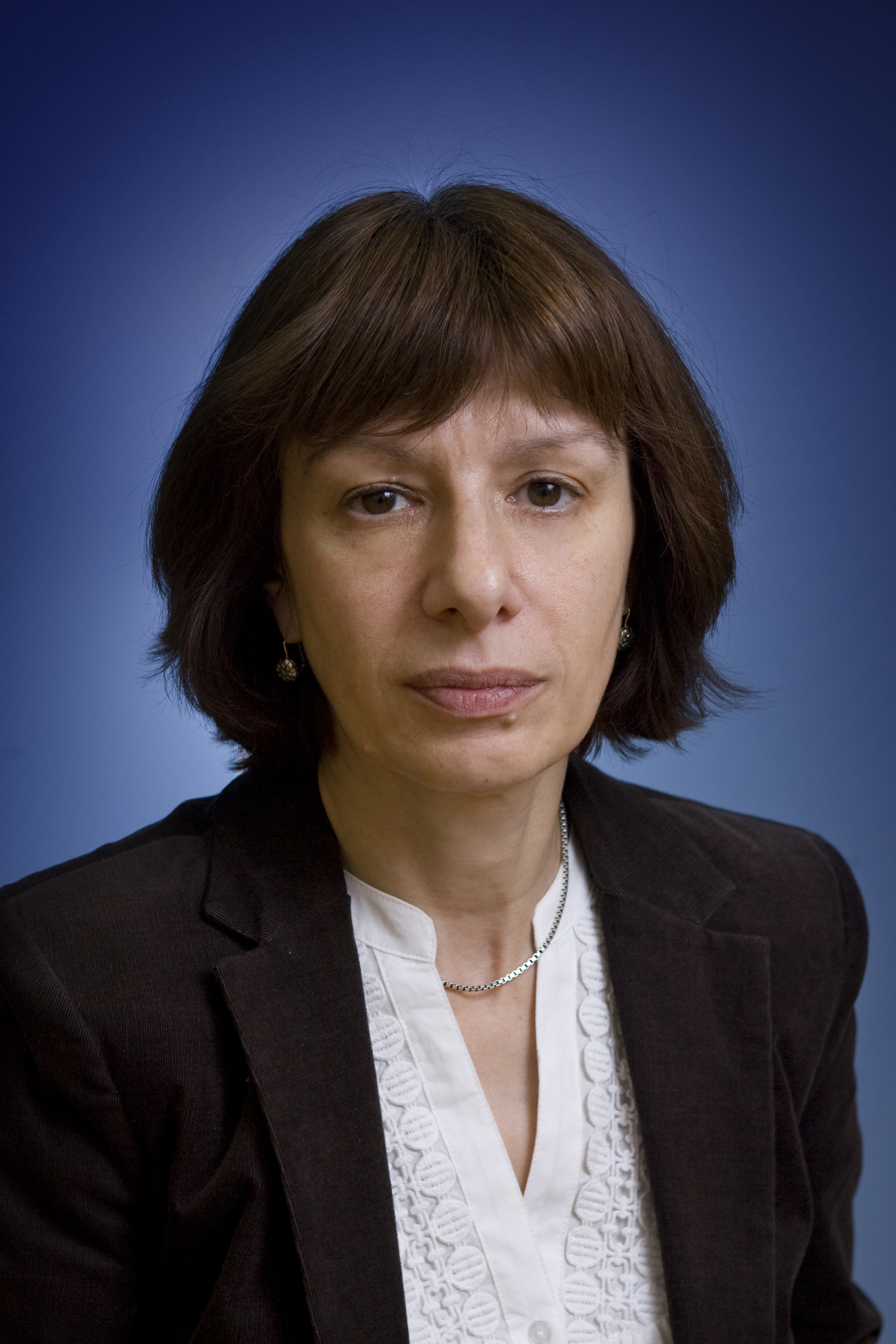
Former Scholar in Residence, Society and Regions Program, Editor in Chief, Pro et Contra, Moscow Center
Lipman was the editor in chief of the Pro et Contra journal, published by the Carnegie Moscow Center. She was also the expert of the Carnegie Moscow Center’s Society and Regions Program.
Recent Work
Maria Lipman
Maria Lipman
Carnegie does not take institutional positions on public policy issues; the views represented herein are those of the author(s) and do not necessarily reflect the views of Carnegie, its staff, or its trustees.

Ex-president Gurbanguly Berdimuhamedov remains interested in politics, but his son Serdar, Turkmenistan’s current president, is becoming increasingly independent and willing to break with his father’s legacy. If their covert rivalry goes too far, both risk losing power.

Galiya Ibragimova

Despite a new textbook, an influx of Russian teachers and managers, and an end to the teaching of Ukrainian, the Kremlin is unlikely to have “reprogrammed” locals.

Konstantin Skorkin

Cargo traffic through Russia’s Northern Sea Route has increased because of the disruption caused by the conflict in the Middle East, the Ukraine war, and U.S.-China tensions.

Mikhail Korostikov

Sergei Kiriyenko used Russia’s parliamentary vote to further hone his strategy of corporate mobilization that is designed to maximize votes for United Russia.

Andrey Pertsev

The European far right might fail to steer EU policy in the direction Russia wants, but they will create enough chaos inside Europe to benefit the Kremlin.

Dimitar Bechev