

Commentary
Maria Lipman
{
  "authors": [
    "Maria Lipman"
  ],
  "type": "legacyinthemedia",
  "centerAffiliationAll": "",
  "centers": [
    "Carnegie Endowment for International Peace",
    "Carnegie Russia Eurasia Center"
  ],
  "collections": [],
  "englishNewsletterAll": "",
  "nonEnglishNewsletterAll": "",
  "primaryCenter": "Carnegie Russia Eurasia Center",
  "programAffiliation": "",
  "programs": [],
  "projects": [],
  "regions": [
    "Caucasus",
    "Russia"
  ],
  "topics": []
}
REQUIRED IMAGE
Source: Carnegie
Crushing Democracy and Now the Economy in Russia
By Masha Lipman
Originally published in The Washington Post, August 21, 2004.
MOSCOW -- Russian President Vladimir Putin has squandered one of his most precious assets: the trust of economic experts. Their opinion is important to those who would invest in Russia, but there doesn't seem to be a single optimist left in the economic community. The causes of their anxiety are obvious. The net capital outflow in 2004 is expected to be three times that of last year, according to a prominent cabinet minister. Private forecasts are even worse. Yet as recently as March the Russian finance minister had proudly announced that this year Russia would report a net inflow of capital for the first time since the early 1990s.
The Russian market fluctuates wildly, with a general downward trend: It has lost about one-third of its value in less than half a year -- at a time when Russia is making huge profits from exorbitant oil prices.
The cabinet, abruptly reshuffled by Putin shortly before his reelection in March, is torn by disputes. Some ministers in the economic sector are trying to bring back sanity and clarity to the reform effort, while the prime minister, Mikhail Fradkov, focuses on the drive to double gross domestic product -- the goal set by the president -- with barely a clue as to the strategy needed to bring about such growth. The professional team under his command talks about policies, trends and numbers, while Fradkov, as befits a Soviet-style apparatchik, demonstrates a belief in the inspirational force of plan and command and holds economic factors in contempt. Whether Putin shares his prime minister's economic approach is unknown.
Decision making is obscured and unpredictable; policy analysts are left to speculate on the basis of indirect and largely unreliable signs. Comparing today's scene with that of Yeltsin's days, Al Breach, chief economist with UBS Brunswick in Moscow, told Reuters that "under the Yeltsin presidency 50 to 100 people knew what was going on. Under Putin only a handful of people know what is happening, and they don't talk."
The negative developments and the ensuing loss of trust have been provoked by the Kremlin campaign against the oil company Yukos. Until a few months ago Yukos was Russia's most dynamic and well-managed energy company. It still accounts for about 20 percent of Russia's oil production and 2 percent of the world's, but its assets have lost the bulk of their market value because of heavy-handed, repressive measures. Yukos's persecutors do not seem to care about the damage they have inflicted on the Russian economy, the market or the trust of investors. They remain unperturbed by concerns over Russia's contribution to the dangerous upward trend in world oil prices.
In 1999 Putin demonstrated a shrewd vision of his country's economic situation when he wrote that Russia might expect to reach the level of Portugal in 15 years. He made it clear that he wanted Russia to narrow the gap separating it from more developed countries. No less obvious was his belief that Russia couldn't go it alone: He seemed to realize that there was no alternative to closer economic cooperation with the West, where capital, markets and advanced technologies are concentrated.
Putin opted for ensuring stability on the grounds that it would help attract foreign capital. His method for achieving stability was to reestablish state control, which had been dramatically weakened under Boris Yeltsin. He believed in a traditional strong state, in both the Russian and Soviet way -- that is, with a political system reduced to one power center. This vision may have disappointed those who care about democracy, liberal freedoms or civil society, but others saw it as perfectly rational. After all, there was the example of steadily developing China: Its government didn't pretend to be democratic, and foreign investors seemed not at all squeamish.
During Putin's first term, Russian macroeconomics looked increasingly sound. His enlightened economic team in the cabinet was moving ahead with some reforms, big businesses were flourishing and some of them even curtailed their notoriously disreputable practices. Rising oil prices gave the market a big boost. Economic experts issued encouraging statements. Meanwhile, voices lamenting the shrinking of democracy and warning about the growing numbers of Putin's ex-KGB colleagues in top government positions sounded ever more feeble. It appeared that Putin was delivering the stability Russia longed for.
The campaign against Mikhail Khodorkovsky and his company, Yukos, at least originally, may have been driven by the same logic. Khodorkovsky, who had challenged the state by acting too independently at home and abroad, had to be subdued so the government could consolidate control. Indeed, early on the economic experts were not at all upset about the arrest of Khodorkovsky.
But instead of improving government management, the people entrusted by Putin to conquer the arrogant tycoon engaged in a self-seeking campaign to strip Khodorkovsky of his assets. To them this was a chance to take revenge for the earlier postcommunist years they had spent in middle-rank state security jobs, while others had grabbed at the new capitalist opportunities or benefited from high-ranking positions as decision makers.
The lack of public political debate and the unaccountability of the decision makers in a noncompetitive political system enabled the newly empowered elite to have its revenge. A dismembering of Yukos -- the forced sale of the most appetizing chunks at marked-down prices and the establishment of state control over the property -- is what seems to be on the mind of Putin's topmost elite. They expect their effort to be rewarded by lucrative managerial positions overseeing state-controlled property.
The likelihood of this scenario was enough to remove the last benefit of the doubt that economic observers were extending to Putin. This week Christopher Weafer, chief strategist of the Russian Alfa Bank and a respected economist, wrote that the outcome sought by some among the Russian elite "may have more to do with wealth reallocation than preserving the goal of an attractive investment climate."
In Putin's Russia, government control has increasingly become an end in itself, not a means to achieve ambitious economic goals. As in the late Soviet Union, mediocre bureaucrats are in control, while those with skills, talents, high ambitions and, especially, critical opinions are treated with distrust. If Putin ever had a strategic economic vision for Russia, it has been blurred by his Soviet background.
Masha Lipman, editor of the Carnegie Moscow Center's Pro et Contra Journal, writes a monthly column for The Post.
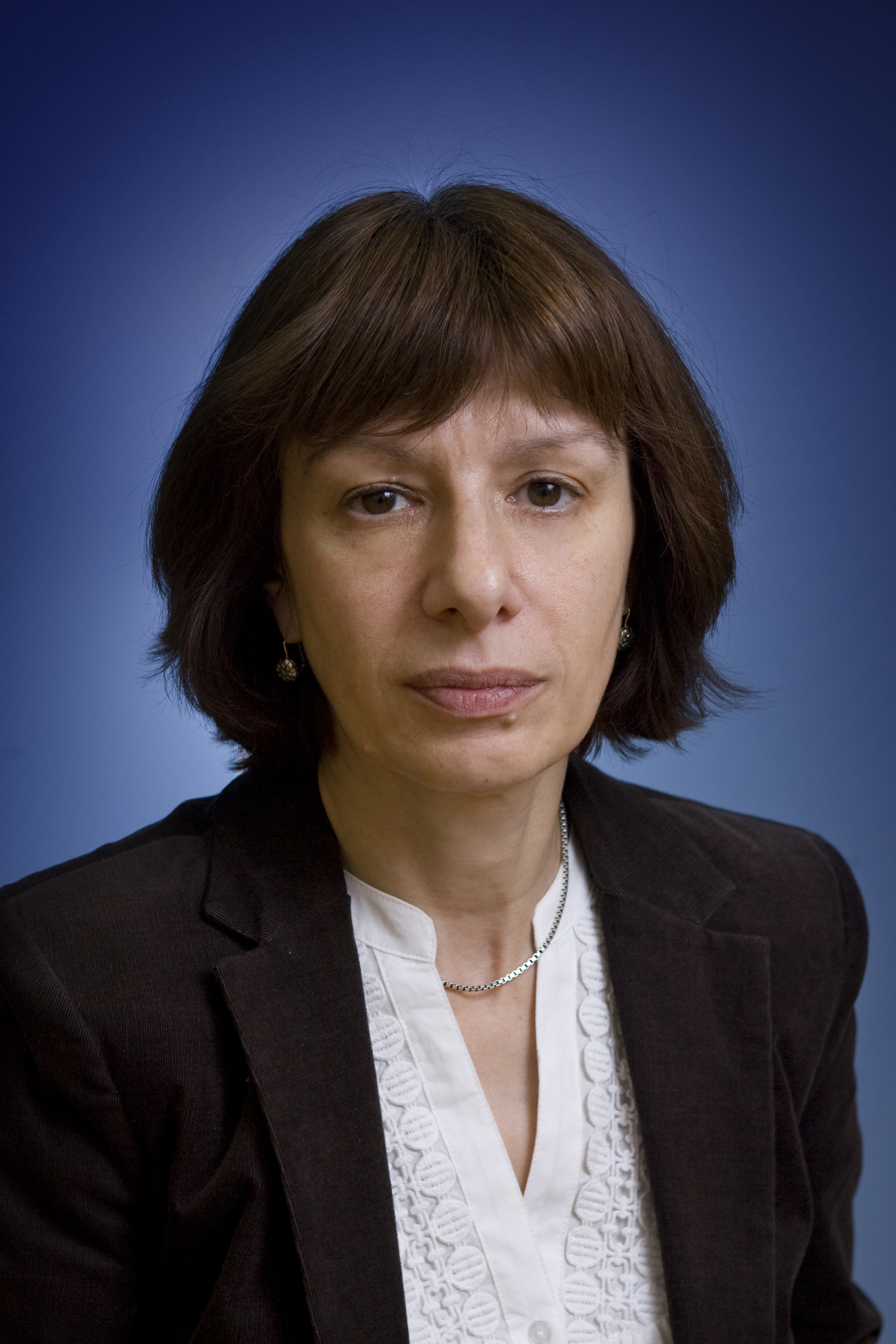
Former Scholar in Residence, Society and Regions Program, Editor in Chief, Pro et Contra, Moscow Center
Lipman was the editor in chief of the Pro et Contra journal, published by the Carnegie Moscow Center. She was also the expert of the Carnegie Moscow Center’s Society and Regions Program.
Recent Work
Maria Lipman
Maria Lipman

Russian strikes are weakening the economy sustaining Ukraine’s war effort. Closing the growing funding gap will require more European support and politically contentious reforms in Kyiv.

Balázs Jarábik

Despite a new textbook, an influx of Russian teachers and managers, and an end to the teaching of Ukrainian, the Kremlin is unlikely to have “reprogrammed” locals.

Konstantin Skorkin

For every ruble allocated to social policy, health, and education in 2027, double that amount is earmarked for the army, the police, and the security services.

Alexandra Prokopenko

Cargo traffic through Russia’s Northern Sea Route has increased because of the disruption caused by the conflict in the Middle East, the Ukraine war, and U.S.-China tensions.

Mikhail Korostikov
An analysis of traffic accident data suggests that Ukrainian drone attacks caused a material but not disastrous fall in Russian gasoline consumption over the summer.

Sergey Vakulenko