

Other
Anders Aslund
{
  "authors": [
    "Anders Aslund"
  ],
  "type": "legacyinthemedia",
  "centerAffiliationAll": "dc",
  "centers": [
    "Carnegie Endowment for International Peace"
  ],
  "collections": [],
  "englishNewsletterAll": "ctw",
  "nonEnglishNewsletterAll": "",
  "primaryCenter": "Carnegie Endowment for International Peace",
  "programAffiliation": "russia",
  "programs": [
    "Russia and Eurasia"
  ],
  "projects": [],
  "regions": [
    "Caucasus",
    "Russia",
    "Ukraine"
  ],
  "topics": [
    "Political Reform",
    "Democracy",
    "Economy",
    "Trade",
    "Foreign Policy"
  ]
}
REQUIRED IMAGE
Source: International Herald Tribune
Soviet heirsWASHINGTON What a difference a year can make! A year ago, President Vladimir Putin represented the new trend in the former Soviet Union. He had successfully consolidated political power and won a solid parliamentary majority. Russia had carried out comprehensive market economic reform and judicial reform. Its international standing was high.
Today, Putin does not seem to get anything right. The lawless confiscation of the Yukos oil company has jeopardized his radical tax and judicial reforms. His handling of the bloody Beslan hostage drama showed the weakness of his centralized state. His heavy-handed intervention in the Ukrainian presidential elections provided evidence that he was not only antidemocratic but also anti-Western. The recent popular protests against his social benefits reform have depressed his popularity at home.
As one star falls, another rises. Ukraine's "orange revolution" has lifted the democratic reformer Viktor Yushchenko to the skies. He has set off a new democratic trend in the post-Communist world.
Both Russia's current malaise and Ukraine's democratic revolution are taking place in the midst of an economic boom. Last year, Russia's economy grew by 7 percent, Ukraine's by 12 percent. So the issue is politics, not the economy.
The focus lies on the generators of the boom. In the mid-1990s, young people took on the challenge of transforming the seemingly moribund Soviet smokestacks. They succeeded beyond any expectations. Alas, as Herbert Hoover once said, "The trouble with capitalism is capitalists." Some of the new owners became hugely and conspicuously rich. Since their property rights were weak, the "oligarchs" reinsured their property rights by buying up politicians, judges and other officials.
Both Russian and Ukrainian politics are now driven by a popular urge to defeat this corruption. The United States faced a similar challenge with the "robber barons" of the 19th century.
Putin's response was to pioneer a strategy of political centralization, enhanced state control and mild authoritarianism, relying on the secret police. He argued this was necessary in order to restore order, reduce corruption, boost economic growth and promote social equity.
Today, these policies seem to have rendered the Russian state more dysfunctional. The reinforcement of state power and secrecy appear only to have boosted high-level corruption. Far-reaching centralization of power has reduced both the capacity and the quality of government decision-making. And as the media have been muzzled, the government has become subject to its own disinformation.
Although Russia's economic growth remains high, it was lower than that in most former Soviet countries last year. Now Putin's secret-police friends are called the new oligarchs. Putin's authoritarianism no longer looks like a solution.
In Ukraine, President Yushchenko has thrown down an ideological gauntlet with his democratic revolution. Like Putin, Yushchenko is raging against corruption and oligarchs, but he prescribes the opposite cure. As he stated at his inauguration, "Only a democratic state values human dignity, freedom, equality and solidarity." Yushchenko's commitment to freedom and democracy is being reinforced by his calls for European integration, while Putin reminiscences about the "vast and great" Soviet Union.
The economic programs of the two presidents are remarkably similar. Both advocate a free but social market economy. Both countries have a flat personal income tax of 13 percent. Ukraine needs to catch up with Russia in market economic legislation, but with rising authoritarianism, the role of the state is growing in Russian business.
The critical issue is the property rights of the oligarchs. Putin has given up much of his initially good economic policies by ruthlessly going after one oligarch, leaving the property rights of others in doubt. Yushchenko must avoid repeating his mistake. Yet he campaigned for the re-privatization of Kryvorizhstal, the last, biggest and most controversial privatization in Ukraine. Having been bought by Ukraine's two wealthiest oligarchs (Rinat Akhmetov and Viktor Pinchuk), it is a palatable political target. The challenge to Yushchenko is to limit re-privatization to the politically necessary and then sanctify property rights. For economic growth, Ukraine needs more privatization rather than re-privatization.
Ukraine's "orange revolution" has made democracy look modern again. Yushchenko's challenge now is to balance calls for social justice with the need for secure property rights.
Anders Aslund is director of the Russian and Eurasian Program at the Carnegie Endowment for International Peace.
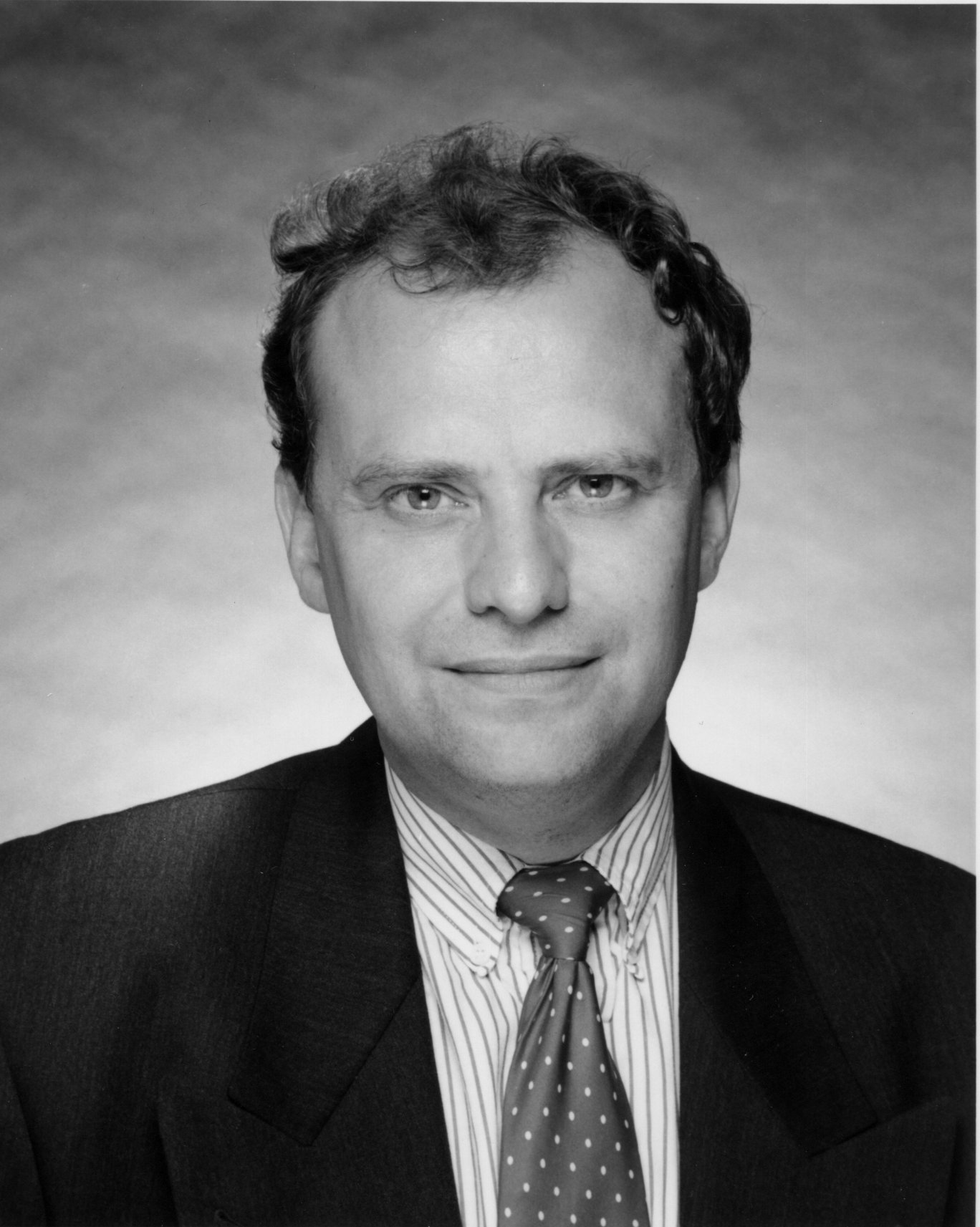
Former Senior Associate, Director, Russian and Eurasian Program
Recent Work
Anders Aslund
Anders Aslund
Carnegie does not take institutional positions on public policy issues; the views represented herein are those of the author(s) and do not necessarily reflect the views of Carnegie, its staff, or its trustees.

Trump has promised Belarus a massive potash deal. But Minsk is seeking something greater: restored Western transit and greater room for maneuver from Russia.

Balázs Jarábik

The European far right might fail to steer EU policy in the direction Russia wants, but they will create enough chaos inside Europe to benefit the Kremlin.

Dimitar Bechev

Minsk clearly expected the dialogue with Washington to yield more results, in particular the lifting of EU sanctions and permission to export potash.

Artyom Shraibman

If the Russian-speaking community in Latvia cannot articulate their interests without being seen as disloyal, they could end up embracing a pro-Kremlin agenda.

Sergejs Potapkins

Russia’s ruling party would have benefited from Putin appearing as its distant patron, but as an active frontman imposing his views on the public, he has done nothing but harm both the party’s election campaign and the ruling system overall.

Andrey Pertsev